The China Dish journal / A closer look
Porcelain vs stoneware: body, glaze and everyday choices
Compare porcelain and stoneware through body, glaze, light and actual objects, then judge everyday pieces by their shape and maker's care notes.
Porcelain has a white, highly vitrified body that can transmit light where it is thin; stoneware has a dense, generally opaque body whose color varies. For everyday dishes, choose the piece whose shape, weight and care notes suit your routine. Neither material name alone tells you which plate will resist a knock or which mug belongs in a microwave.
Start beneath the glaze, then return to the object in your hand.
Porcelain and stoneware compared at a glance
Both names describe fired ceramic bodies: the clay-based material that forms the vessel. Vitrification means that glass forms within that body during firing, helping it become dense. Glaze is the coating over it.
The Museum of Oriental Ceramics, Osaka, describes stoneware as dense and opaque, while thin porcelain lets light through. Its guide also notes that regions classify ceramics differently.
The table follows the broad Western use of these names, with the Maryland Archaeological Conservation Laboratory’s wider range of stoneware body colors in mind.
| Point of comparison | Porcelain | Stoneware | What this helps you judge |
|---|---|---|---|
| Fired body | Dense, highly vitrified and white-bodied | Dense and vitrified; body color can range from white through gray to tan | The material beneath the surface, when its identity is known |
| Light through the wall | Thin areas can be translucent | Generally opaque | A useful clue, with thickness and painted surfaces taken into account |
| Visible surface | May carry glaze and colored patterns | May carry glaze and colored patterns | Surface color alone doesn’t settle the category |
| Shape and weight | Depend on the design | Depend on the design | Compare actual sizes and weights rather than material labels |
| Everyday care | Follow the care notes for that product and finish | Follow the care notes for that product and finish | A material category isn’t a complete care label |
Earthenware adds another body category. Our guide to earthenware, stoneware and porcelain keeps the three names together, while this article stays with the last two.
For the wider view of porcelain, including making and related guides, explore our porcelain overview.
The ceramic body and its glaze answer different questions
Body and glaze explain why a green bowl can be stoneware and a brightly painted bottle can be porcelain. The surface is what the eye meets first. The clay body beneath it supplies the material category, and those layers needn’t share the same color.
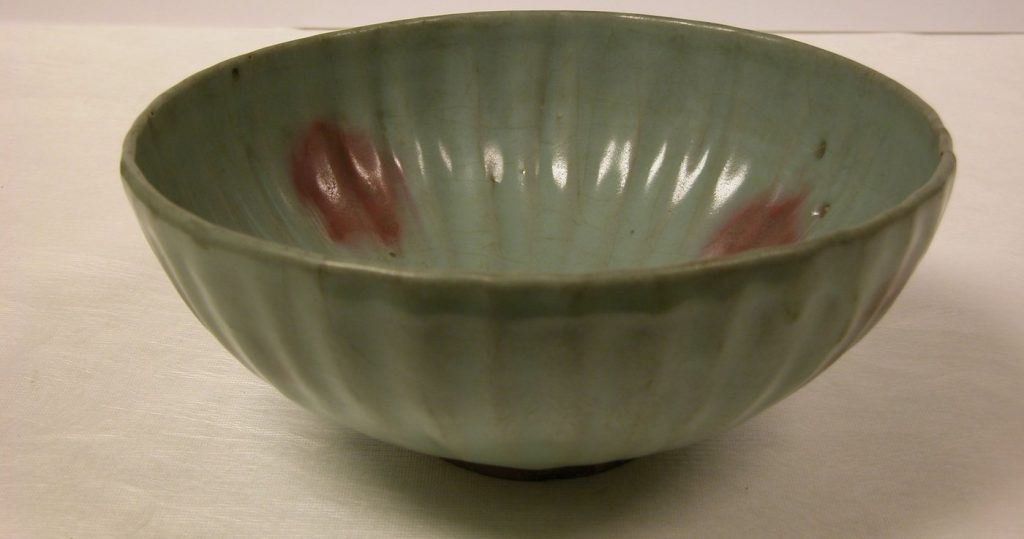
The fluted bowl above is a useful example. The Metropolitan Museum of Art records it as Chinese Jun ware, made in the 13th–14th century, with a stoneware body and splashed blue glaze. Its muted surface and reddish patches are visible details.
The stoneware identity comes from the museum’s record, rather than from a guess about that greenish color.
A maker’s account also shows why the stage of firing matters. Rosenthal describes an absorbent, porous body after biscuit firing, followed by later firing that makes the body watertight.
A sample from that earlier stage isn’t a fair stand-in for its finished porcelain, whose making we follow in how porcelain is made.
The same question helps when reading about ceramics online: does a claim describe the clay body, the glaze, or the finished painted object? A claim about a surface may leave the clay body unexplained.
Why porcelain and stoneware can look alike
Body color offers a clue, but white doesn’t belong to porcelain alone. The Maryland guide includes white within its stoneware body-color range and lists old white stonewares.
A pale dish can need more evidence than a front view provides.
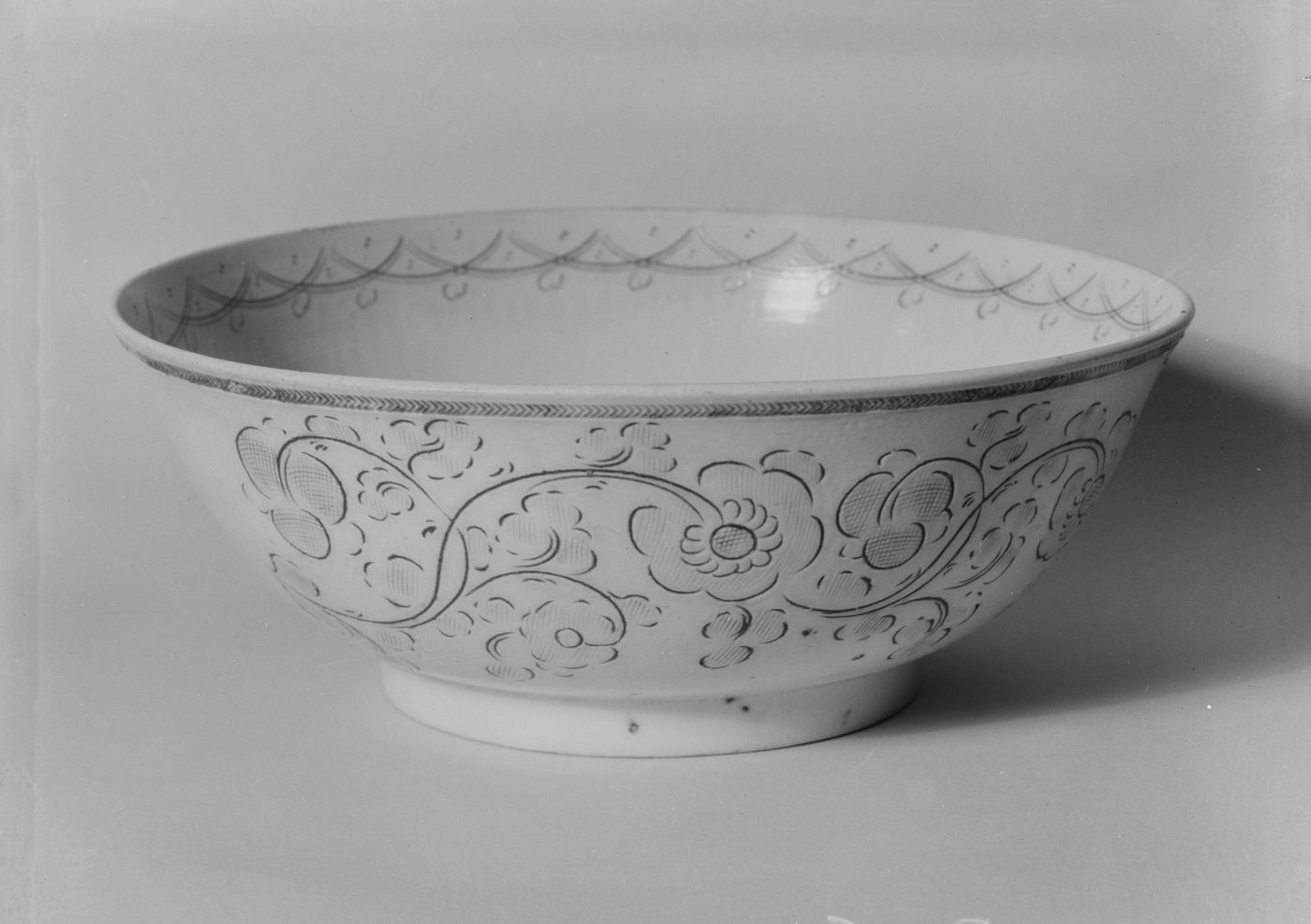
The Staffordshire bowl below has scrolling flowers, a wide opening and a low foot. The Met dates it to about 1750 and records it as stoneware.
The photo is black and white: its light tones cannot establish the vessel’s actual body or glaze color.
The Chinese bottle below poses a different problem. Its painted panels, flowers and long neck draw the eye to its pattern and shape. The Met records the material as porcelain and dates the bottle to 1825–45.
The colorful surface doesn’t cancel its white-bodied material identity, but the photo also leaves us without a view of how much light passes through its walls.
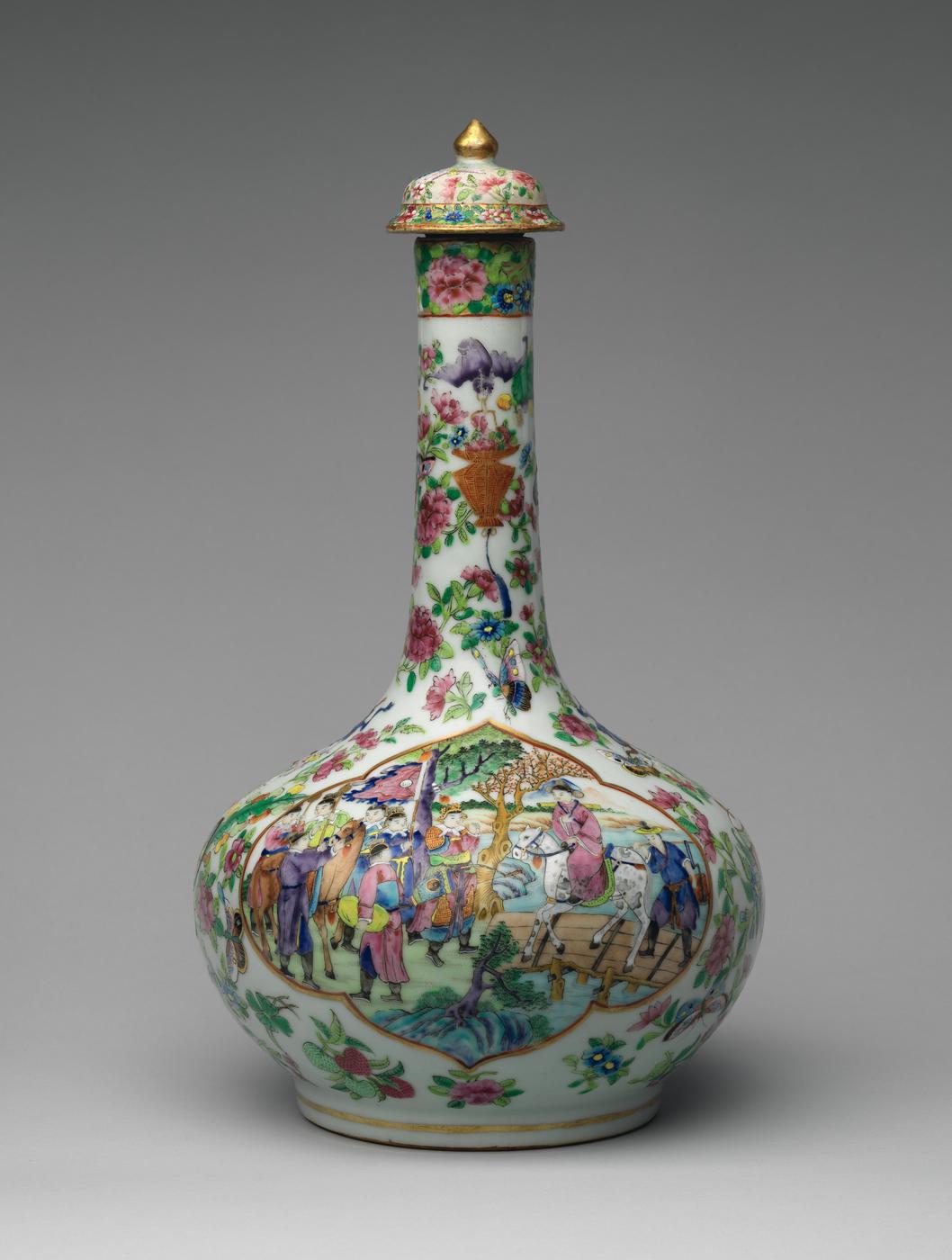
These objects offer more to look at than a plain white plate beside a brown mug. Stoneware can carry fine patterns, while porcelain can present a richly colored surface.
For a closer look at the body clues, what porcelain is explores how to read the material name beside an object.
Is porcelain lighter or stronger than stoneware?
The photos don’t rank weight or strength. The bowl and bottle have different shapes and sizes, so even their measured weights wouldn’t isolate the effect of the material.
A fair look at weight would begin with pieces intended for the same job and close in size.
For a dinner plate, the listed weight and its fit in your cupboard tell you more about handling than the word porcelain does. For a mug, capacity, handle space and the shape of the lip deserve their own attention.
A thick porcelain mug and a finely made stoneware cup don’t make a fair pair merely because their labels name different materials.
Strength claims need specific evidence. A maker’s claim about a named range may help; a material label alone leaves the design and the test method unstated. A thin edge, an attached handle and a broad foot present different parts of a vessel to consider.
Calling the whole piece “stronger” without saying what was tested gives the reader little to work with.
Those details matter when replacing a favorite dish. Match the features you liked: its size, rim, depth and weight.
The new dish’s material is part of its story, rather than a stand-in for the features that made the old one feel right.
Richard Batterham’s choice of stoneware was a working choice
An actual potter’s choices show how much can sit behind a material preference. The V&A’s account of British studio potter Richard Batterham describes a career spent mainly in stoneware, alongside a smaller body of work in porcelain.
He made delicate porcelain forms, including small bottles and lidded boxes, before stopping work in porcelain in 1984.
Batterham also tested glaze recipes over and over for different clay bodies and areas of his kiln. The V&A explains that uneven heat within the kiln called for different glazes.
His finished surfaces grew from that work with specific clays and firing methods, described in the museum’s account of his making.
His choice helps explain why stoneware can be an artist’s goal, rather than a lesser stand-in for porcelain. It doesn’t decide which mug belongs in someone else’s kitchen.
What travels from his practice is the care given to the whole object: body, surface and the way it is made belong together.
Microwave use and cleaning depend on the piece
For household use, that care includes the maker’s notes. Rosenthal’s guide sets out its care symbols and says that certain precious painted finishes need hand washing.
Even within one maker’s porcelain, the surface can change the care advice.
Look for care notes covering the actual product, rather than treating “porcelain” or “stoneware” as approval for every appliance. Our porcelain microwave guide takes up that narrower question.
The old museum objects shown here are material examples; their records supply no modern appliance-use approval.
A painted figure also raises a different care question from a daily dinner plate. If that is the object you have, cleaning porcelain figurines starts with its condition and surface.
A look at tableware shouldn’t stand in for care of an older, repaired or delicate object.
Choosing between porcelain and stoneware for the table
Begin with the job you want the piece to do. A shallow plate, a deep breakfast bowl and a large serving dish make different demands on cupboard space and handling.
Compare those features directly, alongside the product’s own care notes; then consider whether you prefer its surface and form.
If a thin body that lets light through is part of the appeal, porcelain offers a material reason to look more closely. If the appeal lies in a stoneware bowl’s glaze or profile, examine that bowl.
Pale color, dark color, a glossy finish or a rustic outline can describe a look without proving a material category or a quality level.
Return to the fluted Jun-ware bowl and the painted porcelain bottle. Their surfaces attract the eye, while the records explain what each body is.
The material tells part of the story; the vessel tells the rest, once its rim, foot, pattern and care notes have each had a chance to speak.