The China Dish journal / A closer look
What Is Porcelain? Clay Body, Glaze and Identification
Porcelain is more than a white, shiny surface. Understand its fired body, hard-paste and soft-paste labels, and what appearance can actually tell you.
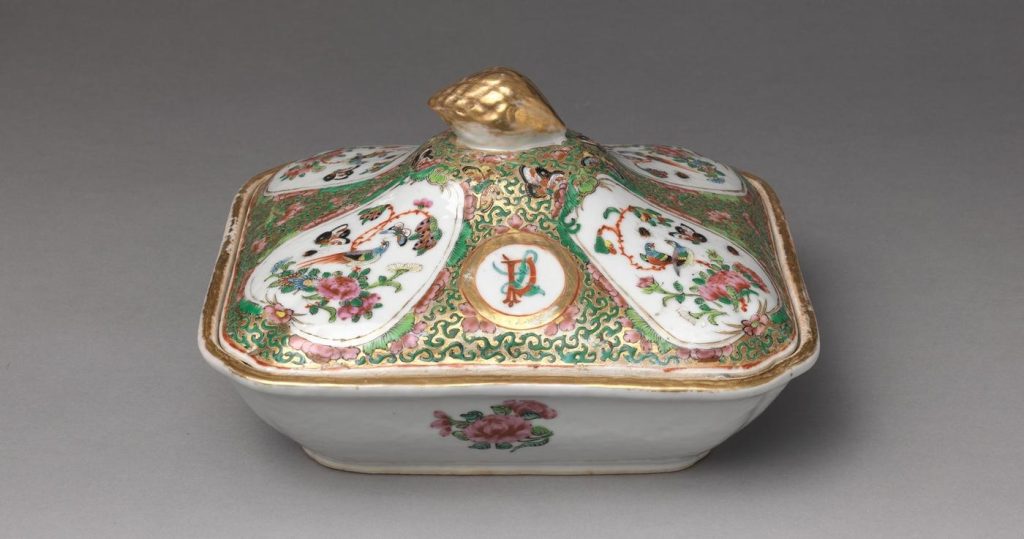
Porcelain is a fine ceramic with a pale, densely fired body that can let light through when thin. A glassy phase within the fired material helps set it apart from more porous pottery. The name describes the ceramic body, while the glaze and painted design describe its surface. A blue bottle can therefore be porcelain just as a white one can.
That difference helps when a museum label, a dinner plate and a seller’s photo seem to offer different answers. Whiteness, shine and light passing through are clues with limits. Begin with what the vessel is made from, then ask how much of that material the surface lets you see.
Porcelain begins with the fired body
The body gives a ceramic its shape: the walls of a bottle, the rim of a bowl or the handle of a cup. Before firing, the material is a workable mixture; after firing, it has become a ceramic, so calling a vessel porcelain refers to the nature of this fired body rather than a painted style.
Kaolin, often called china clay, is central to many porcelain recipes. Porcelain stone also matters in Chinese production. The Gardiner Museum’s account distinguishes a porcelain-stone recipe from a later mixture of porcelain stone and kaolin. Those different routes are a reason to avoid treating a modern bag of porcelain clay as the recipe for every historical object.
During firing, some parts of the mixture form a glassy phase within the body. The term vitrification describes that change. A porcelain vessel hasn’t simply become a piece of glass: the fired body contains both glass and crystals. Its dense structure isn’t the same thing as a coating that makes a porous body look smooth.
Museum terms have a context, too. The Museum of Oriental Ceramics, Osaka, says that the way ceramics are grouped varies among regions, and its own guide follows Western usage. Its guide to ceramic materials makes that boundary clear. Read an object’s precise material wording alongside the broader group to which it belongs.
The wider porcelain guide brings together the related questions about making, material comparisons and use. Here, the narrower task is to understand what the material name tells us about a particular object.
A blue glaze can cover a porcelain body
A glaze is a surface layer fused onto a ceramic during firing. It can be transparent or colored, glossy or less reflective. Looking at glaze color therefore answers a different question from identifying the body beneath it. The bright reflection on a bottle tells us about the surface and lighting; it doesn’t reveal the body’s full composition.
Look at the blue bottle below. Its long, straight neck leads into a rounded lower body, and the blue surface continues across both. The Metropolitan Museum of Art records the material as porcelain with crackled blue glaze, identifying it as Jingdezhen ware. The blue belongs in the glaze wording; it doesn’t require a blue porcelain body.
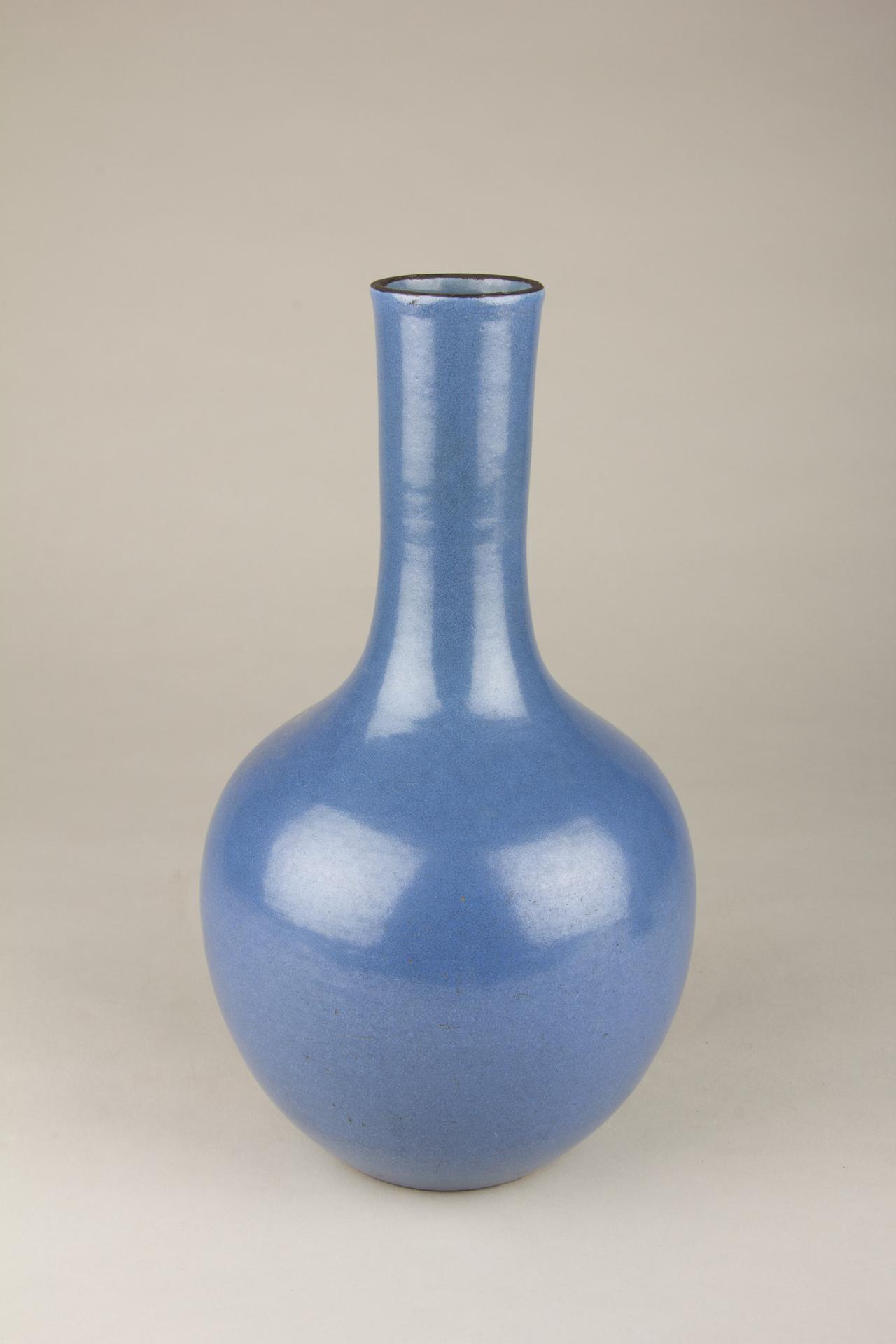
The photo doesn’t expose a fresh cross-section or show the bottle held against a light. We know its recorded material from the museum record, while the image lets us see its visible color and form. I find it useful to keep those two sorts of knowledge apart: what the eye can see, and what the object’s record tells us.
A white surface has the same limit. White glaze or a pale coating can conceal a different-colored body, and a glossy surface occurs on ceramics beyond porcelain. The account of how porcelain is made follows the work that joins body preparation, forming, glazing and firing.
Thin porcelain can pass light; thick porcelain may not
Thin porcelain can transmit light, but thickness is part of that statement. The Osaka museum’s description expressly refers to thinly potted porcelain. A heavy foot or thick wall may look opaque even when a thinner area of the same object would pass light. Decoration and a colored glaze can further change what the eye sees.
The familiar light test therefore has limits. Seeing light through a thin wall tells us about that area; failing to see it through a thick base doesn’t by itself settle which kind of ceramic we have in front of us. Neither result supplies the recipe, the firing history or an object’s age.
A front-lit photo offers even less evidence. A white patch can be light bouncing off glaze, rather than light passing through a wall. See the bright patches on the blue bottle’s shoulder and lower body: they aren’t proof that light passes through it. The image shows a surface effect, not a test of the body.
Other shortcuts need the same care. A white color doesn’t establish porcelain, and shine doesn’t establish a glassy phase within the body. A photo can’t measure how much water a body absorbs. These clues can prompt better questions without each becoming a rule that settles the matter alone.
Hard-paste, soft-paste and bone china name different traditions
Porcelain is used for more than a single historical recipe. Hard-paste and soft-paste labels help distinguish material traditions, especially in European collections. Bone china adds another familiar name. These terms need a little explanation before they can help with an object in front of us.
Hard-paste porcelain generally refers to high-fired porcelain associated with kaolin-bearing recipes. Soft-paste porcelain includes European attempts to obtain porcelain-like whiteness and translucency through different mixtures, some using glass frit, a prepared glass ingredient. The Museum of Russian Art explains that distinction in its porcelain exhibition. The labels describe material and firing traditions; “soft” isn’t an invitation to judge an object by pressing its surface.
Bone china contains bone ash in its ceramic recipe. The addition belongs to the body, rather than to a white glaze painted over it. A maker’s or museum’s material description is consequently more useful here than an impression of how white, delicate or expensive the finished piece looks.
Now look at the white vase below. Leaves and flowers rise in shallow relief across its rounded body, and their edges catch the light. The Met records this Jingdezhen ware as soft-paste porcelain with relief decoration. Its precise wording matters more than assuming that every Chinese white vase must fit a hard-paste label.
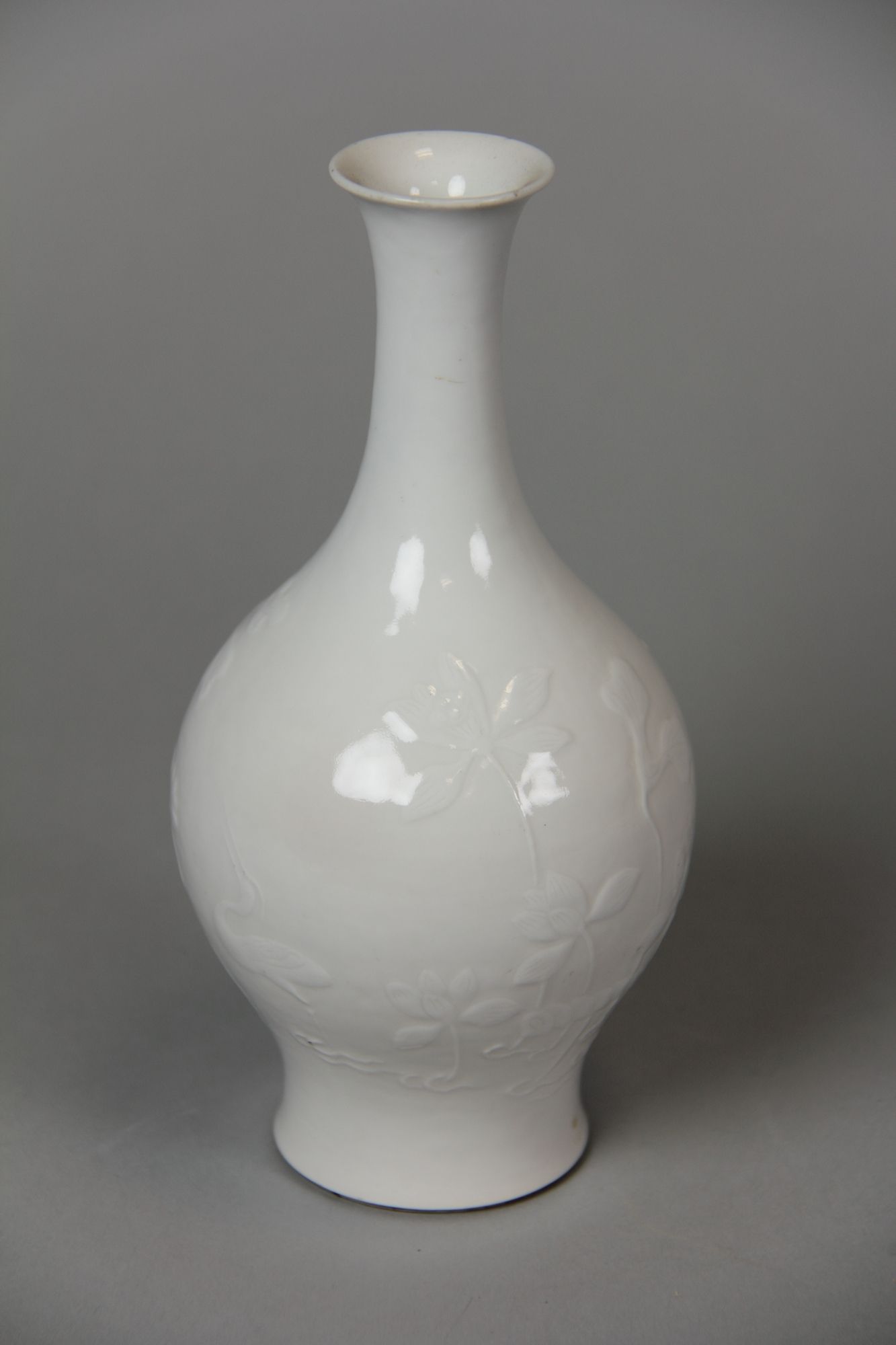
That record doesn’t establish that this Chinese soft-paste body shares the recipe of a European soft-paste object. The photo doesn’t disclose the recipe either. Keep the term beside the named object, where it can help without forcing unlike wares into the same formula.
Identifying porcelain means weighing the evidence
For an unfamiliar ceramic, ask what kind of evidence is available. A documented museum object, a maker’s current product and an uncaptioned photo offer different amounts of context. An attractive image may give very little help with the body, even when it shows the painted surface well.
An already exposed, unglazed area can offer a view of the body itself. Color and texture still need to be read alongside the object’s context. Looking at an underside is one thing; naming a kiln, date or recipe from it is a further claim. The photos here show neither an underside nor a broken edge, so those details remain unknown.
“Porcelain” and “authentic” also answer different questions. An object can be made of porcelain without being an antique or coming from the workshop claimed for it. Establishing the material doesn’t establish its maker, age or value. A porcelain label likewise doesn’t describe every aspect of its glaze, decoration or condition.
If the uncertainty is between dense ceramic categories, the separate porcelain and stoneware comparison addresses that pair. The earthenware, stoneware and porcelain guide sets the names beside one another. Those comparisons help with vocabulary; the evidence for a particular vessel still belongs beside that vessel.
Return to the blue bottle and the white relief vase. The surfaces invite different first descriptions, yet both records identify porcelain and then become more specific. Reading that way lets the material name do its proper job: explain the body, while leaving color, decoration and the limits of observation visible.