The China Dish guides
Huishan clay figures
Huishan clay figurines are painted clay sculptures from Wuxi in eastern China. The tradition brings together compact figures of good fortune, including the smiling child Da Afu (大阿福), and hand-modeled characters drawn from opera and folk stories. Their shaped bodies and painted surfaces work together to give each figure its expression.
Local clay, different ways of forming a body, familiar characters and the skills of individual artists all matter. Those connections lead from Huishan’s workshops to auspicious figures, a small clay stage and the work of painter Wang Nanxian.
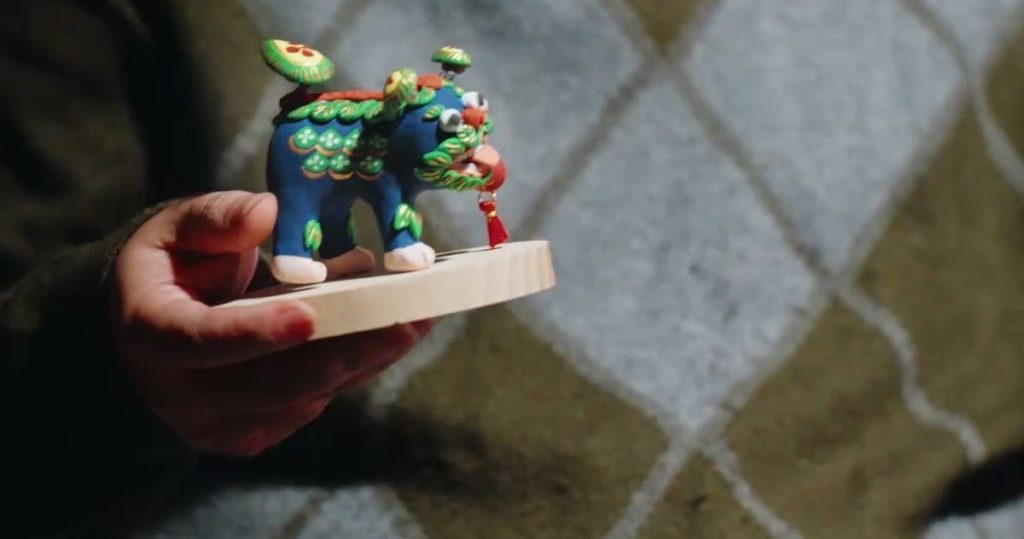
A few details to notice
Look a little closer.
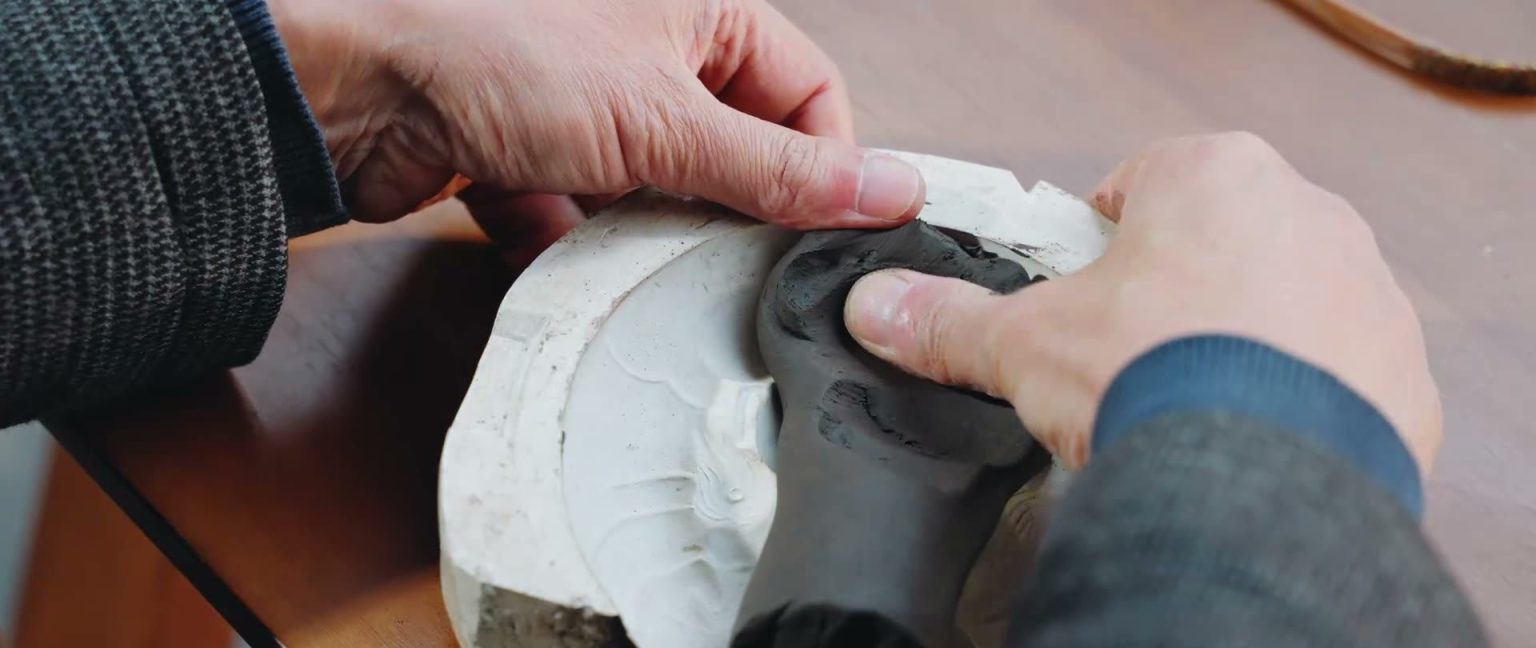
Read the object account and sources ↘
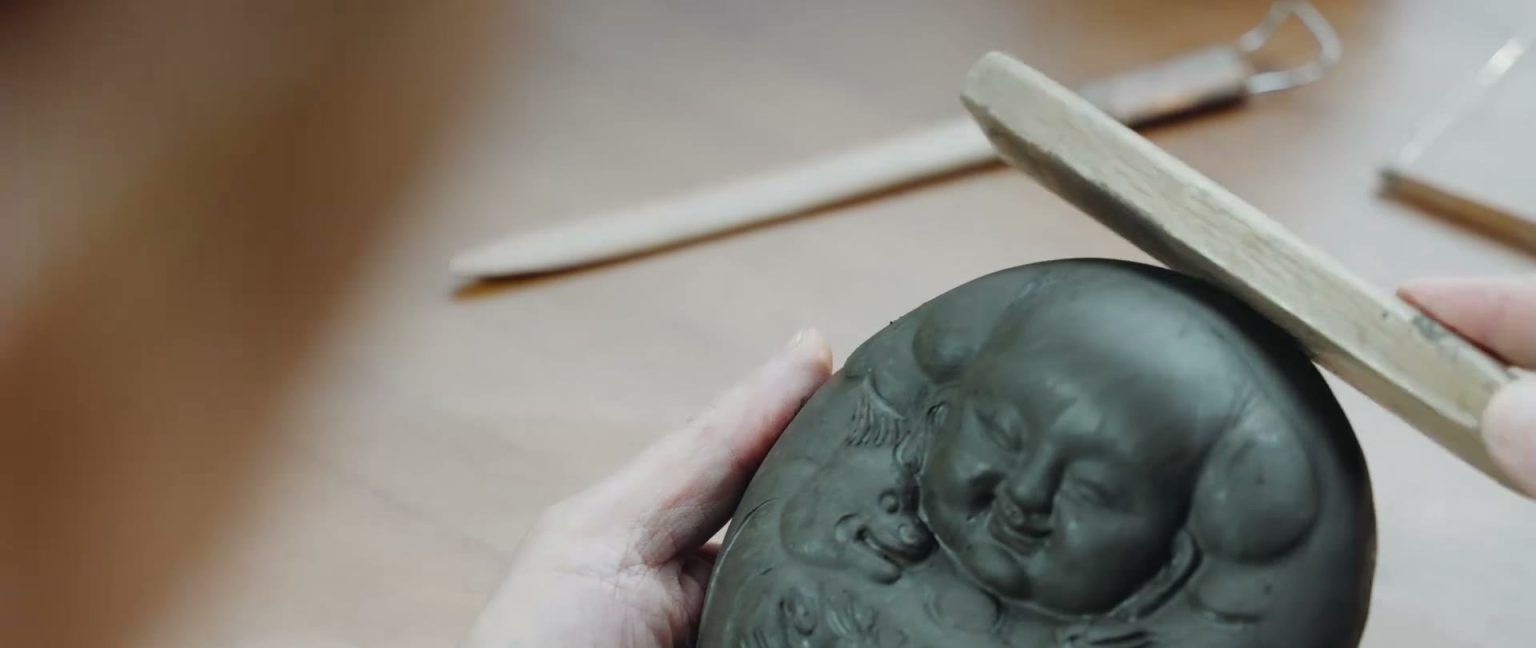
Read the object account and sources ↘
01 / A closer look
What is beneath the painted surface?
- Local clay
- Modeled figures
- Painted surfaces
Huishan figures use fine, pliable local dark clay. Traditional figures can harden by natural drying without kiln firing.
Huishan Clay: Local Material, Modeling and Painted Surfaces ↗
From the referenced guide section and its sources.
02 / A closer look
How do the two groups take shape?
Coarse figures are mold-made; fine figures are hand-modeled. The names describe two traditions of forming and subject matter.
Huishan Figurine Types: Coarse and Fine Clay Figures ↗
From the referenced guide section and its sources.
03 / A closer look
How does an opera figure tell its story?
Pose, costume and painted expression bring theatrical characters into small clay scenes.
Huishan Opera Figurines: Pose, Robes and Painted Faces ↗
From the referenced guide section and its sources.
A useful comparison
Two ways of shaping Huishan figures
| Tradition | Forming | Subjects |
|---|---|---|
| Coarse figures | Mold-made | Compact, auspicious subjects |
| Fine figures | Hand-modeled | Opera characters and stories |
01 / The guide
A painted clay tradition from Huishan, Wuxi
Huishan is a place before it is a style name. Production and sales gathered near Huishan Mountain in Wuxi, in Jiangsu province, giving the figures their familiar name. It’s a local name that gives me a place to begin asking about the figure’s makers and materials.
- Huishan Figurines: Regional Tradition and Wang Nanxian↗
From Huishan’s workshops to Wang Nanxian’s training.
Read the full section
China’s national intangible-heritage record dates the craft to the late Ming dynasty and describes the development of specialized workshops during the Qing. The chronology connects the figures with a community of people making and selling them. The local tradition grew through workshops where forming and painting could become practiced occupations.
The craft entered China’s first national intangible-cultural-heritage list in 2006. That designation concerns a living tradition of knowledge and skills. For an individual figure, its maker, material and object record still supply the more specific information: who shaped it, what it represents and how its surface was finished.
My instinct as a former museum guide is to keep those levels of description separate. A place name gives a useful starting point; a work’s title and its makers bring the explanation closer to the object. In Huishan, I’d look next at the two traditional groups of figures.
02 / The guide
Molded good-luck figures and hand-modeled clay theater
The two traditional groups are usually called coarse and fine figures in English. Coarse figures use molds to establish their basic forms. Fine figures take shape through hand modeling, often as characters from opera, mythology or folk life. Both belong to the painted clay tradition, and both give color an active part in the result.
- Huishan Figurine Types: Coarse and Fine Clay Figures↗
Compare forming methods, subjects and visible details.
Read the full section
The words can be misleading on their own. “Coarse” sounds like a judgment of workmanship, while “fine” sounds like a prize. Here they’re names for kinds of work, including the forming method and common subjects. A rounded good-luck figure asks for different choices from a scene built around a character’s gesture.
| What to notice | Coarse figures | Fine figures |
|---|---|---|
| Basic forming approach | A mold supplies the starting shape | The figure is modeled by hand |
| Common subjects | Good-fortune figures, children and auspicious folk images | Opera characters, myths and folk life |
| A useful visual question | How do the broad shape and color give the figure its presence? | How do pose, costume and expression establish a character? |
A mold can give several figures a shared outline, while painting changes how the face and clothing read. Hand modeling allows a pose to be worked around a particular character or encounter. The category gets me started, but I still want to look at the figure’s proportions, painted features and subject.
The closer comparison of coarse and fine Huishan figures follows those differences in a rounded blank and an opera pair. Understanding how a body is formed also raises a material question: how does the soft clay become a firm figure?
03 / The guide
Why traditional Huishan clay figures can dry without a kiln
Traditional Huishan black-clay figures can harden through natural drying without kiln firing. An archived heritage essay describes the local clay’s fine texture, ability to take a shape and strength after drying. This is an important feature of the traditional material and method: a completed painted figure can have a dried clay body.
- Huishan Clay: Local Material, Modeling and Painted Surfaces↗
Local dark clay, natural drying and painted surface layers.
Read the full section
Drying and firing describe different treatments of a clay object. In this Huishan method, the formed body gains the firmness described in the craft account as it dries. A ceramic tradition such as porcelain also involves kiln firing. Keeping the material and process together explains why the word “clay” alone tells us too little about a finished object.
The national heritage record specifies local dark earth for the hand-modeled figures. Its importance lies in how it can be shaped into a body, a face or a piece of clothing. Color is a separate part of the work: the dark material underneath and the bright finish on top answer different questions about the same figure.
The craft saying often translated as “three parts modeling, seven parts color” gives painting particular weight. I read it as an expression of that importance. The saying draws attention to how painted eyes, a mouth or a patch of clothing can change the character of an already modeled form.
A white ground, the pale coating beneath colored details, helps make the distinction visible. A light-colored face doesn’t tell me that the clay underneath is white. The guide to local clay and painted surfaces examines those surface states more closely, including the difference between a dark body, a white ground and the added features.
04 / The guide
Da Afu and the lotus-and-box figures of harmony
Color and shape come together in Da Afu, the plump child figure closely associated with Huishan. The broad head, smiling face and gathered body suit a compact image of good fortune. China’s heritage record places Da Afu among the subjects carrying wishes for blessings, protection and a comfortable life.
- Looking closely at Da Afu↗
Look closer at Da Afu, its held animal and local legends.
Read the full section
The figure offers an accessible entrance to the tradition because the whole shape makes an immediate impression. An individual object’s held animal, ornaments and painted details can then add a more particular meaning. Da Afu’s forms and local legends explain why the smiling child and its held animal need to be read together.
Another auspicious subject shows how much a held object can contribute. Two Immortals of Harmony, a 1985 work by Yu Xianglian and Wang Nanxian, pairs two smiling figures. One carries a lotus blossom, and the other holds a round box. The China Intangible Heritage Industry Alliance’s catalog connects the pair with wishes for marital harmony.
The catalog explains the objects through Chinese wordplay: the names of lotus and box echo words for harmony and accord. A title gives those accessories a specific role. I find that a useful order for reading this kind of work: identify the subject, check the object description, then return to the details that carry its wishes.
The lotus-and-box figures and Da Afu belong to different subjects, even though both can express good fortune. Keeping their names attached to their own works preserves those differences. A single cheerful expression is only the beginning of the explanation.
05 / The guide
Huishan clay theater beyond a single opera scene
Theatrical figures turn from auspicious images toward characters engaged in a story. A raised arm, a tilted head or the sweep of a robe can suggest an action between people. Painted faces and clothing help give those actions a particular character, bringing the work of shaping and coloring into close contact.
- Huishan Opera Figurines: Pose, Robes and Painted Faces↗
Pose, painted faces and a scene from the White Snake story.
Read the full section
Traditional opera is a major source for hand-modeled Huishan figures, alongside myths and folk customs. Knowing a work’s title matters here. A costume can suggest a theatrical role, but a named scene supplies the people and the encounter that the sculpture has chosen to hold still.
Giving the Pearl Tower as Gift, a 1992 work by Yu Xianglian and Wang Nanxian, provides a local example. The Heritage Alliance catalog connects it with the Wuxi opera The Pearl Tower and its characters Chen Cui’e and Fang Qing. Its description identifies a blue floral cloth parcel held by the woman and a red oil-paper umbrella held by the man.
Those objects belong within a named exchange between two characters. The example widens the idea of clay theater beyond a single familiar legend: local opera can supply a scene, its participants and the things that pass between them. The title makes that relationship more precise than a general label such as “opera figures.”
The separate study of Huishan opera figures follows pose, robes and painted faces into a scene from the Legend of the White Snake. Across these different subjects, the same small sculpture needs a convincing relationship between the modeled body and the color that completes its expression.
06 / The guide
Wang Nanxian and the meeting of shape and color
For Wang Nanxian, that relationship developed through training as well as familiarity with the local craft. Her national heritage biography records her entry into a clay-sculpture and painting training class in 1956. Drawing, sculpture, color and opera were among her subjects, giving the painted figure several kinds of study behind it.
- Huishan Figurines: Regional Tradition and Wang Nanxian↗
Wang’s teachers, study of older works and partnership with Yu Xianglian.
Read the full section
Wang went on to study painting techniques with Chen Yuxiu at the Huishan clay figurine factory. That choice brings the broad idea of “color” down to a practiced skill. There’s already a shape for the painter to work with, so the next choices concern the lines and color on that small face.
Lin Qi’s 2019 China Daily profile describes how Wang’s ability in coloring met Yu Xianglian’s strength in sculpting. The two had studied at the same training school and developed a long working partnership. Their joint names on works such as Two Immortals of Harmony connect the finished figures with two distinct contributions.
I find the shared authorship especially helpful when a painted surface first attracts all the attention. The face belongs to a modeled head, and the clothing has volume before its patterns are added. Painting works with those forms. Recognizing both contributions gives the collaboration a place in the explanation of the object itself.
Wang Nanxian’s training and working partnership follow that exchange through teachers, older works and shared practice. The longer account stays with her learning; the figures here bring us back to what that learning could make possible.
With a Huishan figure, I’d keep its title and makers’ names beside the first impression of its face. The name can lead to a household wish or a moment from opera. The shaped clay and painted marks then explain how that subject has been given a body small enough to examine closely.
Published · Updated