The China Dish journal / A closer look
Is porcelain microwave safe? Gold rims and safe use
Porcelain can be microwave safe, but the exact piece matters. Check the maker’s instructions, metallic decoration, repairs and heating limits.
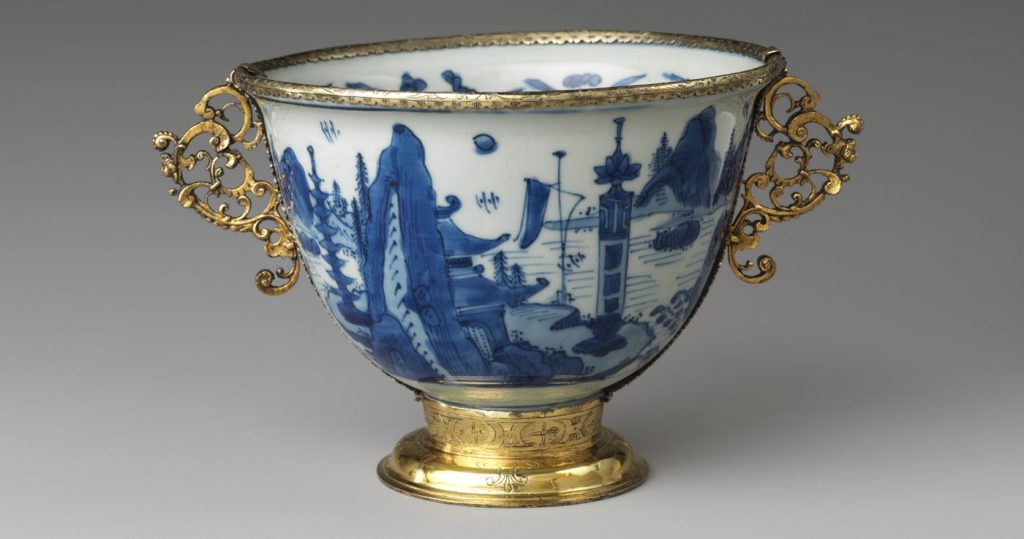
Yes, porcelain can be microwave safe, but the material name alone doesn’t tell you whether your cup or plate belongs in the microwave, because the finished piece may include metal trim or an old repair. Use dinnerware that its maker says is suitable, within its stated limits. A plain white surface isn’t enough to go on.
Check the porcelain piece, not just its material name
Start with the underside and the care guide for the exact item or pattern. A maker’s name can help you find that guide; a country of origin, museum number or painted backstamp doesn’t itself answer the microwave question.
The rules vary by maker. Rosenthal permits its porcelain without metal trim in the microwave, excludes gold- and platinum-rimmed series, and directs unsure owners to the product details. Lenox takes a firm line about the base mark: an item without a microwave-safe mark on the bottom should stay out.
Follow the rule for your piece rather than borrowing a rule from another brand. For a used cup with a worn mark, I’d choose another, clearly marked dish for reheating while seeking the maker’s advice.
A thin white wall may catch your eye, but it doesn’t tell you how the maker meant the cup to be used. Those features belong to a different question, explained in what porcelain is; the wider porcelain guide connects material, making and care.
| What you find | What it means for your decision |
|---|---|
| Maker confirms this item is microwave safe | Follow its limits and the microwave’s manual. |
| Only a dishwasher-safe or oven-safe claim | Microwave use still needs its own check. |
| Gold, platinum or other metallic trim | Check the exact product rules; Rosenthal and Wedgwood exclude metallic trim from their broad guidance. |
| No known maker or use guide | Choose a dish known to be microwave safe. |
| An old repair or unclear state | Don’t extend care advice for sound modern dinnerware to this object. |
Gold rims and metal fittings change the porcelain question
The trim matters even when most of the object is ceramic. Wedgwood’s care guide lists its stoneware and porcelain as microwave safe unless they have metallic trim. Rosenthal likewise excludes gold and platinum rims from its broad microwave guidance.
A fine gold line still counts: check the rim too.
The bird-painted cup and saucer below give that fine trim a form you can look at. The Metropolitan Museum of Art records their materials as soft-paste porcelain, enamels and gold. The image is black and white; the gold is known from the museum’s record.
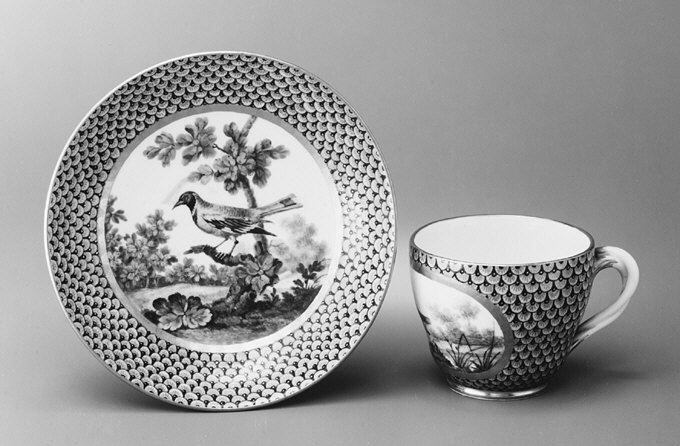
Color alone won’t settle it. A gold-colored detail needn’t be gold, and a black-and-white image can’t show its hue at all.
Read the maker’s guide or the object’s record before giving the bright edge a material name.
Added fittings deserve the same care. The Sèvres cup below is listed as hard-paste porcelain and silver gilt: its record names metal as well as the ceramic body.
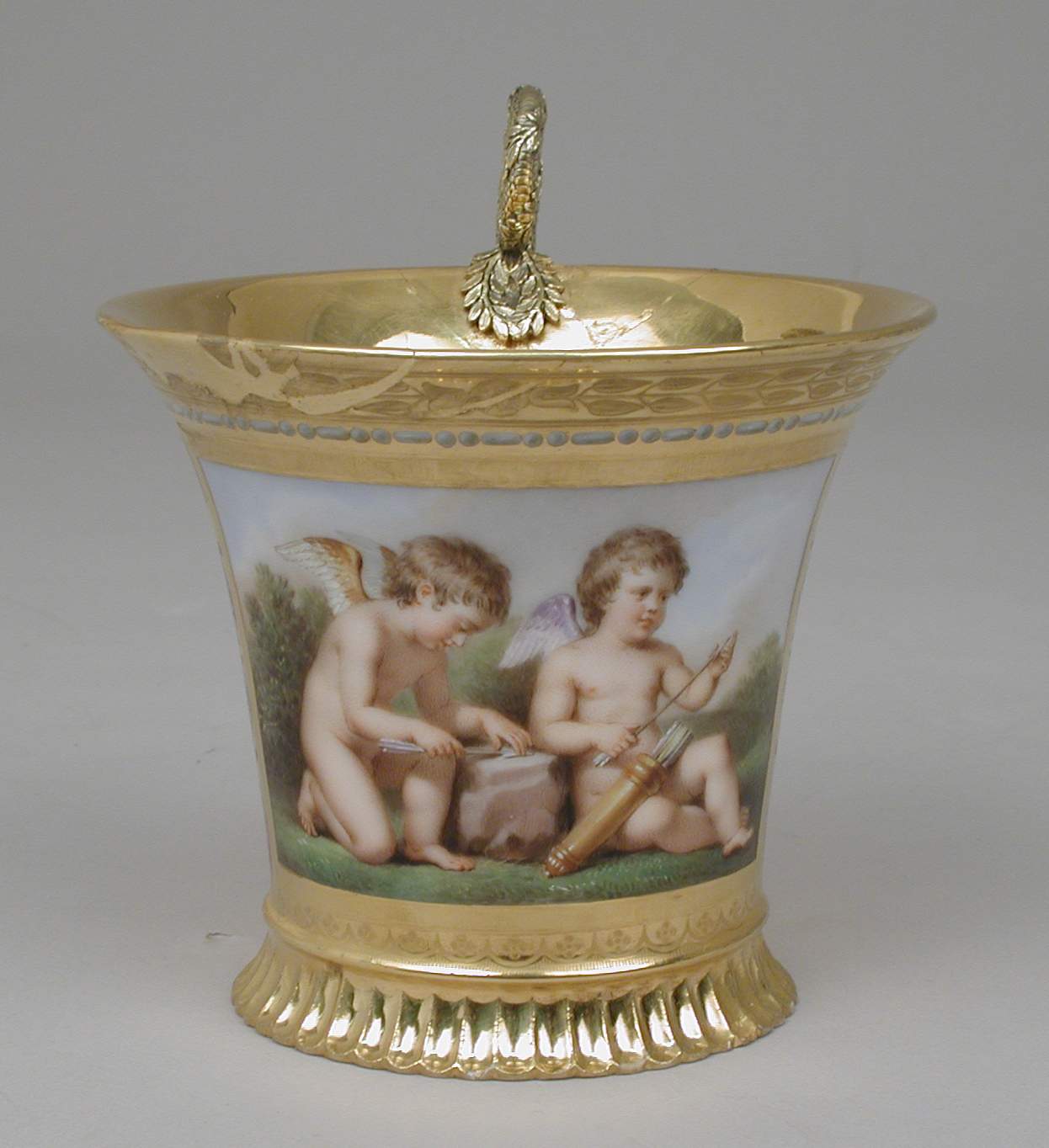
These old objects show painted surfaces and added parts; neither image proves that the piece can go in a microwave.
Taking off a fitting wouldn’t supply the missing maker’s approval either.
Microwave-safe porcelain can still become hot
Even microwave-safe dinnerware can be hot when you lift it. The FDA explains that a dish can take up heat from the food inside. Lenox tells users to handle its microwaved porcelain with an oven mitt or potholder and not to heat the item empty.
Safe microwave use still has limits. Wedgwood warns against sharp changes in heat in its stoneware and porcelain care guide. Rosenthal makes a similar point about thermal stress and says frozen porcelain should be fully thawed before reheating.
Those rules belong to the products they cover; they aren’t a promise that every porcelain bowl can go straight from a freezer to the microwave. Oven, dishwasher and microwave use each need their own care advice, and any lid or added part needs checking too, rather than gaining a right to be heated simply because it fits the bowl.
For a grill or hot-air oven mode, read both the appliance manual and the dish’s care guide for that mode.
The FDA’s microwave oven guidance advises using cookware made for microwave use and following the oven maker’s safety rules.
Antique, repaired and damaged porcelain needs a different decision
An old porcelain cup may have no usable modern heating guide, and a repair adds another material to assess. The Canadian Conservation Institute advises keeping once-broken ceramic and glass objects away from heat even after expert repair, and says they shouldn’t be used to serve food or drinks.
For cracked, chipped or unclear pieces, I wouldn’t use a heating test to settle the question. Choose sound, known microwave-safe dinnerware and ask the maker about a damaged modern item; seek an expert in the care of old objects for advice about a historic piece.
An earlier meal warmed without harm can’t tell you what an unknown repair contains or prove that the maker approves this use. A figure or display vessel also needs its own use advice; being porcelain doesn’t make it dinnerware.
For display pieces, cleaning porcelain figures addresses the separate task of checking their state before cleaning.
Porcelain or stoneware: choose by the use instructions
Switching material names doesn’t remove the need to check the product. Wedgwood groups stoneware and porcelain under the same microwave advice, with the same rule about metallic trim. Lenox asks for the microwave-safe marking for both materials.
Neither name alone chooses your reheating dish. Our porcelain and stoneware comparison covers the material question; for reheating, the useful evidence remains the exact item’s use guide.
When choosing a cup for the microwave, turn it over, name its maker and read the care guide.
Keep the painted or unknown piece for the role you can be sure of, and use known dinnerware for heating. For other questions about ceramic objects, the China Dish home page leads to the material guides.