The China Dish journal / A closer look
How to Clean Porcelain Figures Without Damaging Painted Details
Learn how to handle and dust porcelain figurines, when water is suitable, and where old glue, gilding or exposed biscuit call for a gentler approach.
To clean a porcelain figurine with loose dust, leave it standing on its base and use a clean, soft brush on sound, glazed surfaces. Look over the figure before you touch it. A crack across a wrist, a lifting edge of paint or a yellow line of old glue is reason to put the brush down. If dust is the only thing you wanted to remove, you can usually leave the water in the tap.
Where to put your hands before lifting a figure
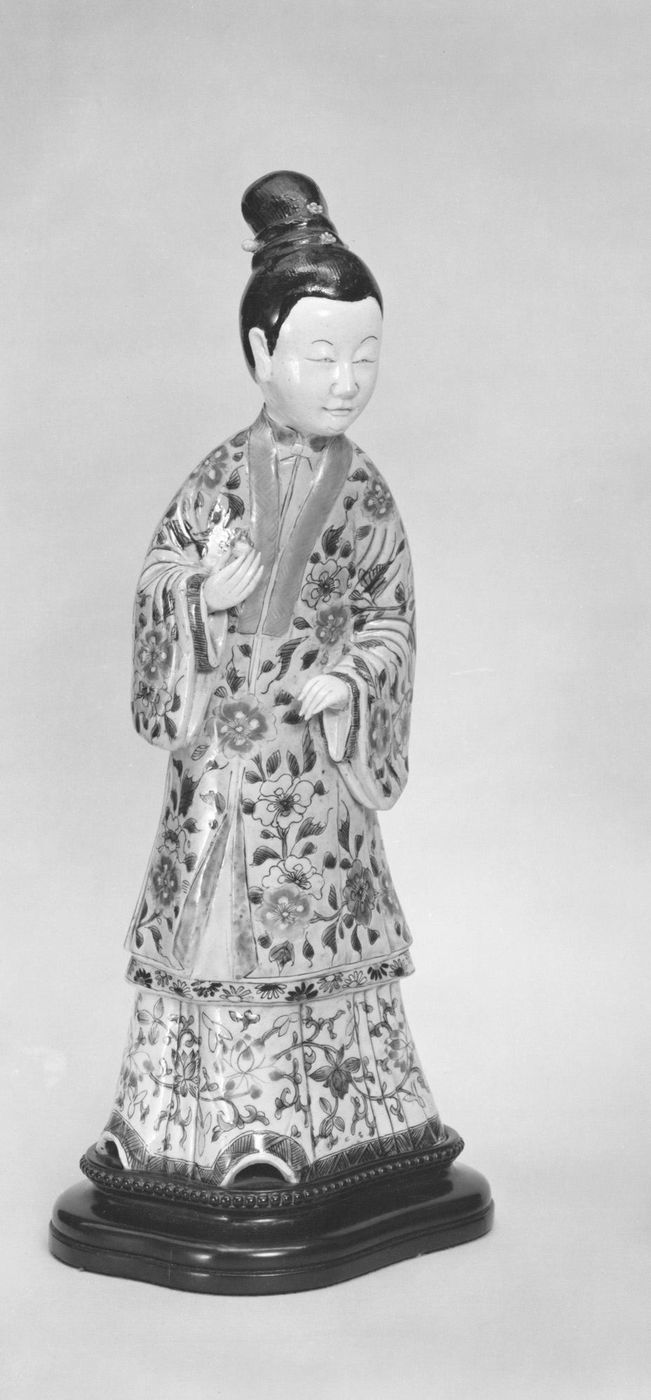
Look at the standing woman’s hands. One rests near her chest and the other extends past a wide cuff. A sleeve reaching across the figure could catch either hand. The broad base gives you somewhere to carry the weight without touching the modeled fingers.
If you need to move a figure, clear a level place to put it down first. Use clean, dry hands. Slide one hand underneath the base to carry the weight. With the other, steady a substantial part of the figure clear of fingers, flowers and projecting clothing. If you see a repaired join across the base or body, leave the figure where it is until a ceramics conservator can advise you on moving it.
Wellcome Library, London, has two views of another porcelain group. In the full view, a seated woman reaches past her skirt. The closer photograph shows small red sprigs on her shoulder. You can plan a path around a projecting hand from a photograph. To judge whether paint is lifting at an edge, you need to see the piece in front of you.


How to brush loose dust from folds and sleeves
Start somewhere easy to reach, such as an open stretch of sound glaze on the front of a robe. Rest the figure on its base while you work. Lightly sweep the loose dust toward the open edge. As you approach a cuff or a hand, lift the brush and look at how much room you have. Leave dust in a narrow gap if getting at it would mean pushing the bristles between two fingers. A cloth can snag just where a small projecting detail is hardest to support.
The floral robe on the standing woman above looks like one continuous pattern. The Metropolitan Museum of Art records colored enamels on both glaze and biscuit, the term for porcelain left unglazed. The black-and-white photograph gives you no reliable way to tell which finish lies beneath a particular flower. For more on the distinction between body and glaze, see China Dish’s guide to porcelain.
When the dust lifts and a brown mark remains, finish dusting. More pressure changes what you are doing. If a flake of color comes away or a detail shifts, stop immediately. Tell a conservator exactly where it happened. A photograph taken with the piece still standing can show the spot without another round of handling.
When can you use water on a porcelain figurine?
For a modern figure in good condition, find the maker’s instructions for its finish. Lladró, for example, allows lukewarm water and a little neutral soap on its nonmetallic porcelain sculptures, including its matte pieces. For sculptures with gold, silver or platinum luster, the company recommends routine dusting with a very soft cloth. A gilt edge on a cuff can therefore change the care instructions for an otherwise familiar-looking figure.
For an older glazed figure, the Canadian Conservation Institute’s museum guidance sets a higher bar before washing. The glaze must be sound, and any paint, gilding or printed ornament must be firmly attached and known to withstand water. A glossy surface alone cannot tell you that. If you have an unidentified decorated figure or one with a possible repair, leave it dry and ask for advice.
Where those conditions are established, the institute’s museum method uses plain water, lukewarm or cooler, and slow air-drying without added heat. Its household care guide permits a drop of dish soap for robust items and suggests cushioning the basin with a towel or soft mat. Keep fine porcelain figures out of the dishwasher.
What if the white porcelain is unglazed?
Look at the white folds around the seated woman in Nature, a group made at Sèvres. The Met records the material as unglazed hard-paste porcelain. That soft-looking surface is part of the finished sculpture. Trying to polish a dull patch until it shines would start with a mistaken idea of how the object was meant to look.
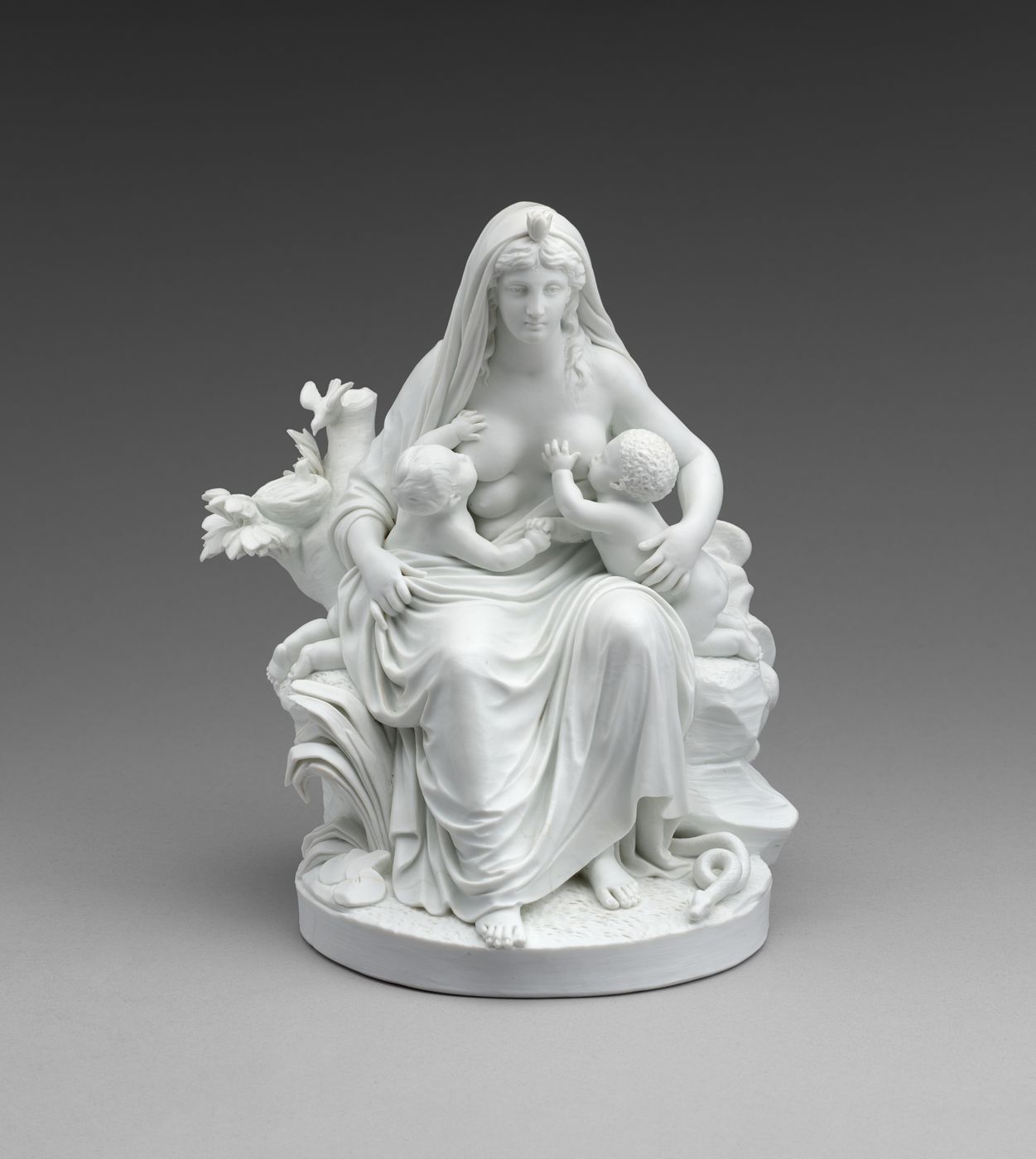
If you inherit a matte white figure and have no care instructions for it, leave the surface as you found it and consult a conservator before cleaning. The maker’s name or paperwork can help distinguish a modern matte finish with its own care instructions from an older biscuit surface. If the terms on a label are unfamiliar, the sequence of forming, glazing and firing is explained in How Porcelain Is Made.
What to do about yellow glue or a stubborn stain
A yellow line around a wrist deserves a closer look before you try to clean it. If it is brittle adhesive from an old repair, the hand may be resting in position even though the bond has weakened. Leave the joint alone. Skip any attempt to wiggle it, scrape away the glue or wash the line clean. When you contact a conservator, say where the line runs and whether the piece has already moved.
A stain can often stay where it is. Bleach or an acid used to remove it can harm the surrounding glaze. If the mark troubles you, take one photograph of the whole figure and another of the mark, and describe what you have already tried. Once the figure is back on display, leave enough space around that outstretched hand to clean the shelf without having to lift the piece again.