The China Dish guides
Regional Chinese pottery
Chinese pottery includes painted prehistoric jars, thin black cups, glazed tomb figures and vessels made in regional workshops. Their clay, shapes and uses belong to different traditions. A green-glazed horse made for a Han tomb asks different questions from a pot made for cooking, even though both can appear under the same broad heading.
The route here runs from early vessels to Han and Tang burial pottery, then to the clay bodies and surfaces of three regional traditions. Those objects give the dates and place names something to attach to. By the end, a smooth surface or a familiar vessel shape should raise a more precise question about how the piece was made and used.
A few details to notice
Look a little closer.
Read the object account and sources ↘
Read the object account and sources ↘
01 / A closer look
How does the finish differ in Rongchang?
- Regional materials
- Vessel shapes
- Surface work
Rongchang’s nijing huo is unglazed; youzi huo is glazed. Unglazed pieces can still carry carved patterns.
Two Rongchang Pottery Types: Unglazed and Glazed Ware ↗
From the referenced guide section and its sources.
02 / A closer look
How does a Jianshui design enter the clay?
A design is cut into the unfired body, then filled with colored clay. The pattern becomes part of the vessel’s surface.
A surface made by carving and filling ↗
From the referenced guide section and its sources.
03 / A closer look
What goes into Yingjing pottery?
The local body includes clay and ground coal cinders. Preparation, grain size and firing connect the materials to the finished pot.
Yingjing Pottery Materials: Clay Body and Coal Cinders ↗
From the referenced guide section and its sources.
Making
Follow each local making sequence
Regional sequences differ. In Jianshui, polishing follows firing; in Yingjing, hot vessels undergo another surface treatment after leaving the kiln.
Chinese Pottery Making: Regional Clay and Craft Traditions ↗
- 01Prepare
Local clay and body materials
- 02Shape
Form the vessel
- 03Fire
Follow the regional method
- 04Finish
Jianshui polishing or Yingjing surface treatment
01 / The guide
Chinese pottery, earthenware and porcelain: the scope of this guide
“Pottery” has a broad reach in everyday English. Ceramic descriptions can be more specific, distinguishing earthenware, stoneware and porcelain. Those names concern the fired material. A term such as “tomb pottery” adds another kind of information: the setting for which an object was made.
- Chinese Pottery Making: Regional Clay and Craft Traditions↗
Explore the regional craft branch of this guide.
Read the full section
Here, the emphasis falls on earthenware and regional pottery traditions, with porcelain covered in its own porcelain guide. The histories overlap. The Museum of Oriental Ceramics, Osaka, describes painted earthenware, glazed wares and early porcelain within the same account of Chinese ceramics, including their production during overlapping periods.
I don’t read the material name as the whole story. A museum label might identify an earthenware body, a green glaze and a burial model on the same piece. Reading those details together tells me more than the color could: what the object is made from, what covers it and where it was intended to go.
02 / The guide
Painted Neolithic jars and Longshan black pottery
Early Chinese pottery already offers several ways to think about a vessel: through its outline, its painted surface and the archaeological culture to which it belongs. The National Museum of China’s Ancient China exhibition names objects from several Neolithic cultures. Its labels let us begin with particular pieces instead of treating “ancient pottery” as one style.
Read the full section
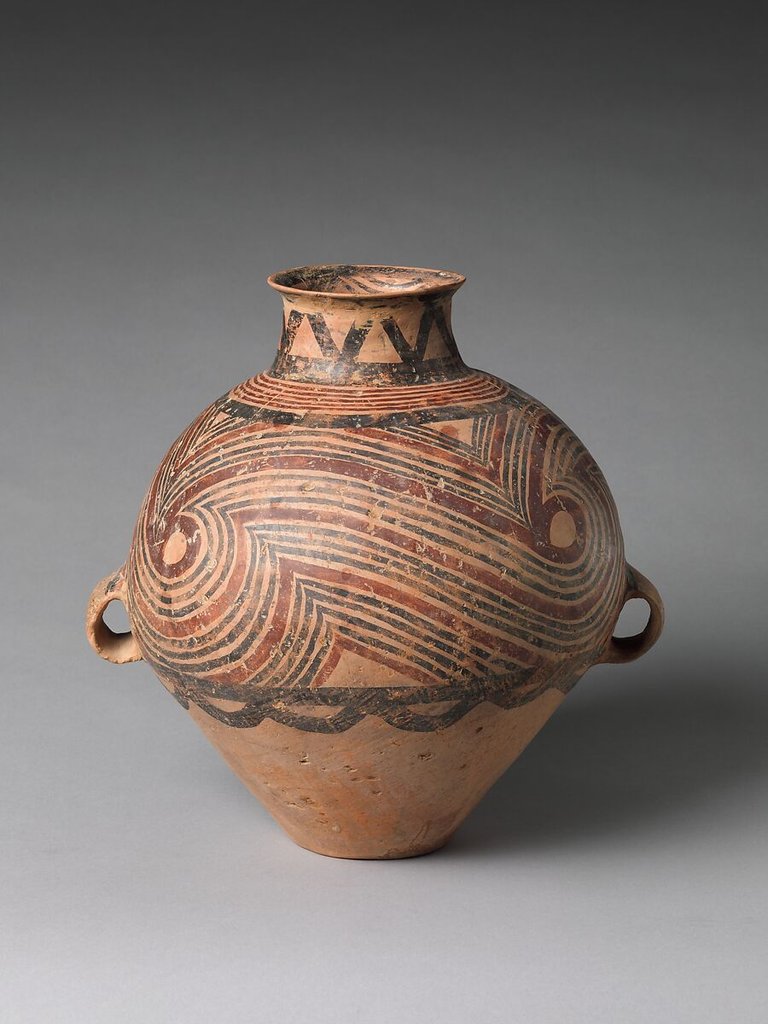
Three examples make that range clear. The museum identifies a painted jar with a spiral design as Majiayao culture, a pointed-bottom bottle as Yangshao culture and an eggshell-thin black stem cup as Longshan culture. The broad dates below follow the museum’s labels.
| Object named in the exhibition | Cultural attribution | Approximate dates on the label |
|---|---|---|
| Painted pottery jar with spiral design | Majiayao | 3200–2000 BCE |
| Pottery bottle with pointed bottom | Yangshao | 5000–3000 BCE |
| Eggshell-thin black pottery stem cup | Longshan | 2500–2000 BCE |
The ranges overlap, so the table works as a set of labeled examples rather than three consecutive chapters. Majiayao and Yangshao remain distinct names here. Keeping the attribution beside the object also gives the spiral design and pointed base their own contexts, instead of making both stand for a single painted-pottery tradition.
A stem lifts the bowl. That’s the shape I picture when I read the cup’s name, alongside the thin body and black color in its description. I’d keep the whole label in view: “stem cup” names the form, while “Longshan” supplies its recorded cultural attribution.
Useful vessels appear elsewhere in the same exhibition. The museum names pottery cooking vessels, food containers and steamers from several cultures. These functional descriptions widen the picture beyond decorated display pieces. They also show why a vessel’s name deserves attention: a cooking vessel, a bottle and a cup invite different questions, even before their decoration is considered.
03 / The guide
Han and Tang pottery made for tombs
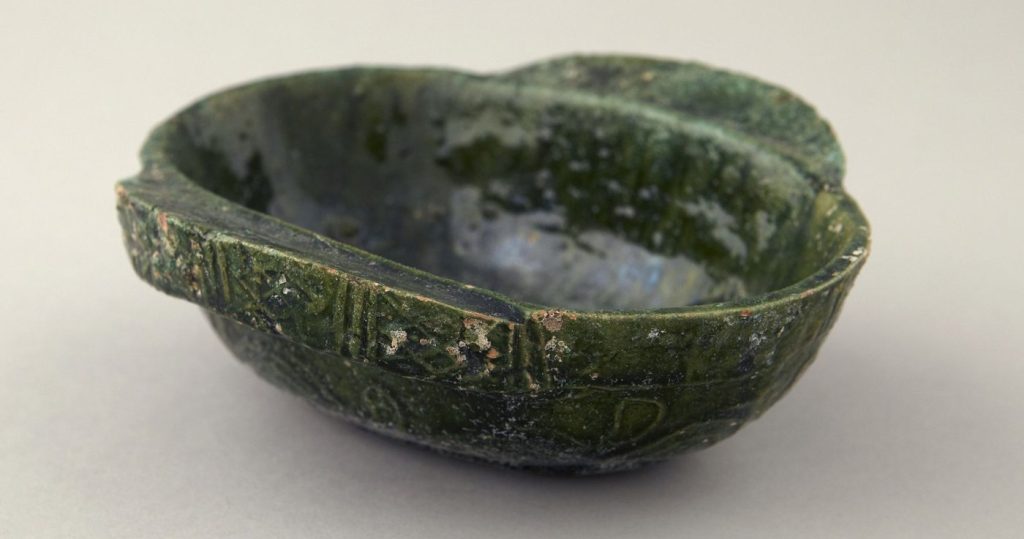
An object’s setting can change the meaning of a familiar form. In Han burial pottery, horses, people, buildings and utensils could become models placed with the dead. A small stove with cooking vessels represents equipment from daily life, while the model itself belongs to a burial setting.
Read the full section
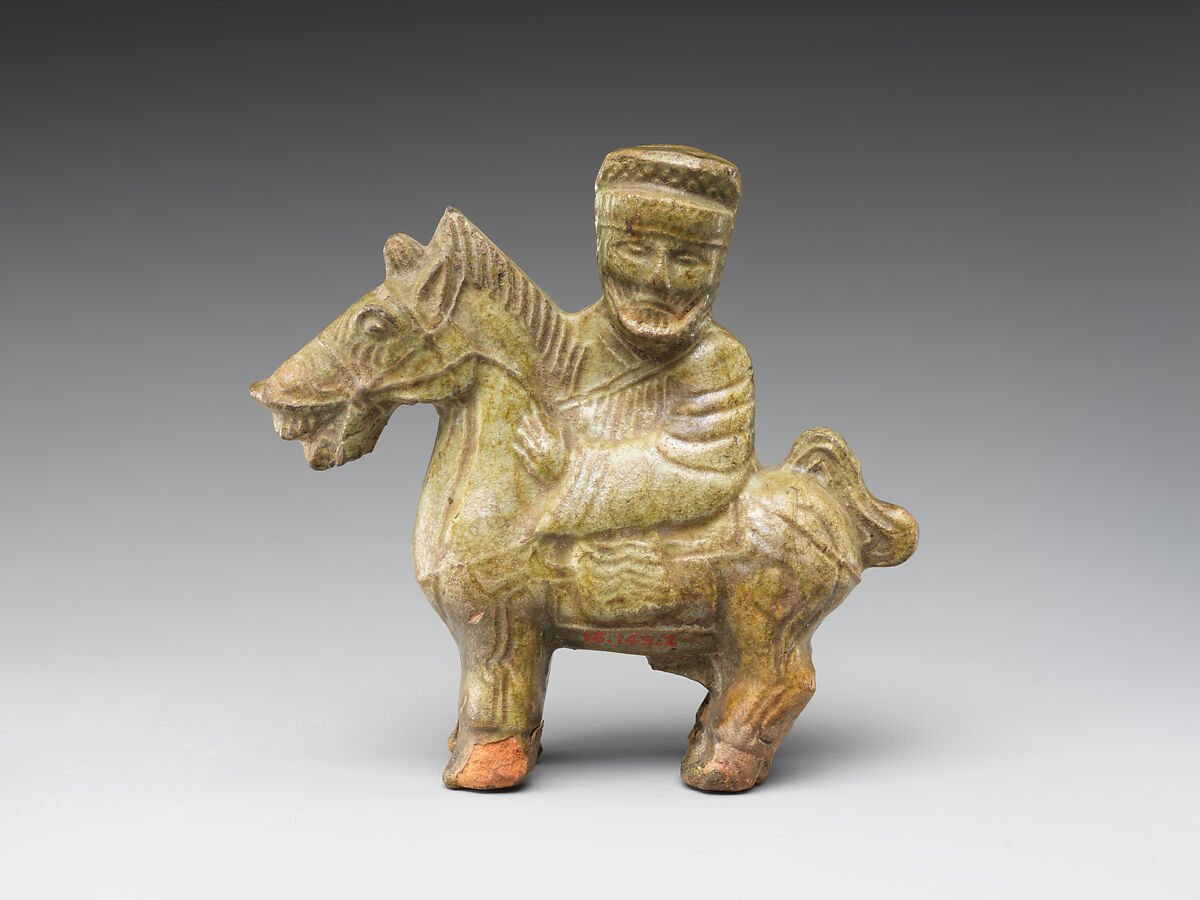
The Metropolitan Museum of Art’s Horse and rider, object 16.149.2, gives that distinction a specific example. Dated to the first or second century CE, it is earthenware with a green glaze. The museum identifies the rider as a Han cavalry soldier and explains that models of this kind formed part of an escort intended to accompany and protect the deceased.
The Ashmolean’s burial display includes Han models of stoves with vessels, as well as buildings, people and domestic animals. I’d look at the modeled utensils as a connection with life outside the tomb. The stove gives that connection a familiar shape; its role as a burial object adds the setting in which to read it.
Surface color supplies only part of this history. The Ashmolean describes both low-fired glazed models and high-fired green-glazed burial wares from the Yue kilns in eastern China. The shared burial setting therefore accommodated differences in material and firing. A green surface needs its object record alongside it to establish where and how the piece was made.
Burial pottery continued into the Tang dynasty, dated 618–907 CE. The Ashmolean explains that models could be displayed before entering the tomb, with their sizes and types related to the deceased person’s status. Its examples include multicolored glazed wares and unglazed pieces painted with pigments. The surface was part of how these objects appeared, while their burial context explains what they were made to do.
04 / The guide
Rongchang, Jianshui and Yingjing: clay bodies and finished surfaces
Glaze changes what meets the eye. It’s a coating on the ceramic body, the fired clay structure of an object. Carving, filling and polishing can give a surface still other histories, so I’d look beyond the gloss to understand how a regional pot acquired its finish.
- Two Rongchang Pottery Types: Unglazed and Glazed Ware↗
Rongchang’s glazed and unglazed surface traditions.
- Rongchang Clay: Red and White Bodies, Marbling and Glaze↗
Red and white clay, marbling and the surface above the body.
- A surface made by carving and filling↗
Jianshui’s carved and filled clay, followed by an unglazed finish.
- Yingjing Pottery Materials: Clay Body and Coal Cinders↗
Yingjing’s clay-and-cinder body and its preparation.
Read the full section
Rongchang, around Anfu in Chongqing, has traditions of both glazed and unglazed ware. Its national heritage description identifies local red and white clay materials, with fired bodies described as ocher-red or ivory-white. The choice of body and the choice of surface can therefore be discussed separately. Rongchang’s glazed and unglazed ware gives the finish its own closer treatment.
I’d begin with the clay when a description identifies a red or white body, then look at what covers or changes its face. A pale area could belong to the body or to decoration, depending on the recorded making technique. The detailed account of Rongchang clay follows that material question through red and white clays and a maker’s work with them.
Jianshui pottery, from southern Yunnan, offers a different relationship between decoration and the vessel wall. A design is carved into the unfired body and filled with colored clay before firing. Grinding and polishing follow without an applied glaze. The smooth finish brings work within the body back to the surface; Jianshui carving and filling examines that meeting in detail.
Yingjing pottery comes from Sichuan and uses clay mixed with coal cinders. Its traditional finishing sequence can continue while the fired vessel is still hot, with transfer to a separate pit for a burning surface treatment. The cinders in the body and the later finishing work occupy different stages. Yingjing pottery materials looks more closely at what enters the clay mixture.
When I look at a polished pot, I want to know where the shine comes from. A glazed Rongchang vessel has a coating to account for; a Jianshui body has been worked smooth after firing. Those are different histories to follow across an apparently even surface. Knowing the recorded tradition gives my eye something firmer to work with than gloss alone.
05 / The guide
Why making Chinese pottery takes local judgment
The regional differences also depend on decisions made while the clay is still changing. Preparing material, forming a vessel, drying it and firing it are broad tasks; a potter has to judge when a particular body is ready to move between them. The interval between tasks can matter as much as their names.
- Chinese Pottery Making: Regional Clay and Craft Traditions↗
Follow the separate Rongchang, Jianshui and Yingjing sequences.
Read the full section
In a February 4, 2020 report, journalist Liu Yuguo described Yingjing potter Zeng Qinghong’s attention to weather and material condition. The account connects waiting with observation: the material has to reach a state in which it can be shaped. Zeng’s work gives that pause a place within making, alongside the more visible tasks at the wheel and kiln.
Drying takes judgment. That’s the part of Zeng’s account I keep returning to: a list puts preparation beside forming in a few words, while the potter must watch the material between them. The clay has to be ready. Keeping that pause in the explanation helps me follow the sequence as work with a changing material.
The national heritage accounts show further differences in how surface work fits around firing. Rongchang includes glazed and unglazed branches; Jianshui is polished after firing; Yingjing has a hot finishing stage. The regional pottery-making sequences follow those separate paths from prepared clay to finished vessels.
My years in Jingdezhen and background as a museum guide make me interested in the work a finished surface can conceal. A museum label fixes a name and a date range beside an object. A potter’s account adds decisions made while its material was workable. Between the two, the jar, cup or modeled stove becomes easier to read: a particular shape, made from a particular body, for a particular setting.
Published · Updated