The China Dish journal / A closer look
How Is Porcelain Made? Shaping, Glazing and Firing
Follow porcelain from clay to kiln and see how makers form a hollow teapot, join its parts, glaze the surface and fire the finished pot.
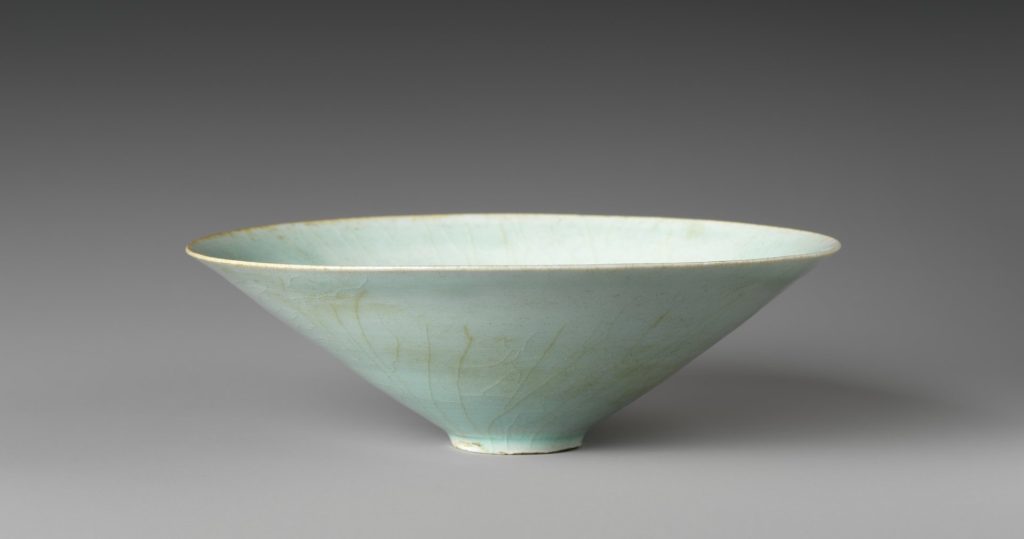
Porcelain is made by shaping a fine clay body, drying it, and firing it until it becomes hard and dense. Many makers first fire the bare clay, apply glaze while the surface can still absorb water, then fire it again. A cast teapot and a pressed plate can go through the same kiln stages. The difference starts on the workbench, where the potter needs a hollow wall for the teapot and a broad, even surface for the plate.
Preparing the clay for the shape it needs to take
A maker’s first choice concerns the shape as much as the ingredients. Clay for a round plate needs to hold its form as a tool passes over it. Clay for a hollow cast teapot needs to flow into the curves of a mold. Both can yield white porcelain, but they behave quite differently on the workbench.
Rosenthal, a German manufacturer, grinds kaolin, feldspar and quartz with water for its hard-paste porcelain. It removes iron particles that could leave brown marks after firing and screens out other impurities. The pale surface of a finished plate owes something to this early work, long before anyone coats it with glaze. Its color is one of several features that help identify porcelain.
How a teapot gets its hollow center
For a cast teapot, the maker pours liquid clay, called slip, into a plaster mold. The plaster draws water from the slip touching it. A layer of clay gradually collects against the inside of the mold while the slip in the middle stays fluid. Pour that liquid back out and a wall of clay remains, enclosing the space that will eventually hold tea. A maker can adjust that wall by changing how long the slip sits in the mold.
At Rosenthal a teapot emerges from the mold without its handle or spout, so a worker has to position each of those separately cast parts on the body and join it with slip. The seams need attention too. Once the mold sections come away, they leave lines that workers smooth with blades and sponges.
A dinner plate offers two other ways to arrive at a familiar shape. The Portuguese manufacturer Porcel uses a roller to shape round plates and saucers from pliable clay. Rosenthal describes another method in which a press squeezes fine, spray-dried granules between tools that form the face and back of a plate. In that process the rim still needs smoothing after pressing.
What a maker can change before porcelain dries
In her account for Ceramics Monthly, artist Sandra Torres describes casting the parts of a composite vessel in separate molds at the same time, aiming for matching wall thicknesses. She takes them out while the clay still bends, cuts the pieces to fit, and attaches them with slip. Changing the angle of a cut lets her give two vessels different profiles even when their parts come from the same molds. She also sponges individual rims into a gentle wave.
The timing matters because Torres works with thin walls and a slip that becomes brittle as it dries. She reports that handling her pieces when they are completely dry accounts for most of her losses at this stage. A rim she can reshape while it is damp may break in her hands later. That short working interval helps explain why two cups can look like members of a set and still have quite different mouths. Sandra Torres, “Opportunities in Slip Casting”
Why the first firing leaves the surface absorbent
Drying takes water out of the shaped clay. The first firing, often called bisque or biscuit firing, gives a dry piece enough strength for the next round of handling. MEISSEN describes firing its dry blanks to about 1,740°F (950°C). At that point a worker can lift the piece and dip it into a glaze bath. Water from the bath enters the pores and leaves the glaze solids on the surface.
| Stage | What has changed | What the maker can do next |
|---|---|---|
| Damp, formed clay | A wall, rim and hollow interior have taken shape. | Trim, join or alter parts while the clay still yields. |
| Bisque-fired blank | The body is firmer and can absorb water. | Apply underglaze decoration or coat the surface with glaze. |
| Glaze-fired porcelain | The body has become dense and the glaze has fused to it. | Select the finished white ware or add decoration that needs another firing. |
Where the glaze goes, and what the hot kiln changes
The shape of a piece helps determine how a worker gets glaze onto it. MEISSEN dips tableware and often sprays its detailed figures. The coating still has to melt in the kiln to become the finished glaze. The guide to ceramic glaze explains how that fired layer gets its color and finish.
Glaze also affects how a piece can rest during firing. At Rosenthal, workers wipe glaze off the feet of plates so the molten coating will not stick to the support beneath. To locate that part of a dish, look at the narrow raised ring on the Korean example below. Turn the dish upright in your mind and the ring becomes the part that meets the table. The photograph records the finished foot. The Met gives no manufacturing explanation for the tan patch inside it.
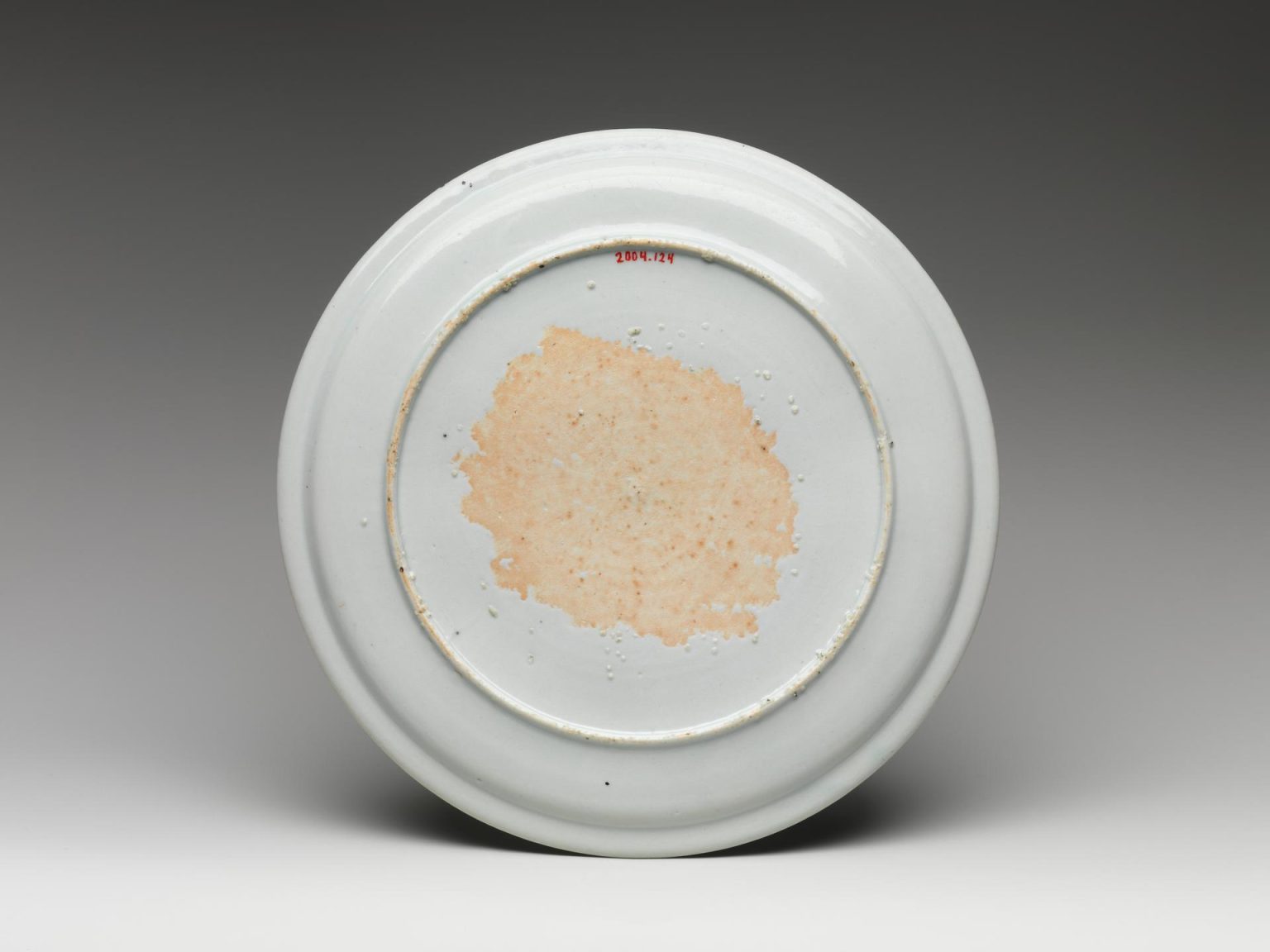
During MEISSEN’s glaze firing, temperatures reach up to about 2,550°F (1,400°C). The body shrinks as it becomes dense, and the glaze fuses to its surface. Shrinkage and sagging both matter to the model maker at Rosenthal, who has to make the plaster model larger than the finished pot and set its spout at a steeper angle to allow for the way hot porcelain bends under its own weight.
How decoration changes the firing sequence
A plain glazed piece can be complete after the glaze firing. On a painted piece, the position of the color affects when the painter can work. At MEISSEN, painters can decorate a porous blank before glazing, leaving the design under the fired glaze. At Porcel, a selection of already-fired white ware goes on to decorators who apply transfers or brush on color and metallic accents. These pieces go back to the kiln, with further firings depending on the design.
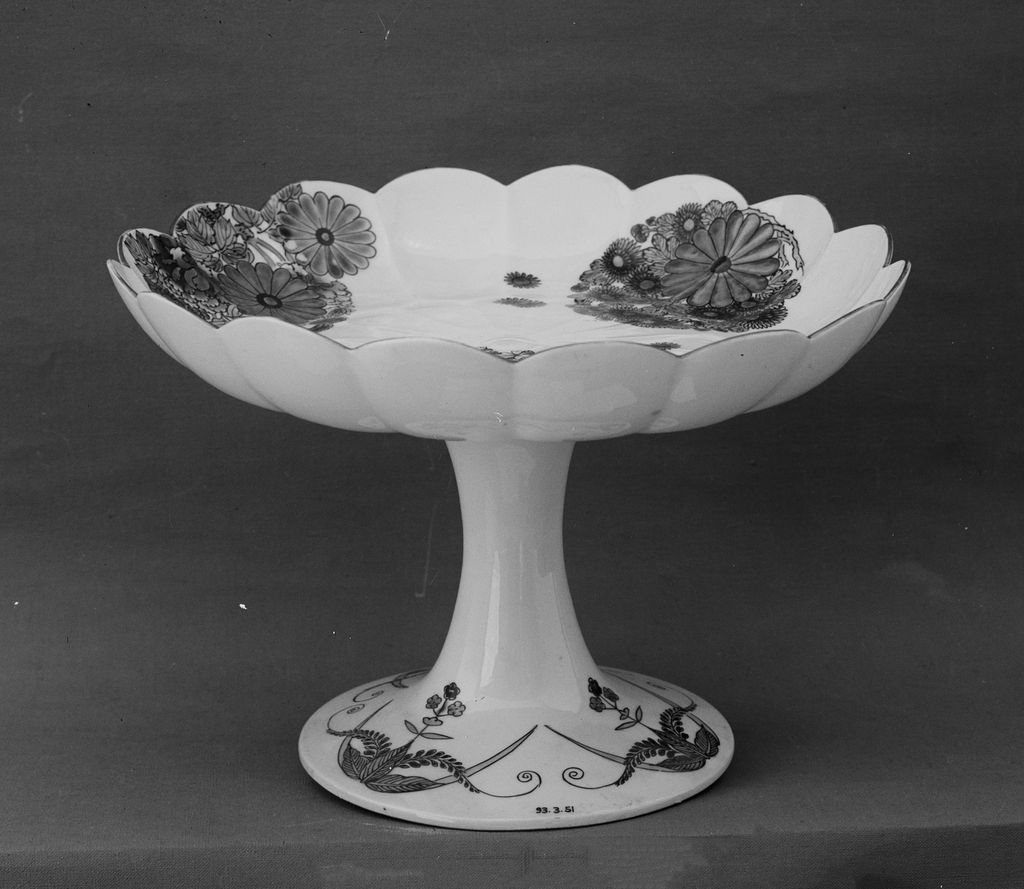
Look at how the flowers fill the inside curve of this dish, while another design wraps around its foot. The photograph shows where the decoration sits on the form. The museum record identifies the enamels, but gives no count of the firings. For documented pieces that show how a painter can build up more than one layer of color, see underglaze and overglaze decoration.
The next time you pick up a porcelain cup, follow its outline from rim to handle to foot. The rim invites a question about how the wall was shaped. The handle brings you to the join, and the foot shows where the maker had to consider how the cup would stand through a firing. Even a plain white cup gives you several places to start. More about porcelain