The China Dish guides
Porcelain: Material, Making, Types and Everyday Care
Porcelain is a fired ceramic with a dense, usually white body that can transmit light when thin. The material supports very different objects, from a plain cup to a painted bowl or a carefully joined ewer. The body, shape and surface explain how the objects differ; each piece’s stated purpose and condition guide its use and care.
Porcelain stalls, workshops and kiln districts were familiar parts of my teenage years in Jingdezhen. I find the material easier to explain when its name stays close to an object: what gives the vessel its shape, what covers its surface, and what the finished piece is meant to do.
A few details to notice
Look a little closer.
Read the object account and sources ↘
Read the object account and sources ↘
01 / A closer look
Earthenware
- Porous body
- Glazed surface
- Varied colors
The fired body retains spaces that can take up liquid. A glaze may seal its surface while the body remains earthenware.
Where earthenware differs from stoneware ↗
From the referenced guide section and its sources.
02 / A closer look
Stoneware
Its ingredients fuse in firing to make a dense body. Stoneware generally remains opaque, while glaze color describes the surface.
Porcelain and stoneware: bodies before appearances ↗
From the referenced guide section and its sources.
03 / A closer look
Porcelain
A usually pale, dense body can transmit light when thin. The body, glaze and decoration describe different parts of the object.
Porcelain in the ceramic family ↗
From the referenced guide section and its sources.
Making
From a workable body to a finished object
Body preparation, shaping, drying and firing connect the material with its finished form. Glaze and decoration add their own sequences.
- 01Prepare the body
Blend and prepare the material so it can be shaped.
- 02Shape and join
A wheel or mold forms the vessel; handles and other parts may need joining.
- 03Dry with care
Thickness and uneven drying affect how the formed body survives this stage.
- 04Coordinate the surface and firing
Glaze, underglaze painting and overglaze colors follow different firing sequences.
A useful comparison
Earthenware, stoneware and porcelain at a glance
| Material | Fired body | How glaze fits |
|---|---|---|
| Earthenware | Porous; body colors range from pale to red or brown | A glazed surface can cover a body that remains porous |
| Stoneware | Dense and fused; usually opaque | Both glazed and unglazed wares exist |
| Porcelain | Usually pale, dense and fine; thin sections can transmit light | A clear or colored glaze can accompany painting or other decoration |
Hands at work
Shared ceramic techniques
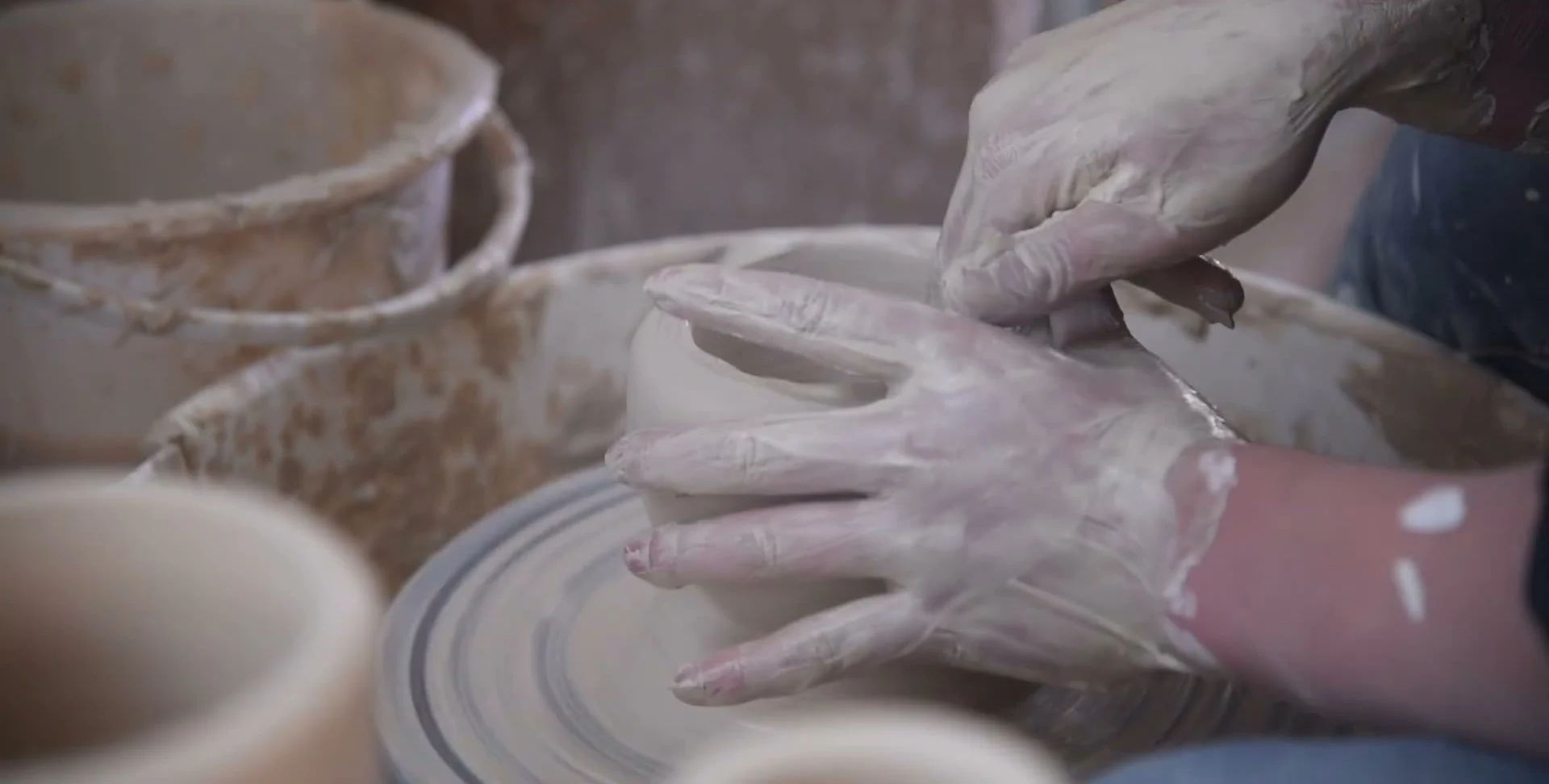
These views show forming, trimming and brushwork shared across ceramic practice. The trimming view does not establish the clay body.
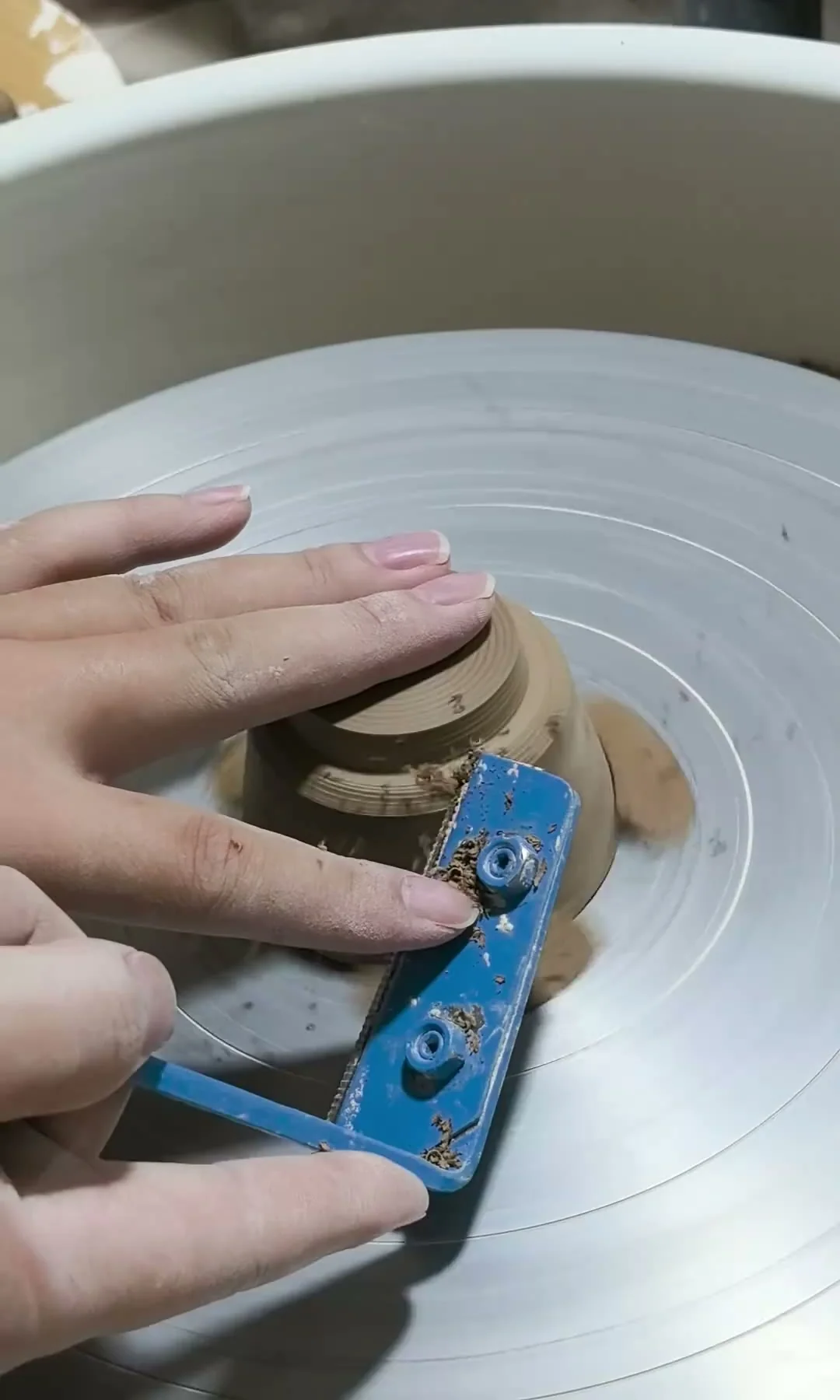
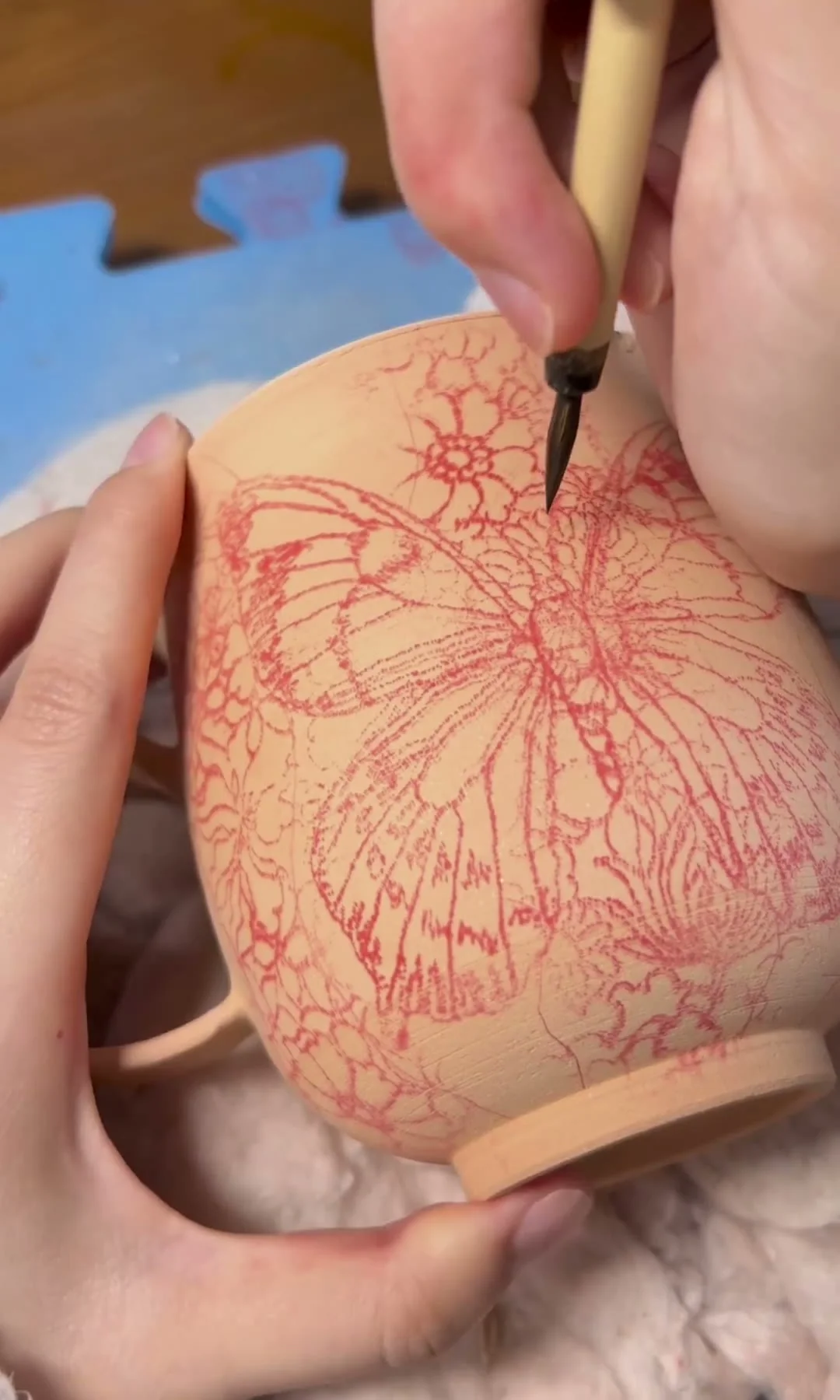
01 / The guide
Porcelain in the ceramic family
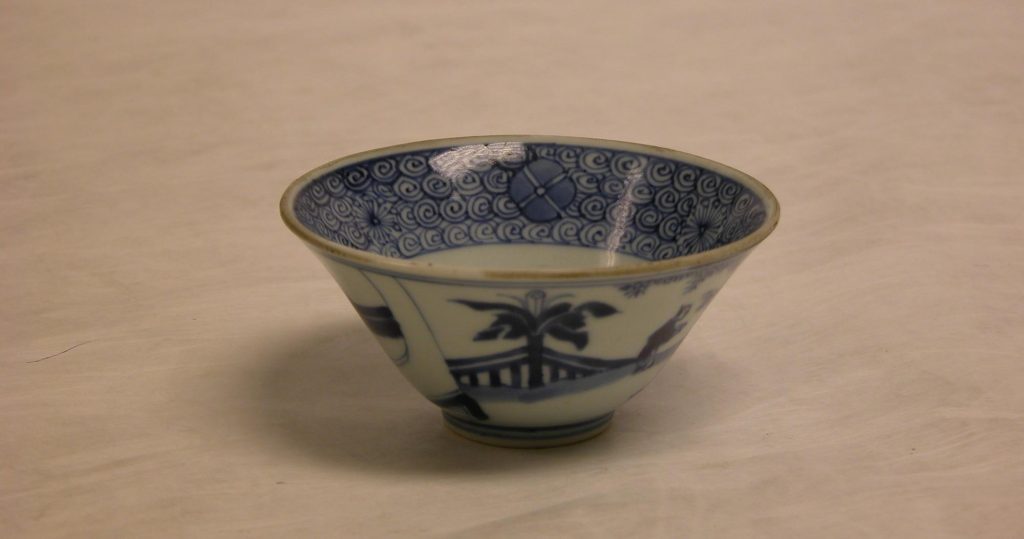
Porcelain belongs to the ceramic family alongside stoneware and earthenware. Its body is the material forming the vessel; glaze is a glassy surface layer. A white porcelain ewer and a blue-painted porcelain bowl can therefore share a material category while presenting very different surfaces.
- What Is Porcelain? Clay Body, Glaze and Identification↗
Read the definition, fired body and visible clues.
Read the full section
Porcelain doesn’t name just one recipe. Hard-paste porcelain belongs to the tradition developed in China, using white china clay with other mineral ingredients. The Museum of Russian Art describes kaolin, or china clay, alongside porcelain stone in the Chinese material. The recipe concerns the body, before a painted pattern enters the story.
Soft-paste porcelain grew from European efforts to reproduce the appearance of imported porcelain with other mixtures, including ground glass and clay. Bone china is another formulation, distinguished by the inclusion of bone ash. These names describe material traditions, so a label can say more than the broad word porcelain alone.
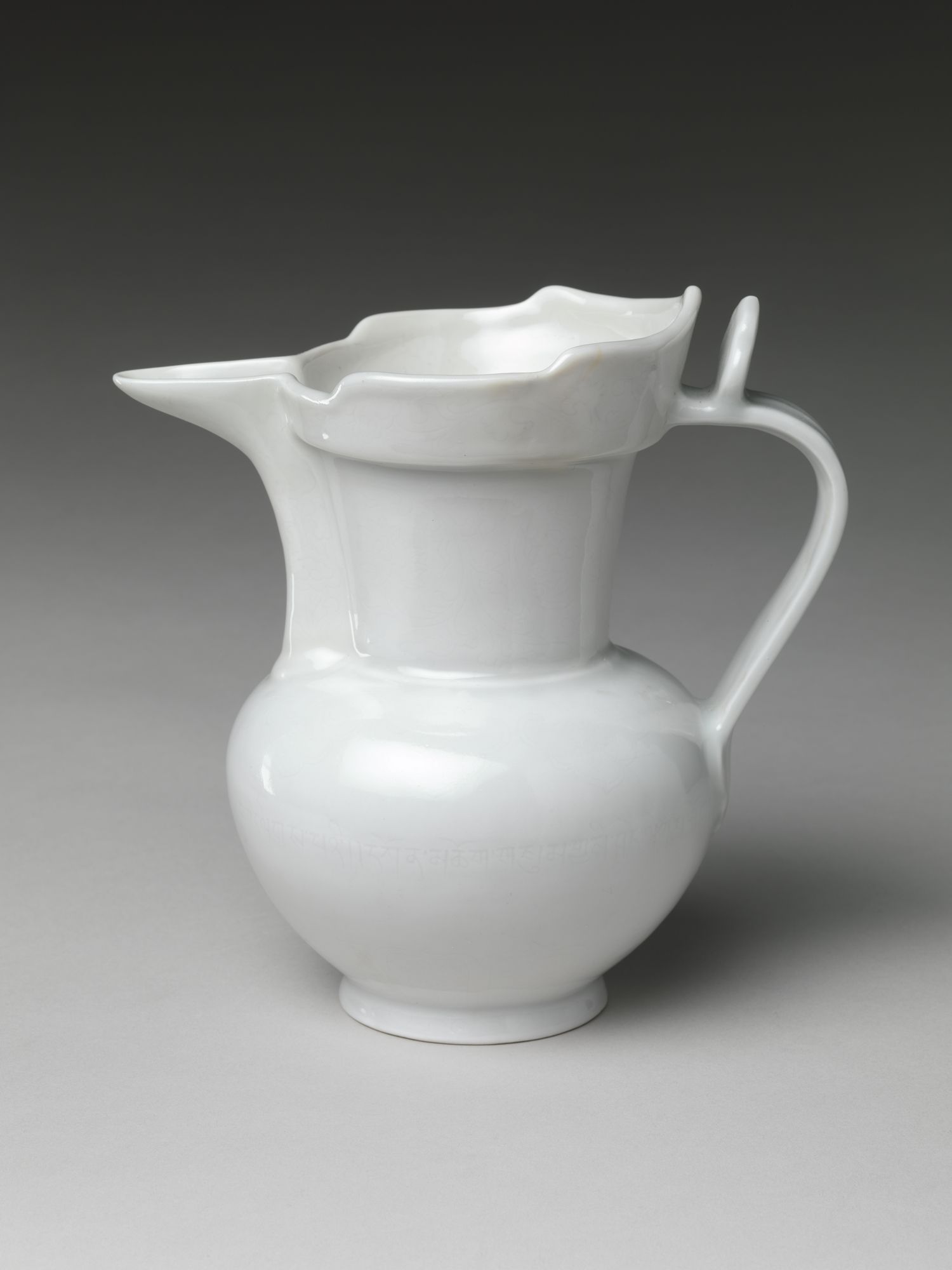
The white ewer below puts those material names beside a real object. The Met records a porcelain body with cut patterns beneath a clear glaze. For more about what the body contains, how light passes through it and what visible clues can show, read What is porcelain?.
02 / The guide
Porcelain and stoneware: bodies before appearances
Stoneware and porcelain are both fired ceramic materials whose bodies can become dense as their ingredients fuse in the kiln. Porcelain is associated with a pale body and translucency in thin sections; stoneware generally remains opaque. Glaze color is a separate feature, shared across these material categories.
- Porcelain vs stoneware: body, glaze and everyday choices↗
Compare the two bodies and the choices a finished object presents.
Read the full section
The Museum of Oriental Ceramics, Osaka, describes stoneware as vitrified: its ingredients have fused during firing, producing a dense body. The museum also notes that ceramic classifications differ somewhat between Western and East Asian traditions. A familiar English category is a starting point for reading an object record; it isn’t a replacement for its specific description.
When I compare two cups, I start with what each fact tells me. A thin wall may pass light; a dense body takes up little water. A cup still has a rim, a handle and a weight of its own, which affect how it feels to use.
For the two materials together, continue with Porcelain vs. stoneware.
03 / The guide
Where earthenware differs from stoneware
Earthenware is more porous than stoneware: the fired body retains spaces that can take up liquid. A glaze may seal the surface, while the clay beneath it remains earthenware. The surface and the body each contribute to how the finished vessel holds liquid.
- Earthenware vs stoneware: porosity, glaze and daily use↗
Read the focused comparison of porosity, glaze and use.
Read the full section
The Western Australian Museum’s conservation handbook includes both red terracotta and pale, tin-glazed wares within earthenware. The category therefore includes much more than brown garden pots. White surfaces and painted decoration occur here too, which is why appearance and material names need to be read separately.
One object in the Gardiner Museum’s Macdonald Collection makes the distinction unusually clear: a Japanese porcelain vase has a replacement lid made from Dutch tin-glazed earthenware. The vase survives with a porcelain body and a pottery lid. Similar looks can hide two different histories within one object.
The focused comparison is Earthenware vs. stoneware.
04 / The guide
Earthenware, stoneware and porcelain at a glance
The three names become easier to use when the same property is compared across each row. This table shows broad patterns in fired bodies. It keeps the material question separate from a maker’s stated uses for the finished object.
- Earthenware, Stoneware and Porcelain: The Differences↗
Keep all three material categories together.
Read the full section
The table follows the broad groups described by Osaka and the Western Australian Museum. The words identify ceramic materials, while the individual record supplies the object’s place, period and technique. A known recipe, such as bone china, gives the body a more precise name within porcelain.
A practical comparison also needs a purpose. For a drinking cup, shape, weight and the maker’s use instructions sit alongside the material. For a collection object, the recorded body, surface and condition carry different questions. Calling one category universally better would erase those differences in what the objects were made to do.
Keep all three names together in Earthenware, stoneware and porcelain.
05 / The guide
How porcelain takes shape and gains its surface
The finished material records decisions made while the body was still workable: preparing its ingredients, shaping and joining the vessel, drying it, and coordinating glaze, decoration and firing. Those stages explain why two objects labeled porcelain can differ so much in form and finish.
- How Is Porcelain Made? Shaping, Glazing and Firing↗
Follow body preparation, forming, glaze and firing.
Read the full section
Forming a porcelain vessel and joining its parts
Preparing a body means blending it so it can be shaped. The Musée national Adrien Dubouché describes grinding material with water, filtering and pressing it, then removing air. The prepared body can then be formed. Workshops use a mix of equipment and handwork suited to their objects.
A wheel develops a vessel through rotation and pressure, while a mold gives another route to a repeatable form. In slip casting, liquid clay enters an absorbent plaster mold; water moves into the plaster and a clay wall develops against it. Excess liquid is drained in hollow casting, leaving the formed wall behind.
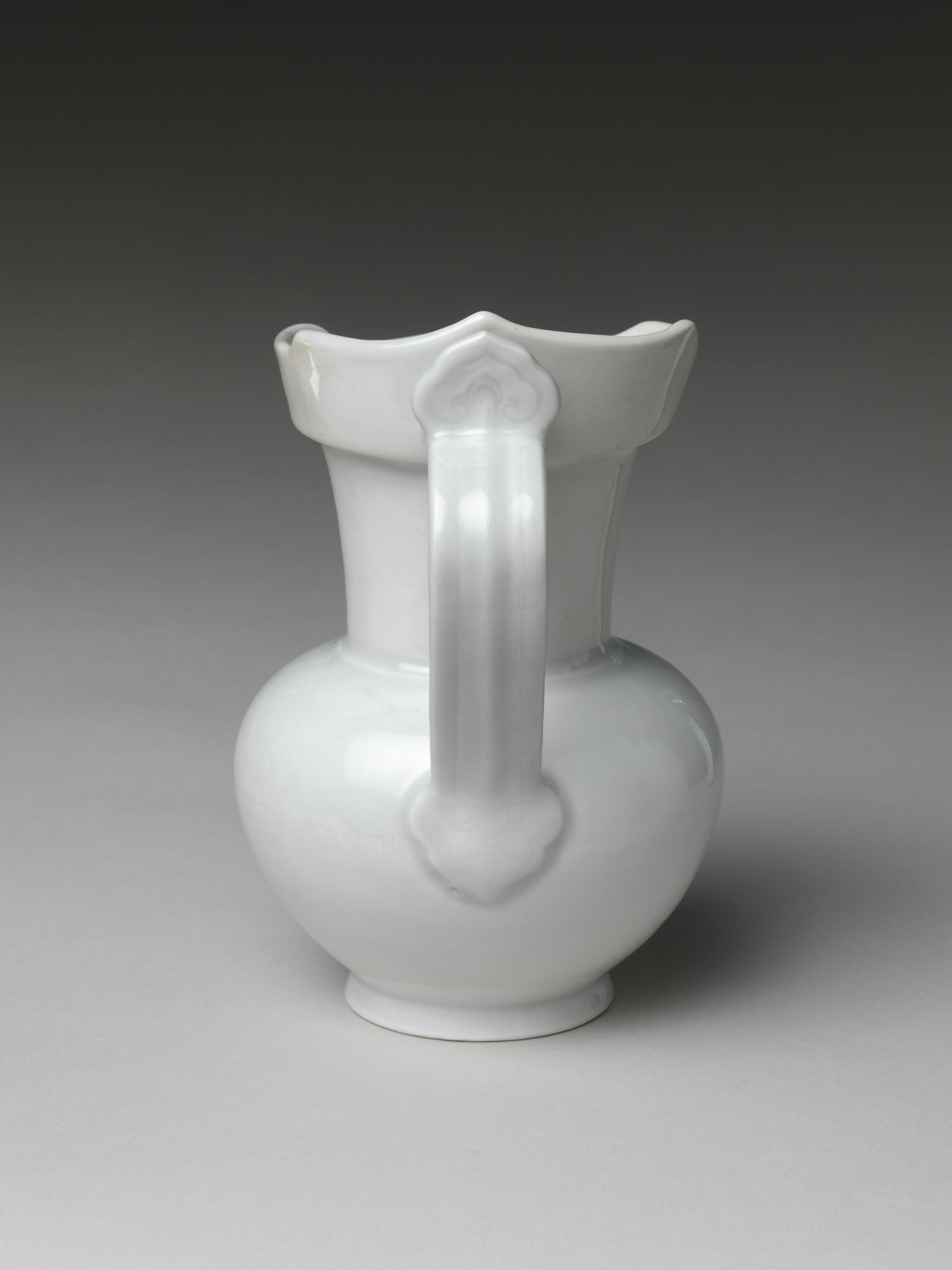
The monk’s cap ewer makes the next problem visible: several shapes must work together. Potter Edmund de Waal, who works in porcelain, draws attention to its broad handle, rounded belly and angular upper section in his response to the vessel for The Met. He explains that joining porcelain parts is a recurring difficulty in his own practice.
De Waal’s point draws my eye to where the handle meets the pot. Its upper end joins near the rim; its lower end meets the rounded body. His response to the ewer at The Met brings a living maker’s knowledge to a pot made centuries before his own work.
Drying is another part of making, not simply waiting for the next operation. Aalto University’s Ceramic Handbook explains that work can crack when it dries too quickly or unevenly, and that thickness affects drying time. The vessel must pass through this change while retaining the shape and connections established during forming.
Firing, glaze and decoration
Firing changes the body permanently. As described in the Western Australian Museum handbook, clay particles join and the body continues to fuse as the firing progresses. The resulting structure depends on the material and firing process. A porcelain name identifies a family of materials; it doesn’t prescribe one kiln schedule for every object.
Decoration adds another sequence. In blue-and-white porcelain, cobalt decoration sits beneath a transparent glaze. The Gardiner Museum explains that the painted body receives the glaze before the high-temperature firing. Overglaze enamels instead go onto an already glazed and fired surface, followed by a further firing suited to those colors.
White porcelain can carry decoration just as deliberately as a painted vessel. The Met records incised, hidden decoration beneath the transparent glaze of the monk’s cap ewer. The ewer’s shallow lines contrast with the bowl’s painted blue patterns, showing how porcelain decoration can use the body’s surface in different ways.
The V&A also describes porcelain figures left unglazed as biscuit wares. A glossy coating is therefore only one possible finish. Body, shape and surface belong to connected stages of making, but each has its own vocabulary. Our next article in this part of the guide is How porcelain is made.
06 / The guide
Using porcelain in a microwave: read the maker’s marking
Microwave use depends on what the maker says about that piece. A porcelain label describes the material; a microwave-safe mark describes an intended use of the finished item. The high heat used to fire it tells a different part of the object’s story.
- Is porcelain microwave safe? Gold rims and safe use↗
Check the exact piece, its marking and its maker’s instructions.
Read the full section
Lenox’s current porcelain care guidance gives a concrete rule for its products: an item without a microwave-safe marking on its base should stay out of the microwave. The company also advises against heating an empty item and calls for an oven mitt or potholder after heating. Those instructions belong to the finished product.
I treat a household use question differently from a museum material question. Knowing that a bowl is porcelain helps place it within ceramics; knowing its maker and use instructions helps decide whether it belongs in a microwave. A missing or unclear instruction is a reason to check that exact piece with its maker before using it that way.
Continue with the dedicated question, Is porcelain microwave safe?.
07 / The guide
Caring for porcelain figures and tableware
Care begins with the object’s condition, decoration and construction. Sound modern tableware with its maker’s cleaning instructions presents a different task from a porcelain figure with projecting fingers, gilded details or an old repair. A hard ceramic body isn’t immune to breaking at a vulnerable part.
- How to Clean Porcelain Figures Without Damaging Painted Details↗
Read about dust, water, decoration and old repairs.
Read the full section
The Canadian Conservation Institute recommends supporting ceramics with both hands and avoiding lifting by handles or spouts. On the ewer shown above, the long handle makes that advice easy to picture. Supporting the vessel keeps its weight from depending on the very connections that attracted de Waal’s attention.
Cleaning also requires looking at the surface. The Institute advises inspection for damage and applied decoration before treatment, and cautions that cloths can catch on rough areas or insecure decoration. Its guidance directs unglazed, unevenly fired or soft ceramics to a conservator. Repairs, too, belong with a professional conservator.
For modern dinnerware, the maker’s stated washing instructions remain the starting point. For a figure or collection object, identifying fragile details and previous damage comes first. That distinction prevents a routine intended for a working plate from becoming an automatic treatment for every object made of the same material.
The focused care article is Cleaning porcelain figurines. Return to the ewer’s handle after reading it: the curve can be admired as a choice of form, its attachments understood as a making problem, and its whole weight supported as a matter of care.
Published · Updated