The China Dish journal / A closer look
Earthenware vs stoneware: porosity, glaze and daily use
Learn how earthenware and stoneware differ beneath the glaze, what actual bowls can show, and which labels matter when choosing everyday dishes.
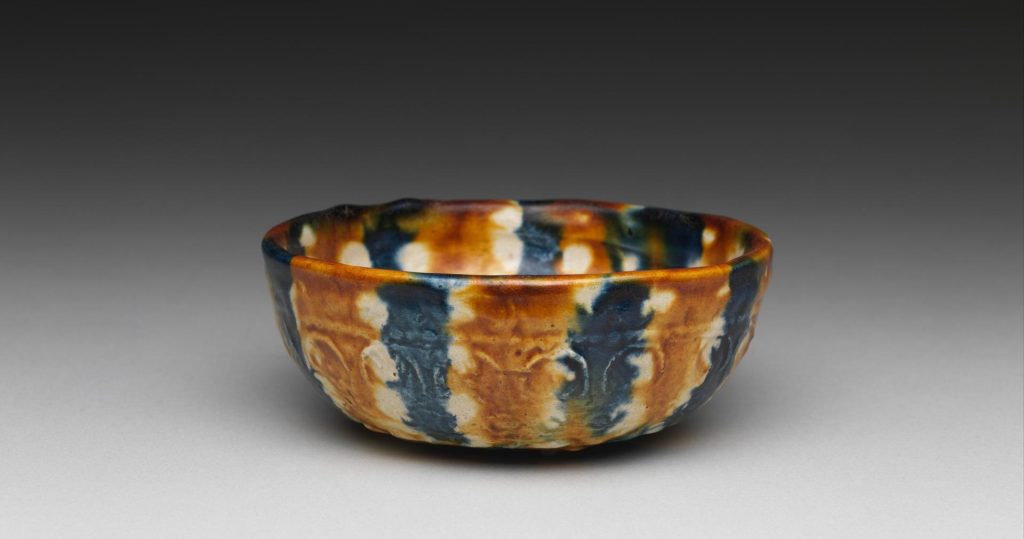
Earthenware has a porous fired clay body; stoneware is fired to a denser, more glassy state that takes up much less water. For everyday dishes, stoneware’s dense body can be useful, but the maker’s stated uses matter more than the material name alone. A glossy finish doesn’t settle the choice. The bowls below help separate the body, the glaze, and what either can tell us about daily use.
Earthenware and stoneware differ beneath the glaze
The body is the clay structure of a bowl, including its walls and base. The glaze is a glassy coating fused onto its surface. Keeping those parts separate makes the difference easier to understand: a smooth outer coating can cover a body that remains porous inside.
During firing, parts of the clay body form glass and help bind it together. Potters call this process vitrification. The porous body is less fully vitrified, while stoneware has a more vitrified body. The Museum of Oriental Ceramics, Osaka, uses this divide in its guide to ceramic materials, while noting that regions group ceramics in slightly different ways.
Lower firing and higher firing are useful broad descriptions, rather than universal temperature bands. The clay mixture matters as well as the firing: a temperature suitable for one body isn’t a recipe for every other clay. Nor does a firing temperature printed in a description tell us the measured water absorption of the finished bowl.
| What is being compared? | Earthenware | Stoneware |
|---|---|---|
| Fired body | Porous and not fully vitrified | More vitrified, with much lower water uptake |
| Role of glaze | Provides a liquid barrier over the porous body | Provides a surface finish over an already dense body |
| Visible surface | Can be glazed, painted, or left unglazed | Can also be glazed or left unglazed |
| What a photograph establishes | Shape, surface, and visible decoration | Shape, surface, and visible decoration |
| What the name doesn’t establish | Food use, appliance use, or a measured strength | Food use, appliance use, or a measured strength |
Water uptake describes how much water enters the fired body under stated test conditions. A figure without its test method and product name isn’t a sound basis for judging dishes. Here, the useful divide is the body structure; neither of the pictured bowls has been tested for this article. Our porcelain guide connects these material questions with forming, glazing, and firing.
A glazed earthenware bowl is still earthenware
The pale bowl below makes that divide tangible. Its rounded rim, low foot, and shallow bands are easy to trace, while its surface has a light sheen. The Metropolitan Museum of Art lists its material as glazed earthenware. The glaze hasn’t changed the name of the body beneath it.
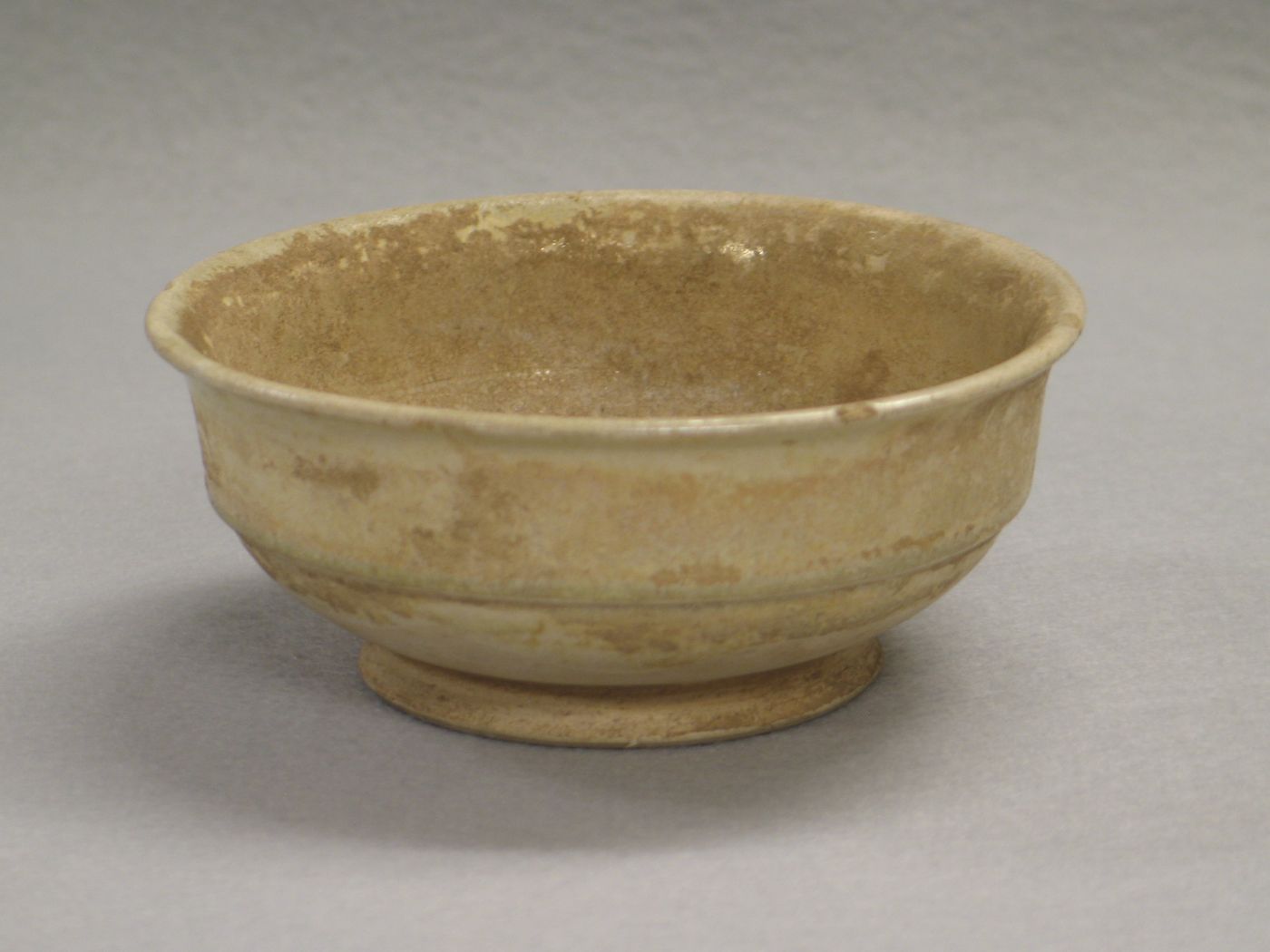
Glaze can help a porous ceramic hold liquids by sealing its surface. The V&A explains this under “B is for biscuit” in its A–Z of ceramics. A coating and a dense clay body achieve different things, even when both finished surfaces look smooth.
White surfaces are equally easy to misread. The V&A’s entry on delftware describes tin-glazed earthenware with a normally white glaze. White can belong to the coating rather than identify the material below. The amber, blue, and cream bowl at the top of this page offers another surface; its colored glaze is a specific example, not a standard look for this clay type.
I prefer to read the material label before letting the surface suggest a clay type. The label gives us a way to look more closely: we can then notice how a potter has shaped or glazed that clay, without asking color to prove more than it can.
Stoneware can have a glossy, colored surface too
The stoneware bowl below carries a blue-green glaze with bright streaks of light inside. Its surface looks very different from the pale bowl, but the gloss itself is something they share. The Met lists this bowl as stoneware with bluish glaze, or Jun ware.
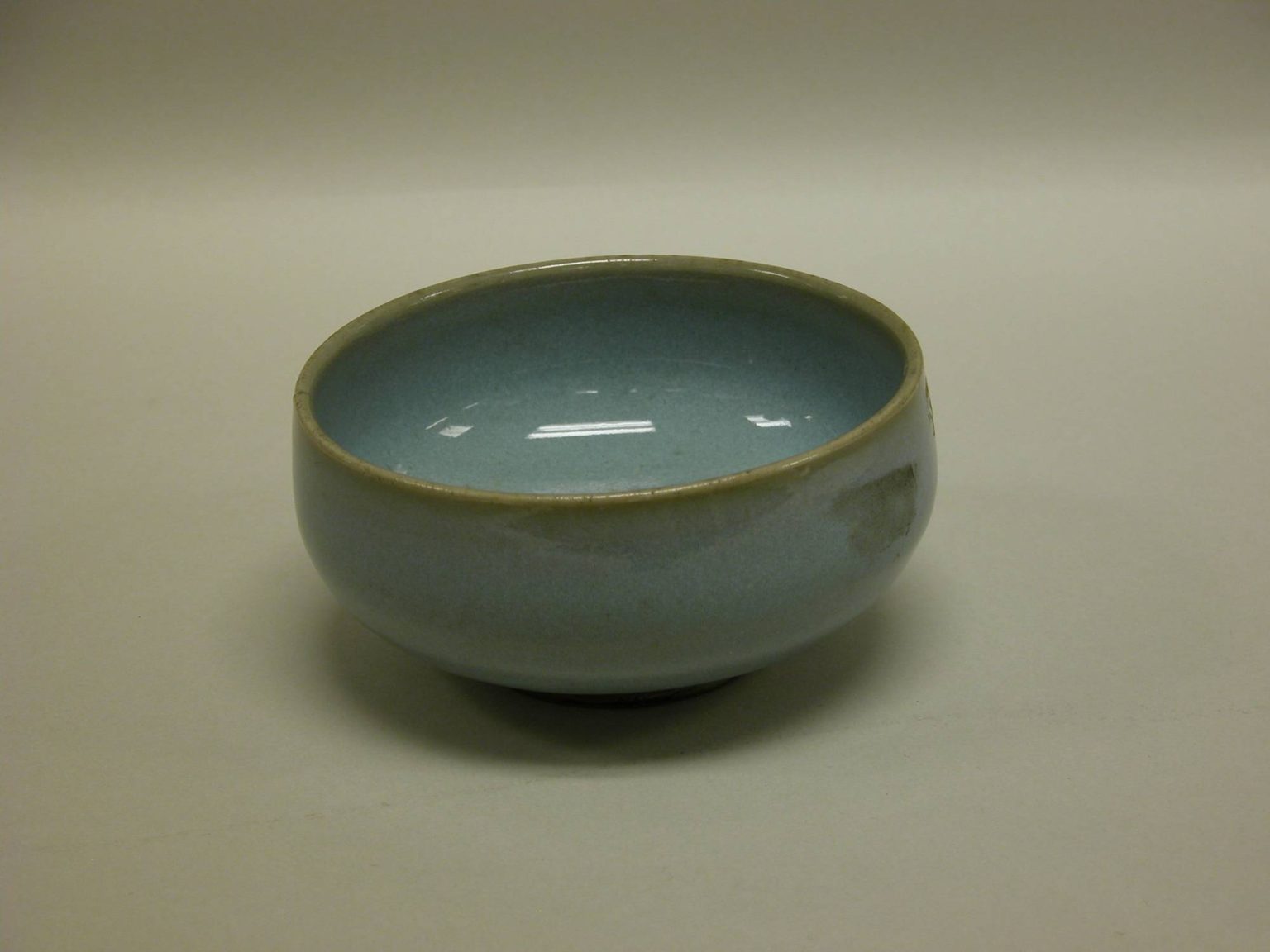
Jun ware names a ceramic tradition; it isn’t a household strength rating. Here, the museum’s material label tells us the clay type, and the photo lets us see its surface. The image doesn’t measure how hard the bowl is, how much water it absorbs, or how it responds to a sudden change in heat.
The different profiles deserve attention as well. The pale bowl opens outward toward its rim; the blue-green bowl has a more rounded wall. Those are features of these objects. They don’t make a rule that a clay type must flare or must be rounded, and the photos aren’t shown at the same scale to compare weight or wall size.
Color and weight cannot identify an unknown bowl alone
The museum examples show why naming an unknown bowl needs more than a quick visual shortcut. Both have glaze, both have shaped rims, and both are bowls. A familiar shape or an earthy color can suggest a question to pursue, but neither gives a reliable material label by itself.
An exposed foot lets us see the body where glaze isn’t present. Even there, body color alone cannot establish the clay type. For a modern piece, a maker’s notes tied to that design are more useful than matching it to an online photo. For an old object, a museum record supplies context that an isolated image lacks.
There is no need to scratch, strike, or soak an unknown bowl to follow these points. Such tests could damage the object while leaving its name in doubt. A missing label is a reason to keep an open question, especially when the piece may be old or valuable.
Choosing earthenware or stoneware for daily dishes
A material label helps with choosing dishes, but the next question is what the actual piece was made to do. Stoneware’s dense body is a useful starting point when low water uptake matters. Earthenware can also be made as glazed dishes; the clay type doesn’t restrict every piece to display.
I would compare a named dinner plate with another named dinner plate made for the same job. Comparing a modern plate with an antique display bowl mixes use, age, form, and clay into the same judgment. A broad claim that stoneware is always stronger or safer doesn’t untangle those differences.
For a particular dish, look for the maker’s food-use information and separate care instructions for the microwave, dishwasher, and oven. Permission for one use doesn’t answer the other questions. If those instructions are missing, ask the maker about the specific item instead of treating “stoneware” or “earthenware” as permission.
Older or decorative pottery needs particular care over food use. The FDA’s guidance on traditional pottery identifies antiques, damaged pieces, and pottery of uncertain manufacture as types needing attention, and says not to use items carrying a decorative-only warning for food or drink. Porosity and glaze color cannot resolve that safety question.
For the wider material family, our comparison of earthenware, stoneware, and porcelain brings porcelain into the picture. Here, the useful final divide stays simple: the body tells us about the material, the surface tells us about its finish, and the specific product’s care notes tell us about its intended use.