The China Dish journal / A closer look
Earthenware, Stoneware and Porcelain: The Differences
Compare ceramic bodies, glaze and porosity, then read three museum objects without mistaking their appearance for a material or care rating.
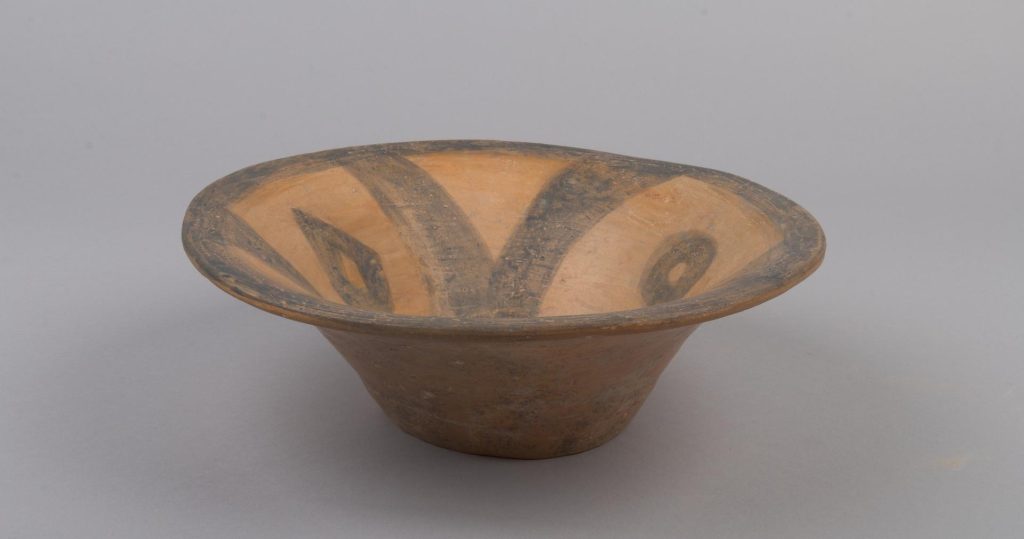
The main difference between earthenware, stoneware and porcelain lies in the fired clay body. Earthenware usually remains porous; stoneware is more fully fused and dense; porcelain typically has a dense, white body that can transmit light when thin. For a new dinner set, those names help describe the material, but the maker’s instructions decide its intended use. For a museum object, the material record is the better starting point than surface color.
Earthenware, stoneware and porcelain at a glance
The table compares broad traits, rather than treating every pot as a specimen made to the same recipe. “Body” means the fired clay beneath any coating. “Vitrified” means that firing has formed glass within that clay, helping it become dense.
| What the label describes | Earthenware | Stoneware | Porcelain |
|---|---|---|---|
| Fired body | Generally remains porous rather than fully vitrified | Dense and vitrified | Dense, with a substantial glassy component |
| Typical firing relationship | Usually lower-fired | Usually higher-fired than earthenware | Usually high-fired; the body recipe matters as well as heat |
| Body and light | Generally opaque | Generally opaque | Thin areas can transmit light; a thick foot may not |
| Color as a clue | Can vary; the surface may be painted or covered by glaze | Varies with the body and surface treatment | Usually a white body, which decoration or glaze may cover |
| Glaze | A glaze can cover a porous body | May be glazed or unglazed | Can be glazed or left unglazed for an intended finish |
| What the name does not establish | Whether this particular piece is suitable for food, heat or washing | Whether this particular piece is suitable for food, heat or washing | Whether this particular piece is suitable for food, heat or washing |
The Museum of Oriental Ceramics, Osaka groups these wares by clay, density and water uptake, while noting that the boundaries differ among regions. Its guide uses Western terms. An English label on an East Asian object may therefore reflect a choice about where a boundary falls, as well as telling us what the body is made from and how it was fired.
A higher firing temperature alone doesn’t identify a finished object. Clay composition and the firing process work together, so a single temperature chart can’t settle every boundary. Nor does a photograph supply the measurements needed to assign an absorption rate.
Separate the ceramic body from its glaze
The body carries the shape. Glaze changes the surface. A glossy coating can make different bodies look much alike, and an opaque coating can hide the body’s color. A painted design adds another layer. Color, finish and body belong in separate parts of the label.
White glaze is a useful example. The V&A’s ceramics glossary describes delftware as tin-glazed earthenware, commonly with a white glazed surface and painted decoration. A white-and-blue appearance therefore doesn’t establish porcelain. The decorative effect and the underlying material answer different questions.
An unglazed surface doesn’t settle the question either. Porcelain figures can be left without glaze for their intended finish, and stoneware can also be unglazed. The word “biscuit” concerns firing and finish; it isn’t another clay family beside those in the table.
For the definition in more detail, including what translucency can show, continue with what porcelain is. Here, the useful habit is to keep the material name beside the surface description rather than letting one replace the other.
A painted earthenware bowl: decoration without a glaze label
The broad bowl shown at the top has dark bands sweeping across its inner wall. The Metropolitan Museum of Art identifies it as a Chinese bowl from the Majiayao culture, Machang type, dated 2300–2000 BCE, and records its medium as earthenware with pigment.
The label names an earthenware body with painted pigment, rather than calling the pigment a glaze. We can follow the lines and the flaring rim in the image without adding a coating the record doesn’t name.
The bowl is 9¾ inches (24.8 cm) across, according to its record. That measurement helps restore a sense of scale to a picture that might otherwise look like a small dipping dish; its broad rim matters to the design we are trying to understand.
The Met’s bowl record also keeps this example anchored to a particular object. Its age and material do not turn it into a model for using modern bowls. The comparison here concerns the vocabulary on a label, not a recommendation to put an archaeological vessel into service.
A stoneware bowl: relief is a surface clue
The next bowl has a raised pattern arranged around its outer wall and a distinct foot beneath it. Those details give the eye a route around the object. They don’t supply a recipe for its clay body.
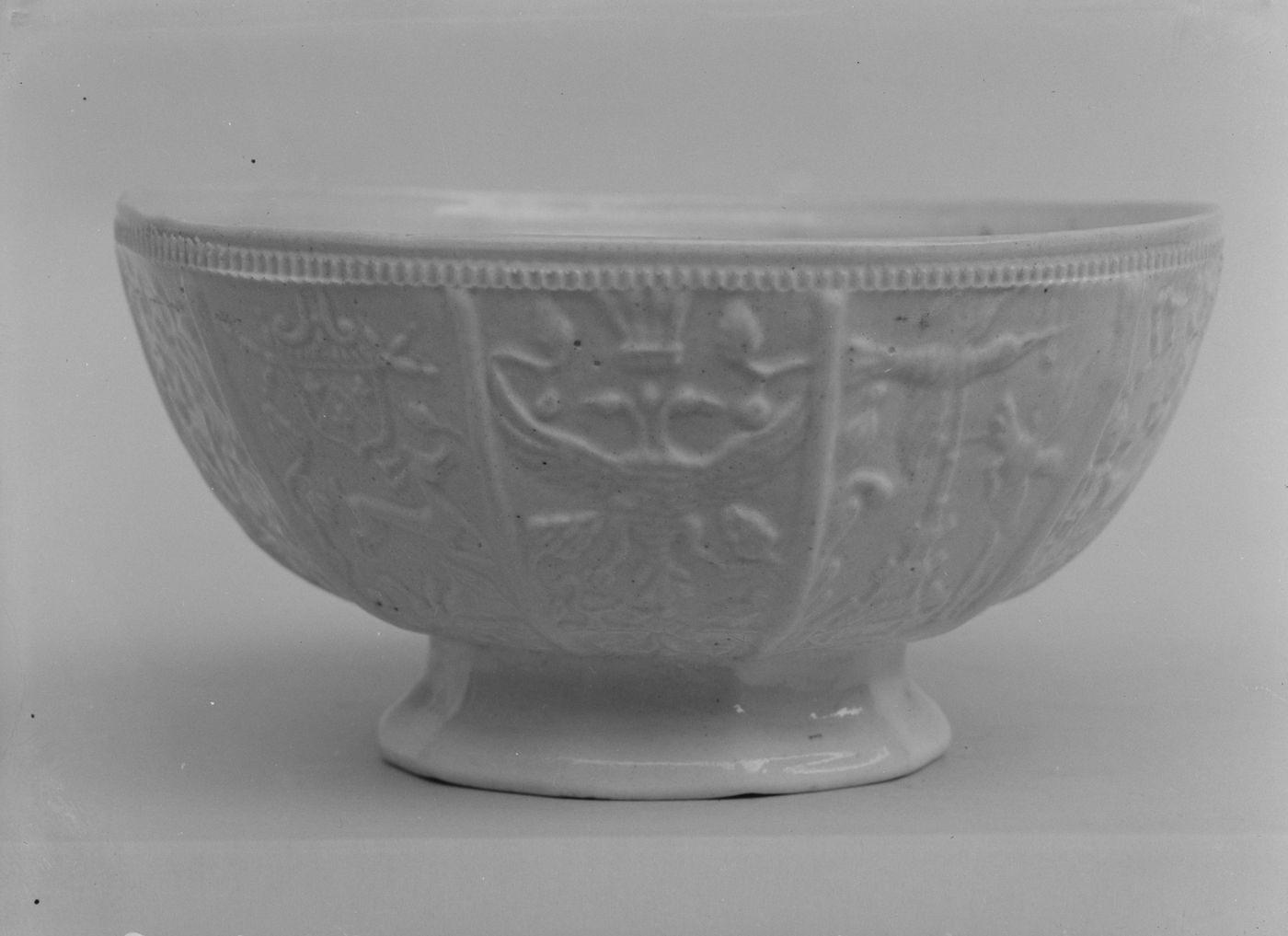
The Met identifies this bowl as stoneware, made in Staffordshire, England. Its recorded diameter is 5½ inches (14 cm), much smaller than the painted bowl above. The black-and-white image can’t establish the real body color. The museum record supplies the material name; the image shows the form and relief.
Stoneware needn’t look like a rough brown pot. The name allows room for different forms and finishes, and “stone” doesn’t mean carved rock. The earthenware and stoneware comparison takes their different fired bodies further.
A porcelain water bottle: let the record supply the color
The porcelain example brings a different shape into the comparison: a rounded bottle with a tall, arched handle, a small opening and landscape decoration across the body. The landscape continues around the vessel rather than sitting inside a bowl’s rim.
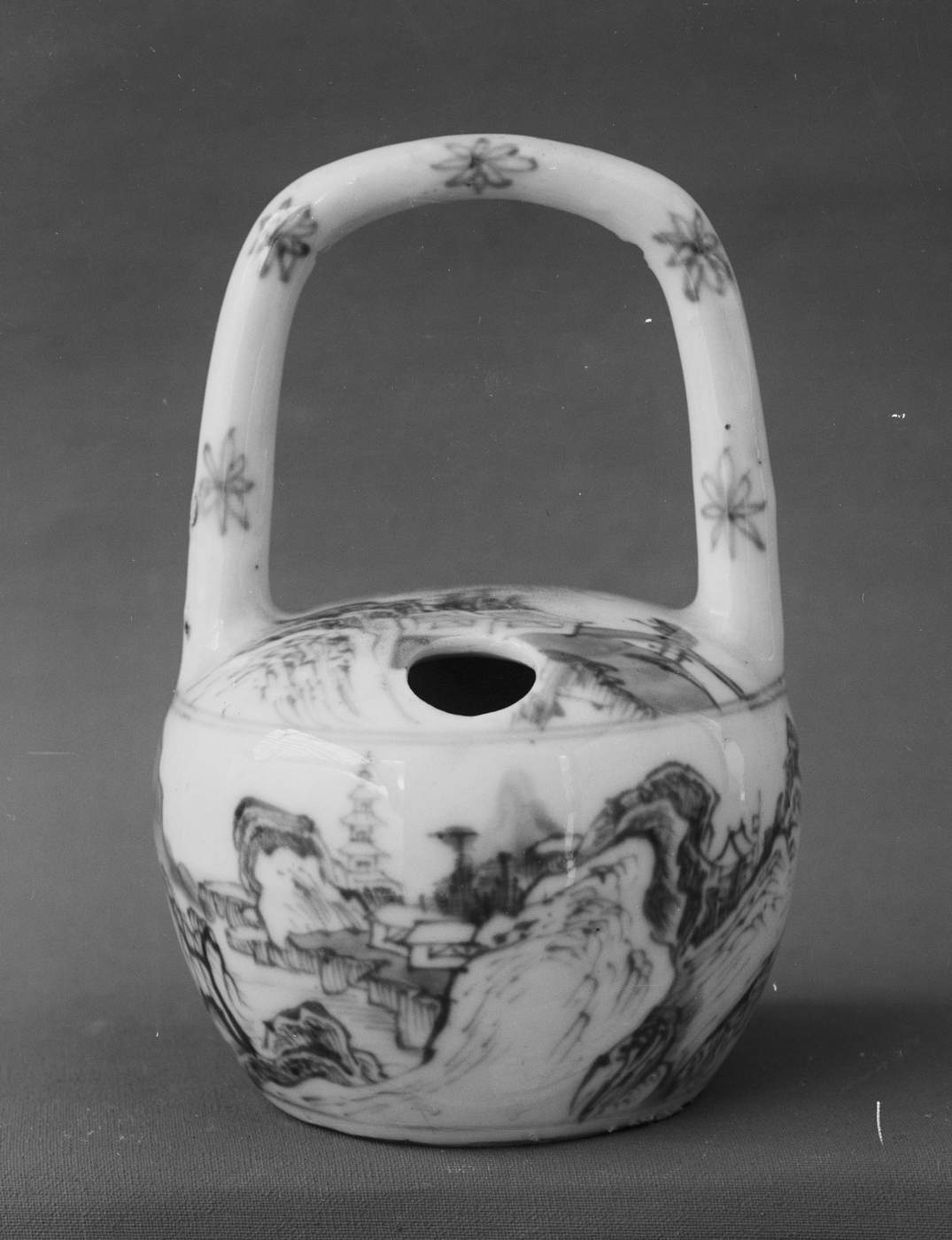
The Met’s water bottle record names white porcelain with blue beneath the glaze. Those colors come from the record, rather than from this black-and-white image. The arched handle and painted scene are visible; the original hues aren’t.
Its recorded height is 5¼ inches (13.3 cm), including the handle. The image can make the bottle seem quite large, but the measurement gives the loop a more intimate scale. Height here and diameter for the bowls describe different dimensions; they aren’t figures for a like-for-like size test.
This view doesn’t show light passing through the wall. Thin porcelain can let light through, but that quality won’t appear in every image or through every part of a vessel. For a closer look at the overlap between dense clay bodies, read porcelain compared with stoneware.
These examples come from different places and periods, with different shapes. They aren’t a controlled test of weight, breakage or heat resistance. Their value together is more modest and more useful: each has a documented material name that can be kept separate from what its photograph reveals.
Choose the question before choosing a ceramic
For a new purchase, decide what you need the object to do before choosing a material name. A dinner plate, display figure and cooking vessel call for different details. A category can narrow the choice, but it can’t replace the maker’s guidance for the actual product.
For a dinner set, I would put size, shape, finish and the maker’s stated use beside the material. “Porcelain” doesn’t tell me how the handle fits my hand, and “stoneware” doesn’t tell me how much room a stack needs in a cupboard. Those are questions about the designed object, rather than reasons to rank a whole ceramic family first or last.
For heating and care, follow the instructions for the exact piece. Don’t infer microwave, oven or dishwasher suitability from “dense” or “high-fired.” The separate guide to porcelain microwave use deals with the markings and use question. For an ornamental object, cleaning porcelain figures treats condition and decoration as part of care.
For a museum visit, I would read the material line first, then return to the object. Does the label name a body, a coating, or both? The painted bowl, relief bowl and handled bottle give different answers. Their names make the differences easier to discuss; their surfaces still deserve a close look.
The wider porcelain guide connects those material questions with making and care. Here, the distinction to carry away is simple: the body gives the material category, the surface adds another layer of information, and the individual object still needs its own description. 素材: D:/站点/china-dish/_交接/Porcelain完善_20261101/七篇素材交付/earthenware-stoneware-porcelain/_交付_earthenware-stoneware-porcelain-met_20261101