The China Dish guides
Ceramic Glaze: Surfaces, Color and Chinese Traditions
Ceramic glaze is a glassy coating formed when a prepared mixture melts onto a ceramic body during firing. What goes into it, and how it’s fired, shape the color, clarity and finish.
Chinese greenwares, copper-red porcelain and white-glazed vessels show how varied that coating can become. The first thing I look for is the glaze’s place above the clay beneath it.
My background in museum guiding makes that split useful to me: a material name and a visible surface answer different questions. Here, the raw materials lead into painted layers, glaze types and firing, before three Chinese objects bring those ideas into view.
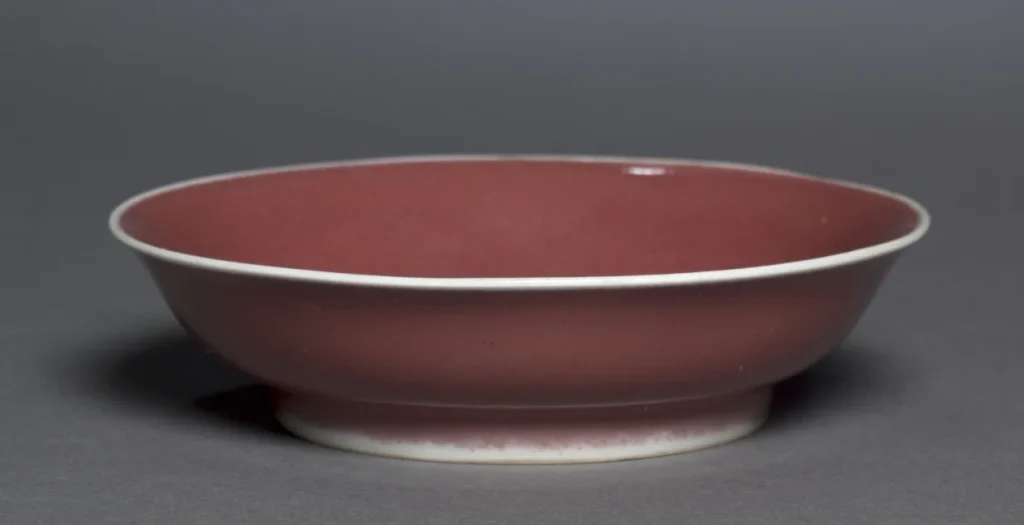
A few details to notice
Look a little closer.
Read the object account and sources ↘
Read the object account and sources ↘
Read the object account and sources ↘
01 / A closer look
What goes into a glaze?
- Glassy coating
- Fired surface
- Body beneath
Silica supplies the glass structure; fluxes help it melt, while alumina helps control its flow.
What is ceramic glaze made of? ↗
From the referenced guide section and its sources.
02 / A closer look
Where does the color sit?
Glaze, slip and painted decoration occupy different layers. A surface color alone does not tell you which layer you are seeing.
Glaze, slip and painted decoration occupy different layers ↗
From the referenced guide section and its sources.
03 / A closer look
What changes in the kiln?
Heat, oxygen and cooling shape a glaze’s color and finish. The same ingredients can produce different surfaces under different firing conditions.
Heat, oxygen and cooling shape the glaze ↗
From the referenced guide section and its sources.
01 / The guide
What is ceramic glaze made of?
Most ceramic glazes combine a glass former with materials that help it melt and control the molten coating. Silica supplies the glass-forming structure.
Fluxes help the mixture melt, while alumina helps control how freely it flows. These are roles within the fired mixture, rather than a shopping list of three powders that all do the same job.
Before firing, the ingredients are usually fine particles held in water. Brushing, dipping or spraying leaves a coating on the ware. The water carries the particles onto the pot; the kiln turns what’s left into the fired surface. A pale, powdery coating can look quite unlike its finished glaze.
| Component or role | What it contributes |
|---|---|
| Silica, the glass former | Much of the glass structure |
| Fluxing materials | Help the mixture melt within its intended firing conditions |
| Alumina | Helps control the molten glaze’s flow |
| Colorants | Change color; iron, copper and cobalt are familiar examples |
| Opacifiers | Reduce transparency; zircon and tin oxide are examples |
One raw material can serve more than one of these roles. A recipe records the materials weighed out, while a chemical formula describes the oxides those materials supply.
The two lists won’t look alike, even when they’re ways of describing the same glaze, because the raw materials can each bring several oxides into the melt.
The coating also has to work before it reaches the kiln. Digitalfire’s ceramic reference explains that raw materials help form the fired glass, keep particles held in water and make the dried coating firm. It’s easy to focus on the fired color and miss those earlier jobs.
02 / The guide
Glaze, slip and painted decoration occupy different layers
A glaze’s ingredients explain its surface, but a painted vessel may have other layers too. Slip is clay held in water. It can cover the body or form a pattern in a different color beneath a glaze. A white-looking surface may involve white clay, a pale slip, a glaze, or several of them together.
The names for painted decoration often tell us where it sits. Underglaze decoration lies beneath the glaze. Overglaze enamel sits on an already glazed surface and gets another firing. The V&A’s ceramics glossary uses this split to explain the terms; each name points to a layer in the pot.
For blue-and-white porcelain, the blue pattern can sit beneath a clear coating. In a blue-glazed vessel, color belongs to the glaze itself. Both may look blue, but a painted line isn’t the same thing as an all-over colored coat. The position of the color matters as much as its name.
| Looking at the surface | The question to ask |
|---|---|
| A continuous colored coating | Does the collection record identify a colored glaze? |
| A painted motif beneath the surface | Is the decoration recorded as underglaze? |
| Color added over a glazed surface | Is it overglaze enamel or another documented treatment? |
| A pale layer over a darker body | Does the record mention slip? |
For the underlying material, the porcelain body and its surface guide puts those layers beside the wider clay question. I don’t need to know every painted motif to begin describing a glaze; I do need to know which layer I’m looking at.
03 / The guide
Glaze types describe more than color
Once the layers are clear, glaze names become easier to sort. Some names describe raw materials or fluxes, others describe firing range, and others describe the surface. An ash glaze and a glossy glaze belong to different kinds of classification. The same coating can answer both descriptions.
The Museum of Oriental Ceramics, Osaka, groups glazes by flux, coloring agent and color. Its examples include ash and lead glazes as flux-based groups, with iron, copper and cobalt under coloring agents. That gives me several ways to name the same coating, without asking a color word to tell the whole story.
Clarity and shine aren’t the same thing either. A transparent glaze lets the layer beneath show through; an opaque glaze hides it more strongly. Gloss describes how light bounces off the surface. A colored clear glaze can be glossy, while a pale opaque coat may also look shiny.
Glossy, satin and matte describe degrees of surface sheen. Satin sits between a strong gloss and a duller matte finish. I prefer to name those qualities apart from color: “blue-green, cloudy and glossy” gives a fuller starting point than just calling a vessel green.
Firing range adds another condition. Low-, mid- and high-fire labels connect a glaze to the heat range in which it’s meant to mature.
The useful pairing is the actual glaze, body and firing process. A modern label that says celadon doesn’t by itself tell me where a pot was made; that name carries a history as well as a color.
04 / The guide
Heat, oxygen and cooling shape the glaze
The firing labels point to a changing material, rather than a finished color waiting inside a bottle. Glaze particles react and melt as the ware heats. The fired coat depends on the recipe, its thickness, the clay body, and how heat and air move through the kiln. A color name can’t fix all of that in advance.
Oxygen matters to some colorants. In an oxidizing atmosphere, there’s oxygen to take part in reactions. Reduction limits that supply and changes the chemistry of some coloring materials. The V&A shows the difference with copper-colored glazes: a change in the kiln’s air can bring a change in the fired color.
Heat also has a duration. A firing schedule records how the kiln heats, holds and cools; the highest heat is one part of that history. If I’m comparing an old ware with a modern studio recipe, I won’t treat a quoted temperature as the whole firing, because it doesn’t tell me how long the heat was held.
The surface keeps changing as it cools. Some glazes grow crystals during cooling, which can alter the sheen or form visible effects. A matte finish may be a planned result of the glaze and firing. I can’t tell its cause from the word matte alone.
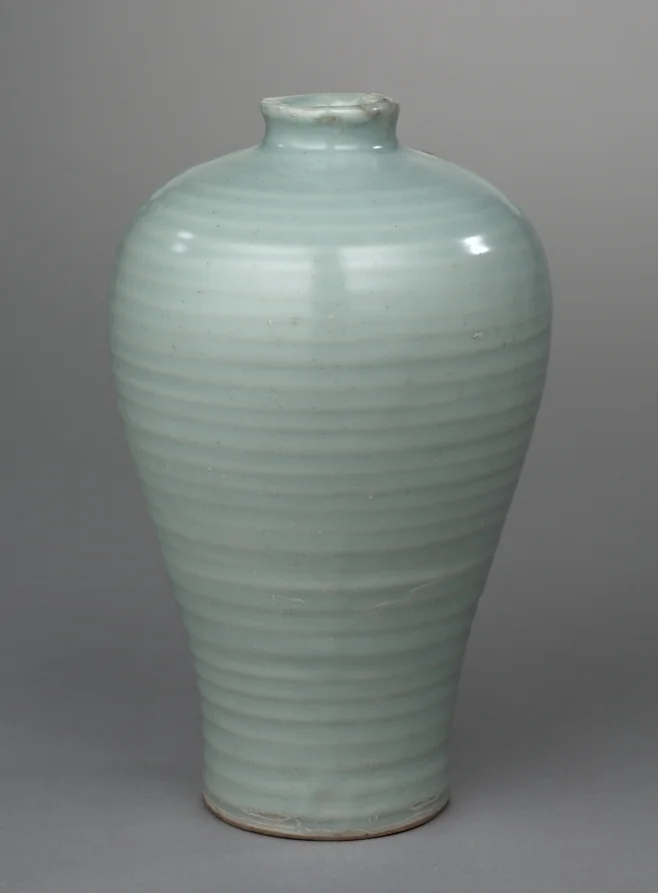
How the coat goes on belongs in the same discussion. The Cleveland Museum of Art’s Longquan vase, below, has a recorded history of repeated glaze coats before firing.
I can see a cloudy surface, and the record helps explain how the maker built it up. It supplies an explanation for one vessel, rather than a coat count for other glazes.
The overview of how porcelain is made places surface treatment alongside forming, drying and firing. For understanding glaze, those stages matter because the coating develops on a body that has its own preparation and firing history.
05 / The guide
Chinese glaze traditions seen through three surfaces
Chinese ceramics give these material distinctions concrete forms. The three objects here bring together a cloudy green stoneware glaze, copper-red porcelain and a white-glazed porcelain jar. Their collection records establish the objects; the photographs let me look more closely at the surfaces those records describe.
Celadon and the depth of a Longquan glaze
Celadon commonly refers to green-glazed wares. Iron can produce the blue-green color under reducing firing conditions, as the Osaka museum’s glaze guide explains.
Longquan, in Zhejiang province, is one Chinese production region associated with this tradition. Its name belongs beside the documented object, rather than being assigned from green color alone.
The Cleveland Museum of Art dates this Longquan vase to the 1200s and identifies it as green-glazed porcelaneous stoneware. The rounded shoulders narrow toward the foot, and horizontal ridges circle the body. A soft blue-green coating covers those contours, with bright reflections across the shoulder.
The museum records that the potter applied successive coats, drying each before adding the next. Firing produced the thick, cloudy surface. I can connect that depth to the maker’s repeated coats, while the museum’s record keeps the explanation tied to this one vase.
Copper-red glaze and a change in firing atmosphere
Copper supplies a different path through color. Depending on the glaze and firing conditions, copper can produce green, blue or red. A copper-red glaze therefore brings the kiln atmosphere into the explanation. Calling it red pigment would leave out the relationship between the coloring material and the firing.
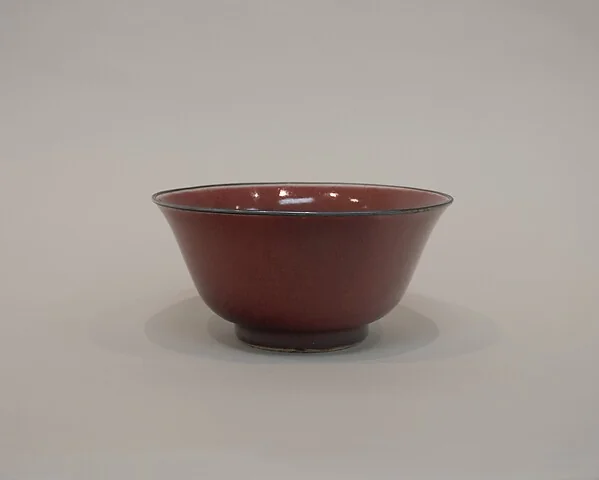
The Metropolitan Museum of Art identifies the bowl below as Jingdezhen porcelain with copper-red glaze, dated to the late seventeenth or early eighteenth century. The red extends around a simple curved body, with a narrow dark edge at the rim. Reflections interrupt the color across its glossy interior.
The bowl lets the coating carry much of the decoration. Its plain outline gives the red surface room to read as a continuous field. I would describe that distribution before comparing it with red painted motifs: an all-over glaze and a painted pattern organize a vessel in different ways.
White glazes and the porcelain beneath
White-glazed porcelain shifts attention toward the relationship between coating, body and shallow decoration.
A transparent glaze can reveal the white porcelain beneath it; other white surfaces need their own documented description. The material question remains useful even when the eye first registers a single pale color.
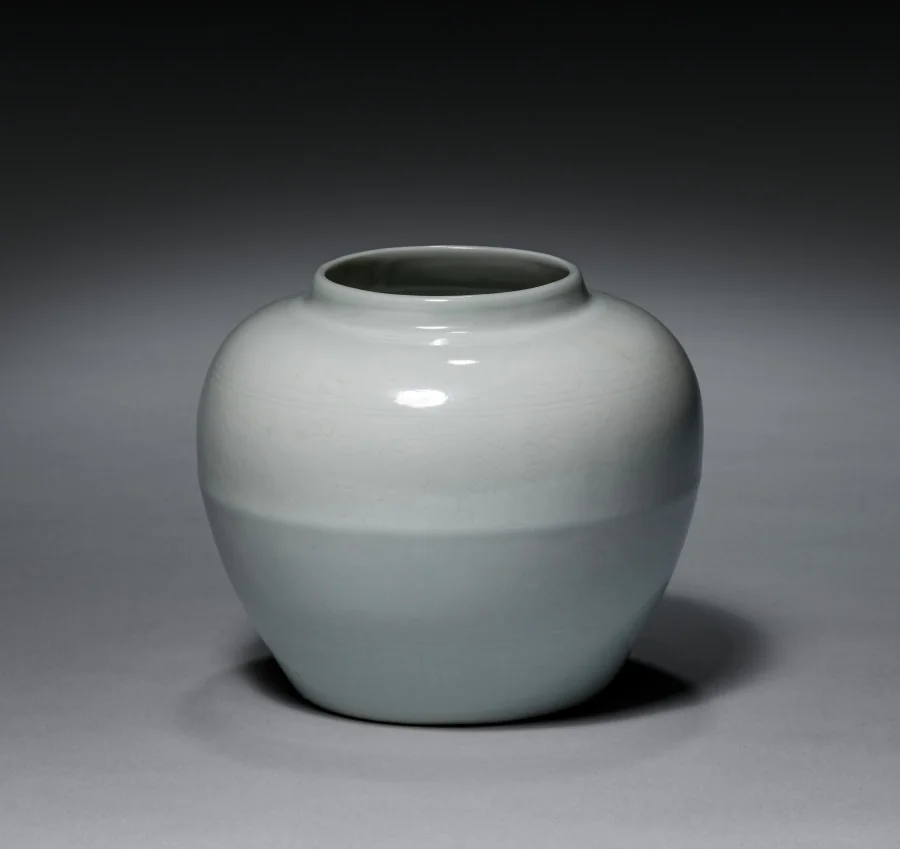
This Jingdezhen jar in the Cleveland Museum of Art has a recorded sweet-white glaze, called tianbai (甜白). The museum dates it to the 1500s–1600s. Faint floral decoration crosses the shoulder, while slender petal shapes run around the lower body. The glaze allows those quiet changes in the surface to remain visible.
The jar rewards a slower look than a bold painted design. Its raised middle seam and restrained decoration divide a surface that initially seems almost uniform.
For the underlying material name, what porcelain means is a useful companion question. The glaze description then adds another part of this particular object’s character.
06 / The guide
Glaze fit connects the surface to the body
The three surfaces also belong to three individual bodies. Glaze fit describes how a glaze and its clay body respond together as temperature changes. Both expand with heating and contract with cooling. Once the glaze becomes rigid, differences between those movements can create stress in the joined materials.
Crazing names a web of tiny breaks across a glaze. On cooling, the coating may try to shrink farther than the body beneath it. That mismatch puts it under tension. In a crackle glaze, the maker deliberately seeks the resulting pattern. The aim changes how I read those lines.
The broad differences among earthenware, stoneware and porcelain help locate the body in the ceramic family. Fit concerns a more specific pairing.
Digitalfire describes fit as thermal expansion compatibility between a glaze and its clay body, which is why changing the body can change the behavior of an otherwise familiar glaze.
Returning to the Longquan vase, I now notice more than a green color. The cloudy coating follows a ridged form, and its thickness has a documented connection to repeated application. The surface becomes easier to describe when the color, coating and body each have a place in the explanation.
Published · Updated