The China Dish journal / A closer look
Huishan Clay: Local Material, Modeling and Painted Surfaces
Huishan clay is the local dark clay used to shape traditional painted figurines around Huishan in Wuxi, eastern China. Its fine, pliable texture suits modeling, and the traditional clay figures can harden through natural drying without kiln firing. Their bright faces and clothing come from the painted surface over the shaped body. The clay, the […]
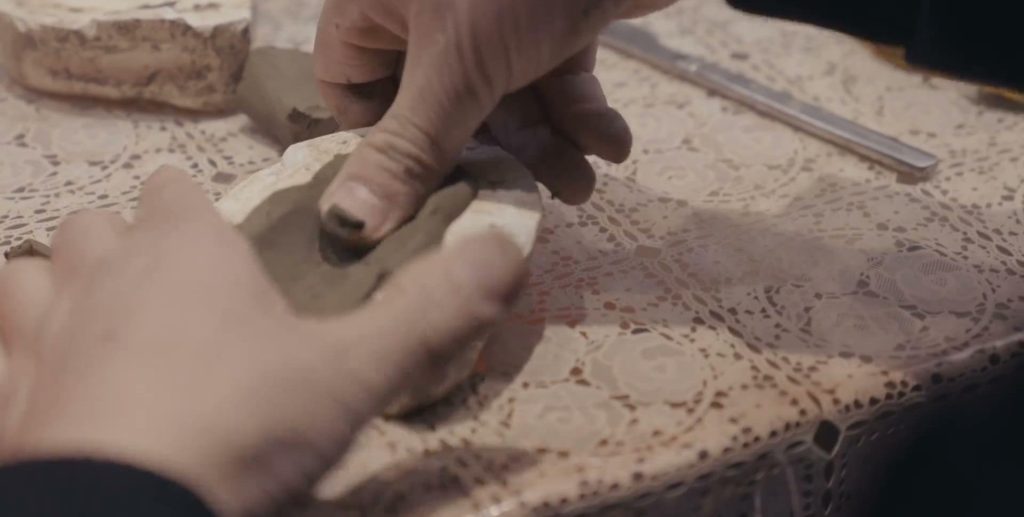
Huishan clay is the local dark clay used to shape traditional painted figurines around Huishan in Wuxi, eastern China. Its fine, pliable texture suits modeling, and the traditional clay figures can harden through natural drying without kiln firing. Their bright faces and clothing come from the painted surface over the shaped body.
The clay, the dried figure and its layers of color each explain a different part of the finished object. Separating them makes a white face or a dark unfinished figure much easier to understand.
Black clay beneath Huishan’s fields
The material has a local origin as well as a local name. China’s national intangible-heritage record specifies dark earth from beneath the area’s rice fields for hand-modeled Huishan figures. Huishan is the mountain beside the Wuxi craft district, so the name ties the material to a place, not simply to a color.
Black clay is valued here for how it responds to shaping. Heritage descriptions emphasize its fine texture and ability to bend and take a form; the Chinese craft expression pairs smooth rolling with bending without breaking. Those are descriptions of a workable modeling material, useful for understanding why a small face can carry closely shaped features.
Pressing clay into a mold makes that quality visible. In the example below, a finger presses dark clay into the hollow of a pale mold. The uncovered section reveals a face and upper body in reverse, while the clay covers the neighboring section of the cavity.
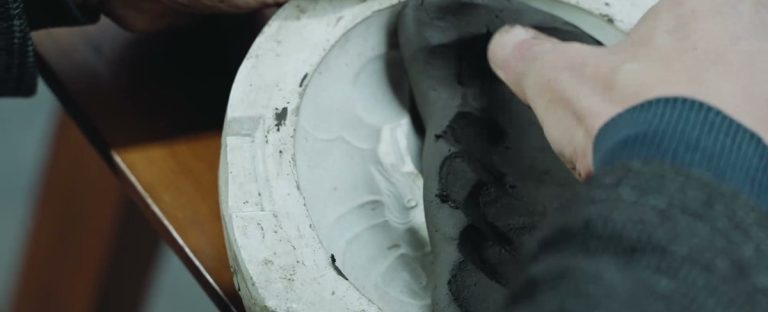
I look first at the edge where the clay meets the empty mold. The hollow face shows what the finger is pressing toward, though I can’t identify a clay deposit from its color. The traditional local material is documented in the craft record.
For the broader setting of these small sculptures, the Huishan clay figures guide connects clay with rounded figures and theatrical subjects.
Why traditional Huishan clay figures don’t need a kiln
Traditional Huishan clay figures can become firm through natural drying, so a kiln isn’t required for this clay-figure method. The archived heritage essay on Huishan black clay describes strength and hardness after drying without firing. The material’s ability to take a shape and then hold it is central to this route from soft clay to a finished figure.
Drying and firing are different stages in a ceramic process. Growing up around Jingdezhen’s kiln districts gave me a familiar sequence of clay bodies, surface treatment and kiln work. Here I have to leave room for a different craft: a dry, painted Huishan figure can be complete without following that ceramic sequence.
The porcelain-making overview includes drying and firing in its process outline. Keeping both words in view helps explain the distinction: a clay object can lose its moisture before a ceramic firing, while the traditional Huishan method described here relies on the dried body itself.
The traditional material also needs to be distinguished from newer products borrowing Huishan imagery. A 2023 People’s Daily report discussed PVC and 3D-printed collectible toys alongside traditional black-clay work. A familiar round face can therefore appear in different materials today; the object’s material description matters as much as its recognizable outline.
From a dark Huishan clay body to a painted surface
A dried Huishan figure gives the painter a shaped surface to work on. The dark body can receive a white ground, a base coating beneath the colored details. In the row below, similarly shaped figures let the eye move from an unpainted dark surface to white-coated forms, then to red lips, defined eyes and black hair.
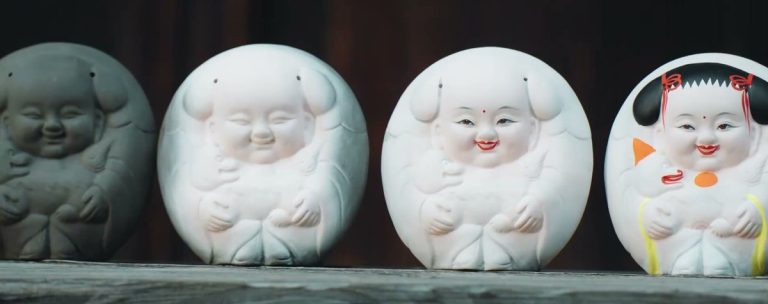
The white-coated figure already has a mouth, nose and hands. The next figure adds dark eye lines and red lips to that modeled face, making its expression easier to pick out. Farther right, black hair and red ribbons give the upper part of the figure a much stronger color pattern.
I prefer to look at the two middle faces. The mouth is already shaped. With the eye lines and red lips painted in, I can pick out the smile more quickly. A white coating also explains why a pale face doesn’t establish a white clay body.
Huishan craft writing gives painting particular weight in the saying “three parts modeling, seven parts color.” The national heritage description uses the saying to express the importance of painting within this sculptural tradition. I read it as an emphasis on craft, rather than a measured ratio of hours or materials.
Shape and painting work together even where their contributions can be separated. The mold establishes rounded cheeks; the painter gives the eyes their dark lines and the lips their red accents. Look back at the white face between the dark figure and the painted one: its features are already there, waiting for color to direct the gaze.