The China Dish journal / A closer look
Huishan Figurine Types: Coarse and Fine Clay Figures
Huishan clay figurines fall into two traditional groups: mold-made coarse figures and hand-modeled fine figures. Coarse figures favor compact shapes and cheerful, auspicious subjects; fine figures often turn opera characters and stories into small sculptures. The useful distinction is how a figure takes shape. Here’s how those methods appear in a rounded clay blank and […]
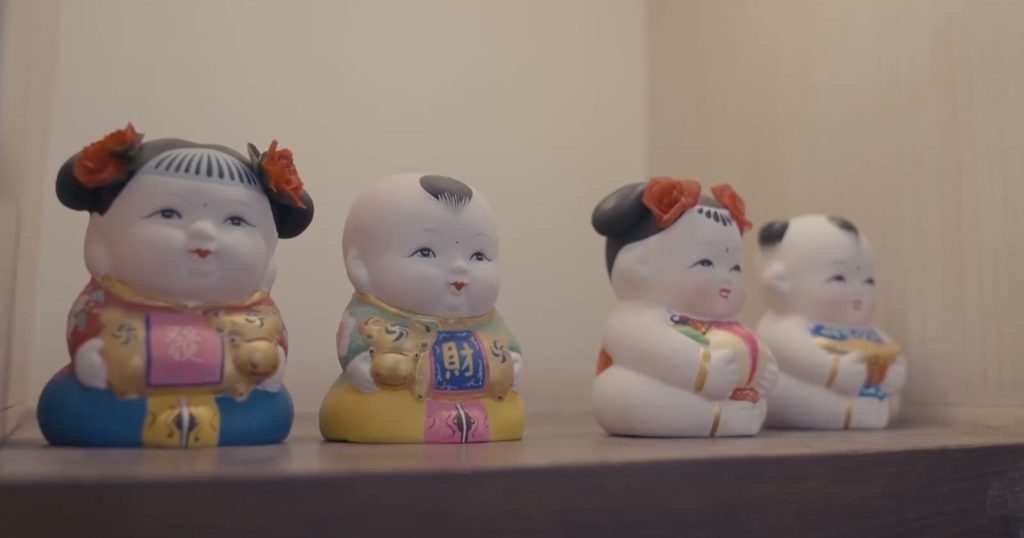
Huishan clay figurines fall into two traditional groups: mold-made coarse figures and hand-modeled fine figures. Coarse figures favor compact shapes and cheerful, auspicious subjects; fine figures often turn opera characters and stories into small sculptures.
The useful distinction is how a figure takes shape. Here’s how those methods appear in a rounded clay blank and a pair of richly dressed opera figures.
Two Huishan figurine types, compared
The two names belong to the clay-figure tradition around Huishan in Wuxi, Jiangsu, in eastern China. The Chinese term cuhuo (粗货) is commonly translated as coarse wares; xihuo (细货) refers to fine wares, especially hand-modeled figures.
In English, “coarse” can sound like a criticism. Here it’s a traditional category name, so I read it alongside the making method and subject.
| What to compare | Coarse Huishan figures | Fine Huishan figures |
|---|---|---|
| Main forming approach | A mold supplies the basic shape | Hand modeling shapes the figure |
| Typical subjects | Good-fortune figures, children, animals and folk figures | Opera characters, myths and scenes from local life |
| Visual emphasis | Compact, simplified shapes and broad color effects | Character, pose and more closely worked details |
| A useful starting question | How does the whole shape hold together? | How do gesture and costume convey a character? |
The subject helps orient the comparison, but the making method matters too. A child figure and a theatrical figure make clear examples because their shapes ask different things of the maker.
China’s national intangible-heritage description treats both groups as part of the same Huishan tradition, with painting playing an important role in the finished work.
The Huishan clay figures guide groups this distinction with the tradition’s clay, Da Afu and opera themes.
Mold-made Huishan figures: a rounded clay blank
A mold-made Huishan figure begins with a repeatable basic shape, and the unpainted child below makes that shape easy to see. A large rounded head sits close to the short body. The hands rest against the front, while the small forms around the chest and belly stay within the body’s compact outline.
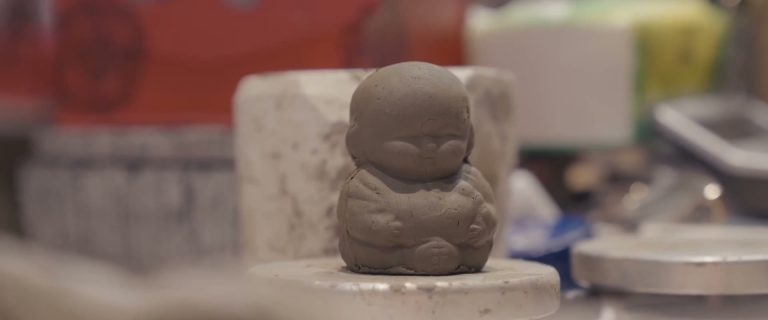
A compact child figure before painting. The mold behind it helps connect the rounded form with the mold-made category.
The blank already has a face and hands; paint doesn’t have to invent those features from nothing. Yet the clay surface leaves the effect of color open. Small facial lines and larger painted areas can lead the eye differently once the figure is decorated.
I like this view for separating the shape that’s already present from the color still to come.
Coarse wares commonly carry wishes for happiness and good fortune. Da Afu, the familiar plump child figure associated with Huishan, is one example in the heritage record.
A broad head and a close, rounded body give that kind of figure a strong overall presence; appreciating it starts with the whole silhouette rather than counting tiny ornaments.
Hand-modeled Huishan figures: opera in the details
Fine Huishan figures bring the comparison from a compact mold-made form to individually shaped characters. Traditional opera supplies many of their subjects, along with myths and folk life. Modeling gives the figure a pose, and painting carries that pose into a particular face and costume.
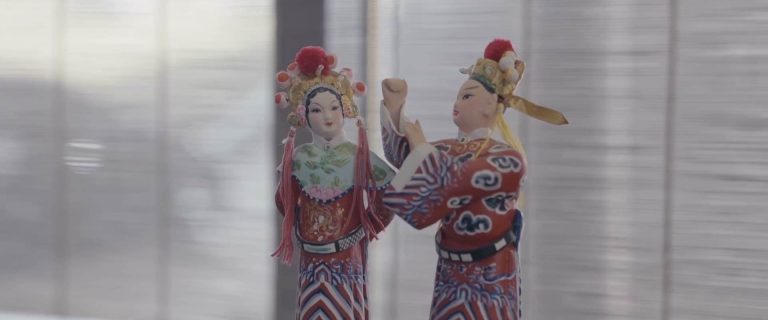
Two theatrical figures with raised hands, long headdress tassels and patterned robes. This cropped view emphasizes their upper bodies and costume details.
The pair above offers several paths for the eye. One face turns toward the other figure, and the raised hands introduce a gesture between them. Tall head ornaments and long tassels extend beyond the faces.
Those separate elements make the figures read as characters taking part in an encounter, even before a viewer knows their names.
The painted clothing adds a second layer of detail. Pale outlines separate dark curling motifs on the red robe, while smaller floral shapes fill the other figure’s chest panel.
I find it helpful to follow the gesture first, then the decoration: the hands establish the action, and the patterned surfaces reward a closer look. The exact opera and roles require a title or object record beyond this view.
Reading coarse and fine Huishan figurines without ranking them
Coarse and fine Huishan figurines offer different ways of giving a small figure presence. The child blank holds its parts close together, making the rounded outline prominent.
The opera pair uses gestures, projecting ornaments and painted patterns to draw attention among several details. Those are useful things to compare before making a judgment about either work.
A simple form can succeed through proportion, expression and confident painting. A detailed figure can succeed through the relationship between its pose, face and costume. The category label tells me where to begin looking; workmanship and an individual object’s documented history call for their own evidence.
Return to the child’s hands tucked against its belly, then to the theatrical figure’s lifted hands. Both details belong to figures made on a small scale, but they organize attention differently: one gathers the eye into a rounded body, and the other carries it into a gesture.
That difference gives the two traditional names something visible to hold onto.