The China Dish journal / A closer look
Chinese Pottery Making: Regional Clay and Craft Traditions
Chinese pottery making involves preparing clay, shaping a vessel and firing it, with surface work following different local sequences. In Rongchang, that work includes glazed and unglazed wares; in Jianshui, polishing follows firing; in Yingjing, hot vessels undergo another surface treatment after leaving the kiln. Those differences are easier to grasp when each tradition is […]
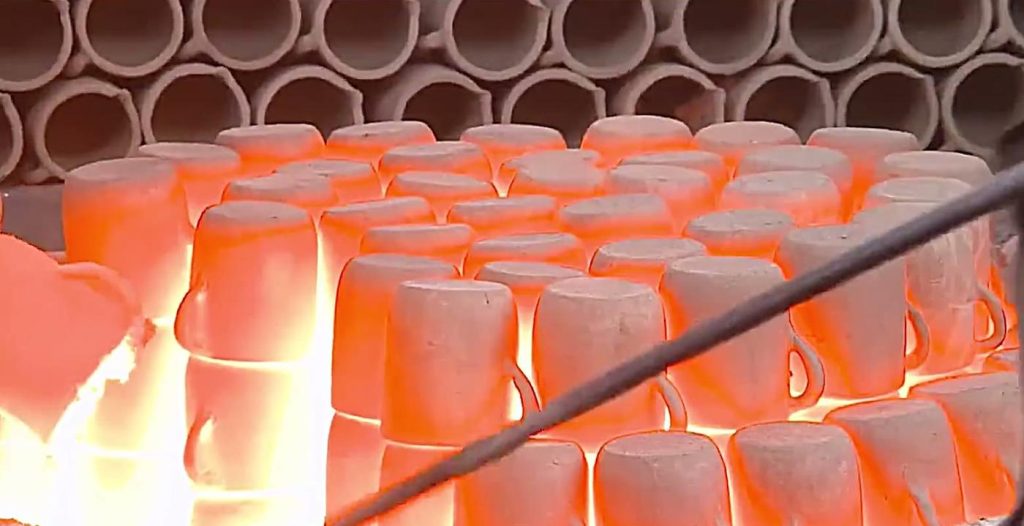
Chinese pottery making involves preparing clay, shaping a vessel and firing it, with surface work following different local sequences. In Rongchang, that work includes glazed and unglazed wares; in Jianshui, polishing follows firing; in Yingjing, hot vessels undergo another surface treatment after leaving the kiln.
Those differences are easier to grasp when each tradition is followed from its own materials to its own finish. I’ll begin with Rongchang’s long production sequence, then turn to Jianshui and Yingjing, where the work continues after firing. These are accounts of regional craft, for understanding how the objects are made.
Rongchang pottery: preparing clay, forming and loading the kiln
Rongchang pottery begins with local clay in the Anfu area of Chongqing. Red and white clay shale supplies the body, the clay structure of the vessel beneath any glaze. Before a pot takes shape, the material goes through selection, drying, grinding, mixing and slurry processing.
Preparing the clay continues with treading and kneading before forming. The national heritage description lists more than 20 operations through to final inspection, and much of that work happens before firing. I like to keep material preparation visible in an explanation: a finished pot can hide the work that made its clay ready to shape.
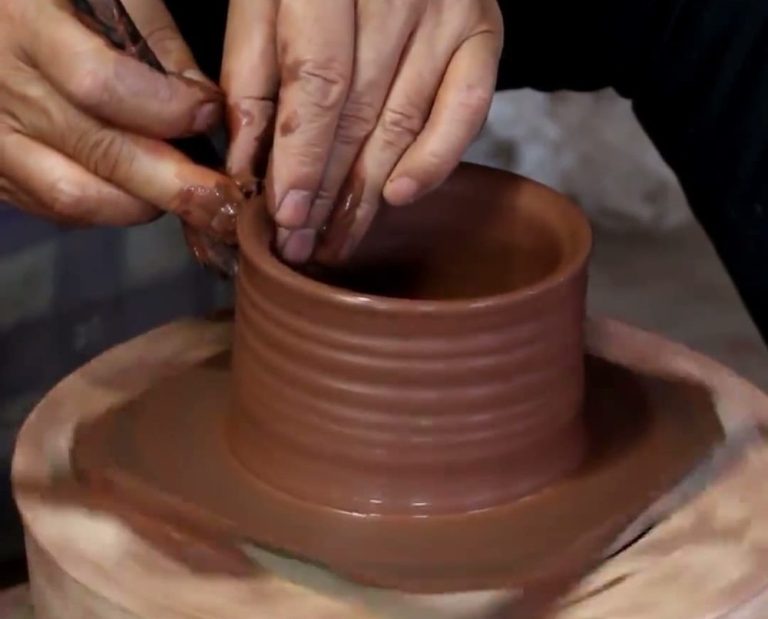
Forming gives the prepared clay its vessel shape, followed by drying the unfired body. In the cup below, fingers reach inside the wall while the other hand works near its outer edge. The open mouth, horizontal ridges and wet surface make this stage easy to distinguish from a finished cup.
Surface work comes before loading the kiln in Rongchang’s recorded sequence, including smoothing, carving and glazing. Glaze belongs to the glazed branch; the unglazed branch leaves the clay exposed. Loading, lighting and tending the kiln lead to closing it, taking out the wares and inspecting them.
The regional Chinese pottery reading routes place Rongchang beside other local traditions. Following the separate operations helps me see a vessel as the result of several kinds of work, from preparing its body to deciding how its surface will finish.
Jianshui pottery: decoration before firing, polishing afterward
Jianshui pottery offers a different answer to finishing the surface: the traditional sequence ends with grinding and polishing an unglazed fired body. The craft comes from Jianshui in southern Yunnan. Clay preparation and hand forming on a wheel establish the vessel before its damp body receives decoration.
Drawing and clay work are connected here. A design laid out on the unfired body guides carving, and colored clay fills the carved areas before firing. The lettering or picture therefore enters the clay surface during making; the later polishing belongs to a separate stage after the vessel has been fired.
Polishing makes a good stopping point in the explanation because it distinguishes two jobs that a smooth finished face can conceal. First comes the design within the body; later comes work on that fired surface. For the narrower question of how lettering and clay relate, there is a Jianshui carving-and-filling reading route.
Yingjing pottery: shade drying and a hot finishing stage
Yingjing pottery also continues beyond firing, but its next operation involves a hot vessel and a separate pit. This Sichuan tradition uses clay and coal slag in its body material. Its recorded preparation includes crushing, adding water and treading the mixture before forming on a hand- or foot-turned wheel.
Shaping includes the vessel’s form and its applied or carved decoration. The unfired pieces then dry naturally in the shade, with strong direct sun excluded from the traditional sequence. That drying stage sits between forming the body and putting it into a purpose-built pit or kiln for firing.
After firing, the still-hot vessels move to a pit for a burning surface treatment described in the Chinese heritage record as glazing. The photograph below shows the movement between two places: a long rod carries a glowing vessel away from the firing area toward the nearer circular opening. The handling continues while the vessel is hot.
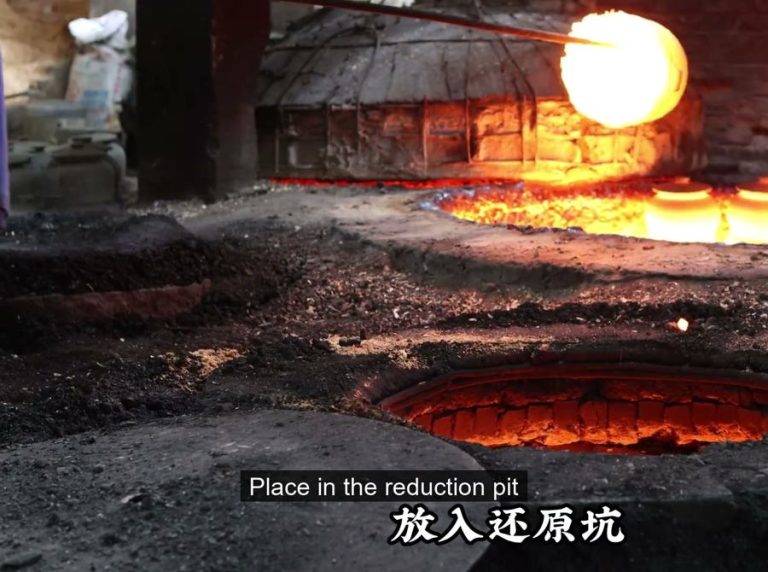
The order matters here. Putting “glaze” before “fire” in every regional account would lose this part of Yingjing’s traditional process. I find the separate pit a clear visual reminder that taking a pot out of the kiln can lead directly to another operation.
Comparing the three pottery sequences: when the surface is finished
The three traditions share work on materials, form and fire, yet they give the final surface different histories. Rongchang includes a choice between glazed and unglazed wares, Jianshui finishes its fired surface by grinding and polishing, and Yingjing’s recorded sequence transfers hot wares to a burning treatment after firing.
| Tradition | Work before firing | Work after firing |
|---|---|---|
| Rongchang | Prepare clay, form and dry the body, then carry out surface work for the selected ware | Remove wares from the kiln and inspect them |
| Jianshui | Prepare clay, form on a wheel, decorate the damp body, carve and fill with colored clay | Grind and polish without an applied glaze |
| Yingjing | Prepare the clay and coal-slag mixture, form and decorate, then shade-dry | Transfer the hot ware to a separate pit for burning surface treatment |
My background in Jingdezhen and museum guiding makes me pay attention to the point where a description becomes easy to picture. “A polished pot” names a result. Knowing whether its surface was glazed before firing, polished afterward or treated while hot gives that result a place in the making process.
For these regional wares, I begin with a simple question about the surface: when did it acquire its final appearance? The answer leads back to different work in different places. A smooth face carries that history.