The China Dish journal / A closer look
Yingjing Pottery Materials: Clay Body and Coal Cinders
Yingjing pottery is made from a clay body that includes local clay and ground coal cinders. The clay is the workable base; the cinders are burnt coal residue mixed into it. In this Sichuan craft, understanding the dark pot begins with those two materials, then follows the work of choosing, grinding and shaping them. The […]
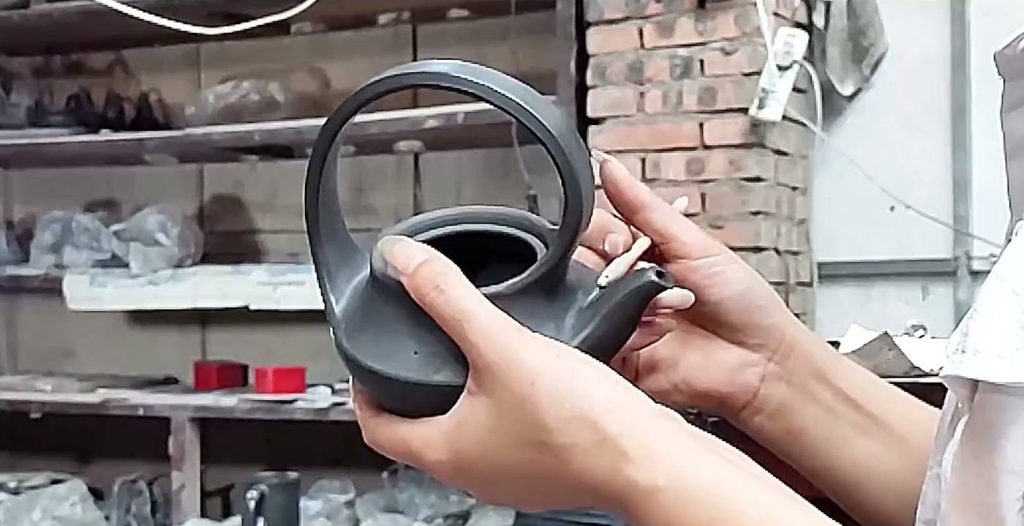
Yingjing pottery is made from a clay body that includes local clay and ground coal cinders. The clay is the workable base; the cinders are burnt coal residue mixed into it. In this Sichuan craft, understanding the dark pot begins with those two materials, then follows the work of choosing, grinding and shaping them.
The mix also helps explain why a coarse cooking pot and a finer piece of tea ware can belong to the same local tradition. I’ll follow the materials through preparation and grain size, then turn to the surface that develops during firing.
Local clay and coal cinders in Yingjing pottery
The local clay has a name of its own: baishan ni (白善泥), a yellowish-white clay described in Yingjing’s craft accounts as fine and strongly sticky. That stickiness matters when thinking about the body, the clay structure of a vessel. The pot has to hold a shape while the maker works on it.
Coal cinders enter that body as a separate ingredient. Coal is first burnt, and the residue is ground and mixed with the local clay. The Chinese term meizha means coal residue; “coal cinders” conveys the material’s burnt state without turning the name into a precise chemical formula.
A pile of dry ingredients can seem far removed from a vessel’s smooth curve. Water and the work of mixing bring those materials into a mass that hands can shape. The national heritage account describes crushing, wetting and treading before forming, with natural shade drying following the work on the vessel.
For more regional reading, the Chinese pottery outline lists Yingjing among its local topics. This article begins with the clay-and-cinder body, before the pot acquires its finished surface.
Selecting and preparing the coal-clay body
Preparing Yingjing clay includes choosing the cinders as well as grinding them. A research team including Chandra Reedy observed this work at Zeng Qinghong’s workshop during field visits in 2014–15. Zeng checked cinders from his own kiln by eye; outside suppliers brought samples for him to judge before their material entered the body.
I find that act of selection more revealing than a bare list of ingredients. “Clay plus coal residue” sounds as though everything left after a fire could go into the mix. Zeng’s choice adds a skilled decision between the burnt material and the potting room.
At the workshop studied, grinding broke down the clay and cinders before workers scooped, shoveled and wetted the mix. A pug mill then mixed the wet body and removed trapped air. The prepared material rested before use, giving the clay time to wet through and become more plastic, or easier to shape.
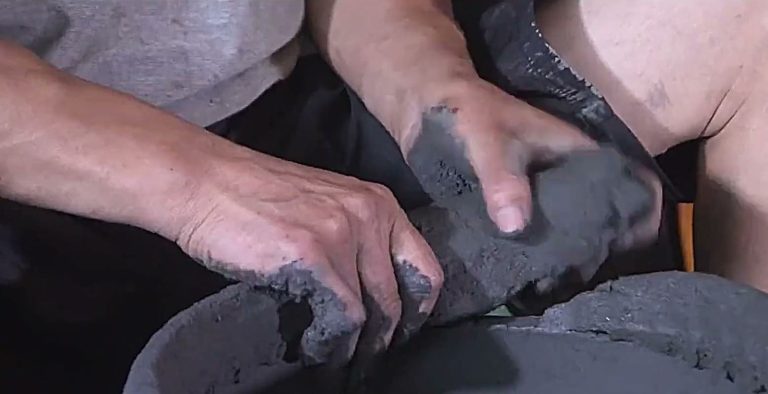
The soft mass below shows what shaping asks of the body. The maker’s hands press into a dark lump while another portion rests nearby; its edges yield under the fingers. The work has reached the point where the mixture can be handled as clay.
Grain size changes the feel of Yingjing ware
Grinding and screening give makers another choice: how fine to prepare the body for the object they want to make. In a 2020 account of Zeng Qinghong’s work, the fineness of the screened clay depended on the vessel’s function. The coal residue also went through grinding and screening before mixing.
That choice gives a more precise way to look at a rough surface. Coarse grain isn’t simply a stage the maker forgot to finish. The size of the prepared particles belongs to the making decisions, so a comparison between wares needs to take their intended forms and uses into account.
The pots below have small raised grains across the dark walls and lids. Light catches those points, while the curved sides and round mouths remain easy to follow. The grain and the vessel’s overall shape are both present; the rough texture doesn’t erase the worked outline.
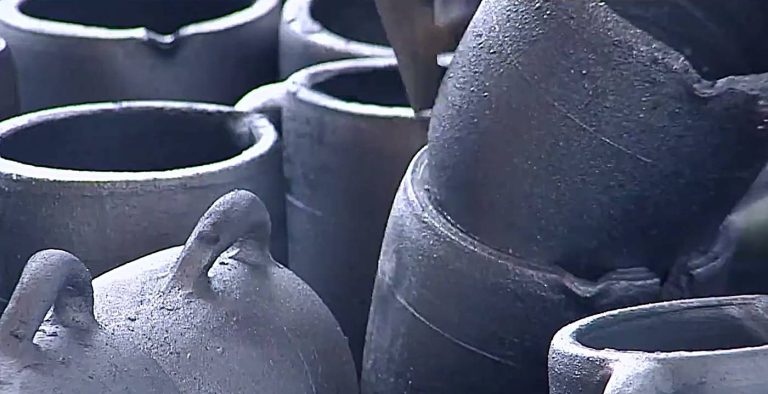
I’d begin a close look with that difference in scale: the broad curve first, then the tiny bumps along it. A photo can show those features together. Identifying the exact substance of each grain would call for a different kind of examination.
Firing gives Yingjing clay another surface
The prepared body carries the vessel into firing, but the finished surface also owes something to what happens after it leaves the main kiln. Yingjing’s traditional process moves the hot ware into a separate covered pit with combustible plant material. Smoldering there is part of the finishing work.
The body ingredient and this later treatment occupy different places in the process. Ground cinders go into the clay before shaping. Plant material meets the already-fired vessel during the hot finishing stage. Keeping those roles clear helps me understand how the material inside the wall and the appearance of its face belong to one pot.
A dark, grainy Yingjing vessel therefore carries several choices at once: selected ingredients, the fineness of their preparation and a surface worked through fire. The next detail I’d look for is where the light breaks across that surface, picking out the grain along a curve the maker shaped while the body was still soft.