The China Dish journal / A closer look
A surface made by carving and filling
Jianshui pottery inlay starts by cutting a design into an unfired clay body, then filling the recesses with colored clay. The drawing becomes a pattern within the surface of the vessel. Carving, a broken edge and the final unglazed finish each reveal how the clay changes. I find this easier to understand from the side […]
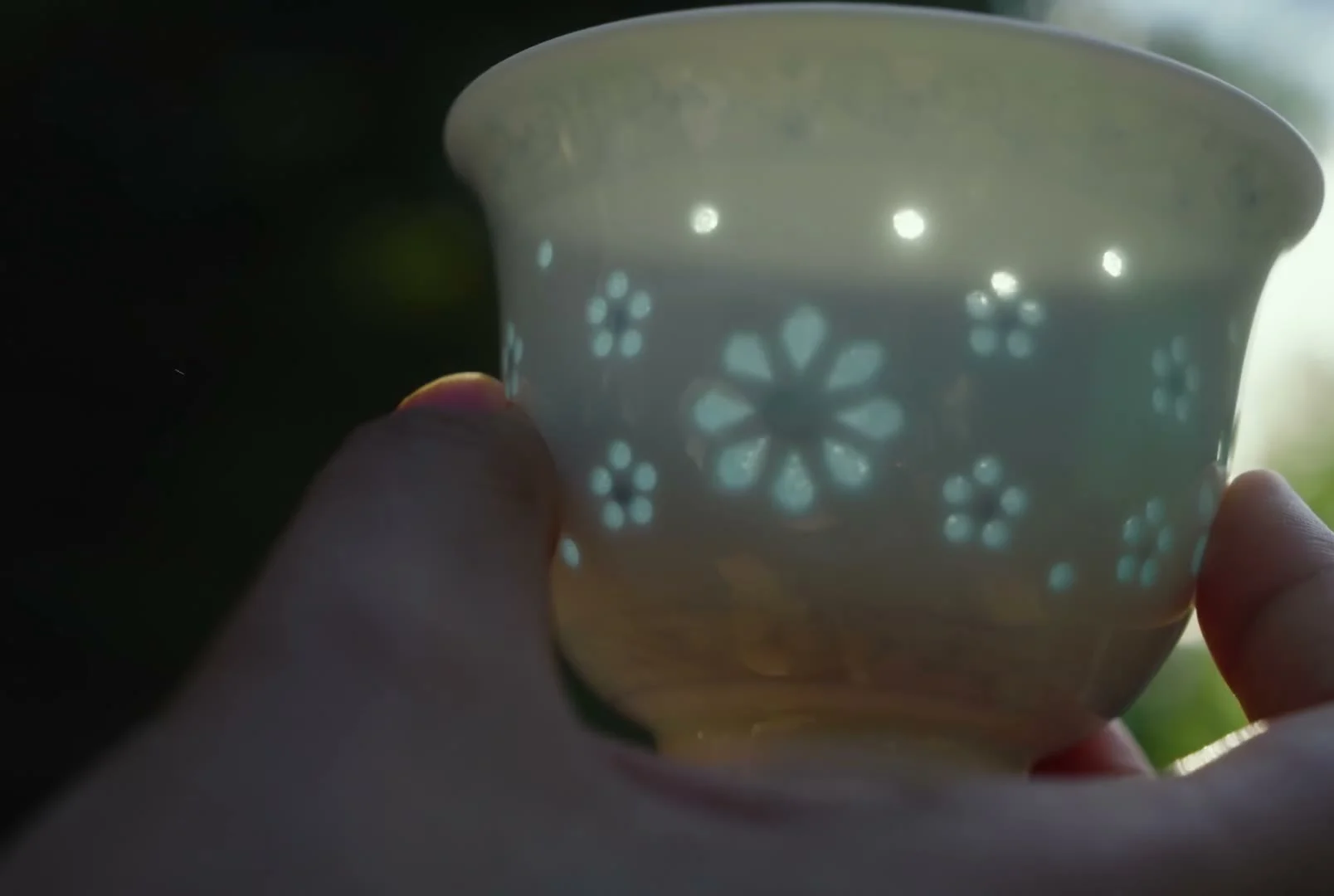
Jianshui pottery inlay starts by cutting a design into an unfired clay body, then filling the recesses with colored clay. The drawing becomes a pattern within the surface of the vessel. Carving, a broken edge and the final unglazed finish each reveal how the clay changes.
I find this easier to understand from the side of a piece than from its decorated face. A polished surface can make several materials look continuous. Understanding where the color sits gives the lettering and painted-looking motifs a more tangible history.
Carving and colored clay: how the design enters the body
The design begins as brushwork on the shaped clay body. A maker draws the lettering or picture, establishing the lines that the carving will follow. The vessel is still unfired at this stage, so its surface can accept both the cut and the clay added afterward.
Carving removes clay from the area inside the drawn outline. That hollow is the space for the new color. Filling follows: the craftsperson works colored clay into the carved design, replacing the material taken away. The local name yin ke yang tian (阴刻阳填) brings those two actions together: incised carving and clay filling.
The material’s moisture matters during this work. The craft account accompanying the photographs describes a damp body: excessively wet clay sticks and interferes with the blade, while overly dry clay becomes brittle and difficult to carve cleanly. Keeping the body workable also helps the added clay join it.
The paired workshop photographs make the change in tools especially clear. On the left, a slender tool follows a drawn figure; on the right, a broader blade works over clay covering part of a lettered vessel. Both hands are doing detailed surface work, but removing material and supplying material ask different things of the tool.
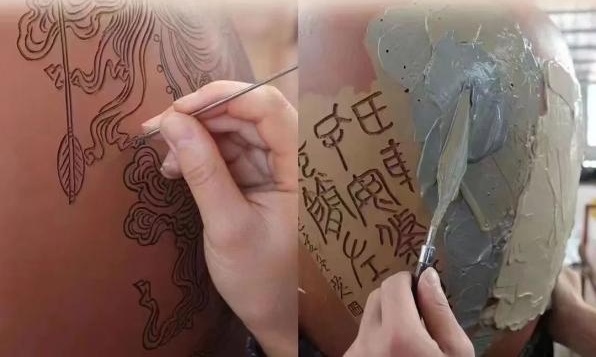
The Jianshui reading route sits within our regional pottery guide. Here, the attention stays on the small area where a design changes the material of the vessel wall.
Reading a Jianshui inlay at the broken edge
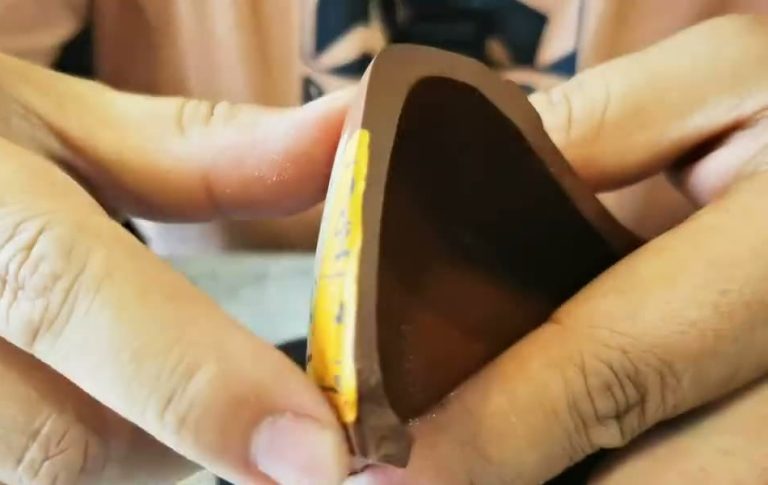
After colored clay occupies the carving, a decorated face shows the shape of the motif while an exposed edge can show its position in the wall. The broken sample below has a yellow strip beside a thicker, dark brown section. The hands turn that edge toward us, giving a view the decorated face would conceal.
The narrow yellow area is the detail I keep coming back to. Viewed from the front, a color patch tells me its outline, but viewed from the side, I can see the patch beside the brown material and follow where the color meets the rest of the wall. The edge makes the difference between a pattern’s visible shape and its place in the clay easier to grasp.
A level face and an inlaid design can therefore belong to the same object. Inlay describes where the contrasting material goes; a smooth finish describes the final surface. The word “carved” can suggest a groove left open, but filling changes that expectation: the groove serves as a place for another clay.
For this sample, the edge is more useful than a claim about its brilliance or value. I can follow the boundary between colors and see how the wall continues behind the decorated area. Looking closely lets me trace those colors; to name the exact clay mixture, I’d need more than the visible edge.
From carved calligraphy to an unglazed finish
The finished face brings the clay pattern back into view as lettering or a picture. In Jianshui’s carving-and-filling tradition, brushwork sets the design, and the subsequent clay work gives that design a material form. The line has both a visual role and a place in the vessel surface.
The process continues through firing, followed by grinding and polishing without an applied glaze. That order helps explain why the smooth surface can look so different from the damp, partly covered vessel in the workshop photograph. The rough, partly covered clay belongs to work still underway; it isn’t how the lettering will look on the finished piece.
As a former museum guide from Jingdezhen, I like explanations that give a visitor something specific to look for. On a Jianshui vessel, the meeting of a colored stroke and its surrounding surface does that job. It lets a reader connect the design with clay cut away and clay added before getting lost in a list of craft terms.
Calligraphy also asks for a different kind of attention from a photograph of the clay alone. A character occupies space on a curved vessel: the eye follows its strokes and the open surface around them. I can enjoy how the letters sit on the curve even when I’d need help to read the words.
The lettering in the workshop photograph remains part of the object; I haven’t assigned it a poem or an author. What the photograph does offer is the contrast between the drawn strokes and the clay that temporarily covers part of them. Once the carving, filling and later finishing are understood, that patch of unfinished surface becomes an intelligible stage in making a decorated pot.