The China Dish guides
Chinese Porcelain: Kilns, History, Shapes and Decoration
Chinese porcelain includes northern white wares, Jingdezhen’s painted vessels and Dehua’s white figures, among other regional traditions. A blue dragon jar and an unpainted seated monk can both belong within it.
Their differences become clearer when place, period, shape and decoration are read separately. Those are the threads followed here, from early kiln traditions to objects made for overseas use.
A few details to notice
Look a little closer.
Read the object account and sources ↘
Read the object account and sources ↘
01 / A closer look
What does the name tell you?
- Place
- Period
- Form & decoration
“Chinese” tells us where a piece was made; “porcelain” names its material. Kiln, date and decoration add different kinds of information.
What does Chinese porcelain include? ↗
From the referenced guide section and its sources.
02 / A closer look
Which place made it?
Xing, Ding, Jingdezhen and Dehua connect objects to different production traditions. Keep the particular kiln and object record in view.
Chinese porcelain kilns: Xing, Ding, Jingdezhen and Dehua ↗
From the referenced guide section and its sources.
03 / A closer look
How was the surface decorated?
A colored glaze, cobalt beneath a glaze and enamels above it describe different ways of making a porcelain surface.
Chinese porcelain decoration: glaze, cobalt and enamels ↗
From the referenced guide section and its sources.
01 / The guide
What does Chinese porcelain include?
“Chinese” tells us where a piece was made; “porcelain” names its material. A museum label may then add the kilns, a dynasty, an emperor’s reign and the way the surface was painted or glazed. Each detail answers a different question about the same object. The label keeps those roles separate.
I grew up around Jingdezhen’s old town and kiln districts, where porcelain stalls, workshops and the movement of finished wares were familiar sights. That background gives the city a particular place in my thinking.
For a guide to China as a whole, I also need to look beyond it, toward northern white wares and the white sculpture of Fujian.
A kiln name puts a piece among the work of a particular place, while a dynasty places it in time. Blue-and-white describes its painted surface. A Ming jar can carry all three names, and I find each one useful for a different reason: where it came from, when it was made and how the blue reached the clay.
The English word “china” adds another layer. The V&A traces its use in seventeenth-century Britain to porcelain imported from China; its later uses grew broader. Our guide to porcelain materials and making explains the body itself. Here I follow the pots and the places behind them.
02 / The guide
Chinese porcelain kilns: Xing, Ding, Jingdezhen and Dehua
China’s kiln names describe a landscape of production, and their importance changed over time. The National Museum of China’s porcelain exhibition sets out the Tang period’s southern Yue and northern Xing kiln systems, followed by the many regional traditions of the Song.
Jingdezhen belongs within that wider history before it becomes central to the story of painted porcelain.
Xing gives me a starting point for northern white wares, beside the green-glazed wares of Yue in the south. I picture those two regions before moving forward in time. “Chinese ceramics” is the broad heading here; the museum’s material entry helps place a vessel among porcelain and stoneware.
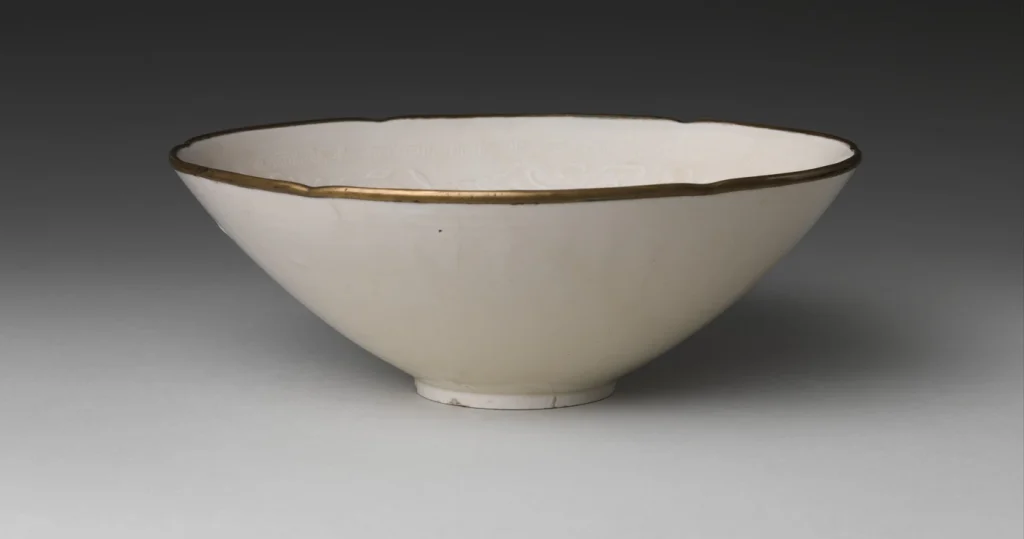
Ding offers a more specific white-ware example. The Walters Art Museum’s Northern Song bowl with a notched rim, number 49.1718, comes from the Ding tradition of Hebei province. Its description joins a warm ivory-white glaze with incised and impressed plant ornament.
Decoration here can lie in the shaped clay beneath the glaze, with no painted blue required.
Jingdezhen, in Jiangxi province, is especially associated with blue-and-white and other painted porcelains. The large dragon jar introduced in this guide was made there for the Ming court.
Dehua, in Fujian province, offers another path: its white porcelain lets modeling, folds and a lustrous glazed surface carry much of the visual effect.
| Name on a label | A useful point of reference | What to look for next |
|---|---|---|
| Northern white-ware production in the Tang period | The record’s material and date | |
| Ding | A northern tradition represented by ivory-glazed bowls | Carved or impressed designs beneath the glaze |
| Jingdezhen | A Jiangxi production center with many painted wares | The particular technique and intended setting |
| Dehua | A Fujian white-porcelain tradition | Modeled details and the glazed white surface |
I use the kiln names to start looking, then return to the piece itself. The museum record dates it and names its clay and glaze.
With a Ding bowl, for instance, that means looking for the plant designs cut or pressed into the clay as well as the warm white surface above them.
03 / The guide
From Tang white wares to Qing painted porcelain
The kiln landscape also changes when arranged in time. Tang white wares provide an early point of reference; Song ceramics bring many regional centers into view.
The National Museum of China includes Ding alongside other Song traditions, with Longquan and Jingdezhen among the southern kiln systems. The familiar blue-and-white jar sits later in this sequence.
| Period | A thread to follow in Chinese porcelain |
|---|---|
| Tang (618–906, as dated in the V&A’s blue-and-white account) | Northern white wares within a varied ceramic landscape |
| Song (960–1279) | Regional kiln traditions, shaped decoration and glaze effects |
| Yuan (1271–1368) | The flowering of cobalt-painted blue-and-white porcelain |
| Ming (1368–1644) | Jingdezhen court production and combinations of painted decoration |
| Qing | Expanded enamel palettes and further developments in colored glazes |
Blue-and-white has earlier precedents, but it flourished during the fourteenth century under the Yuan. The V&A describes improvements in Jingdezhen clay preparation and firing, alongside cobalt supplied within China and from the Middle East.
The distinction between an early example and a flourishing tradition matters: a technique can have a long beginning before it becomes widely influential.
For the Ming, I return to the Met’s dragon jar. The museum calls it a court order, dated by the writing on its shoulder to the Xuande emperor’s reign, 1426–35.
At 19 inches (48.3 cm) high, it’s a large vessel. The blue dragon winds across its curved body beneath a clear glaze.
Later wares gave painters more colors to work with. The Met’s account of Jingdezhen in the seventeenth and eighteenth centuries includes pink and white enamels, along with new shades of colored glaze.
I can see the gain in range more clearly by keeping the blue jar and white figure beside those later painted pieces.
04 / The guide
Chinese porcelain decoration: glaze, cobalt and enamels
Where does the color sit? With blue-and-white, cobalt pigment is generally brushed onto the white body beneath the glaze. Blue lines can trace an edge, while a broad wash fills the space beside it. White spaces left between the blue marks also shape what I see. The picture grows from both colors.
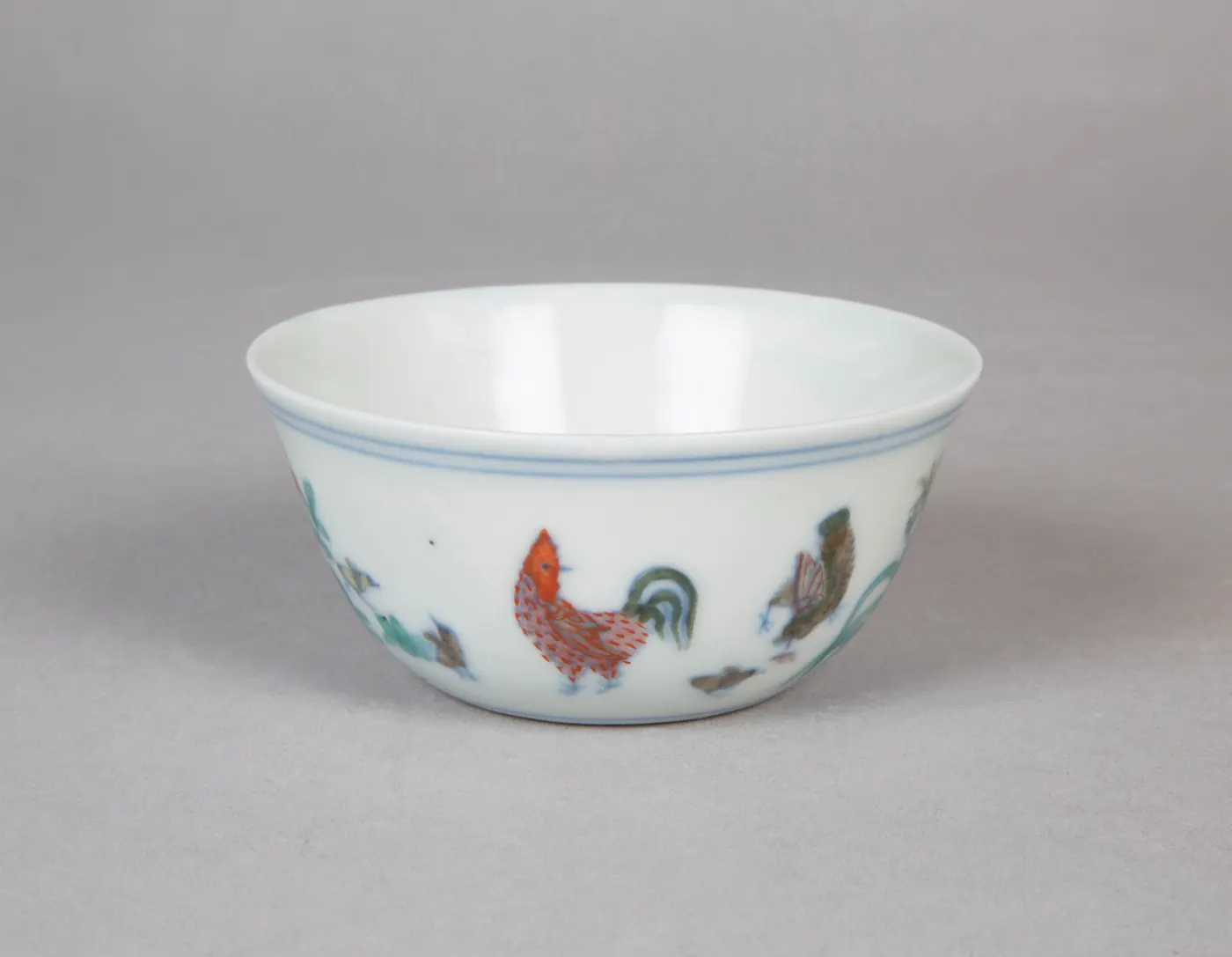
The Met’s chicken cup takes the blue line into a second firing. Made in the Chenghua reign, 1465–87, this small vessel has a rim just 3¼ inches (8.3 cm) across.
Its blue designs were drawn before glazing and the first, hotter firing; colored enamels went over the glaze for a cooler firing. The finished decoration combines contributions made at different stages.
I find the rooster a helpful place to pause. Its red body catches my eye before the fine outlines do. The museum’s account of the firing sequence then gives those visible colors a material relationship.
The Met also connects the chickens and their young with nurturing the family, adding a cultural reading to the painted subject.
Glaze can reveal a modeled surface without a painted narrative, as the Dehua figure below shows. For the broader sequence that turns a clay form into a finished vessel, the guide to forming, glazing and firing follows the making stages.
05 / The guide
Bowls, jars and figures: what Chinese porcelain forms do
Decoration occupies a shape, and that shape sets the terms of looking. The chicken cup spreads its birds around a low, open vessel. The dragon jar carries its painting over a broad rounded body.
The seated figure gives the eye folds, shadows and a face to follow. A flat reproduction can make these differences easy to overlook.
The Met calls the dragon vessel a storage jar. Its broad body and open neck thus belong to its use as well as its outline. I keep that name beside the low chicken cup as I look at the two forms. The cup’s small size changes how the birds fill its sides.
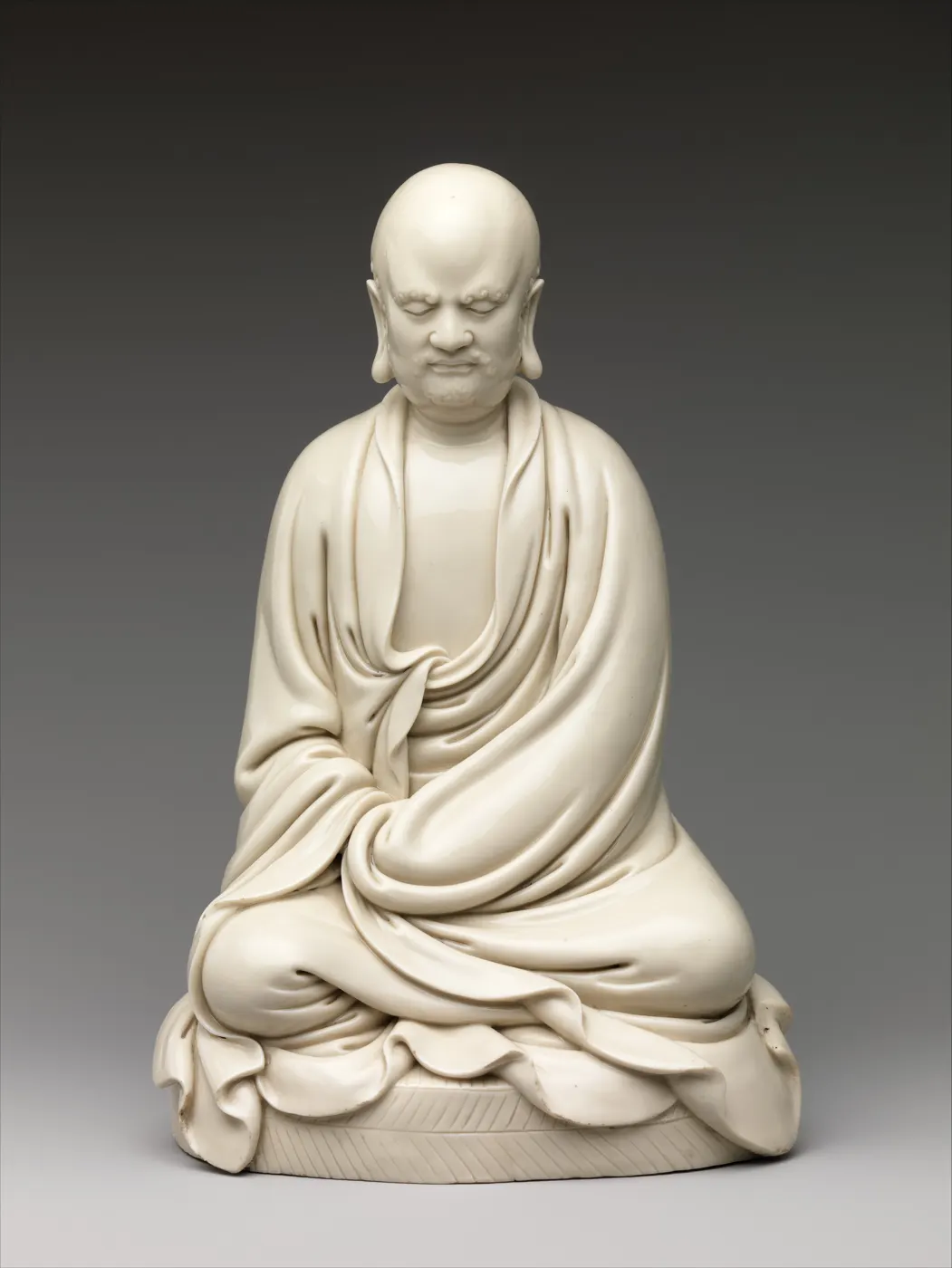
The white figure represents Bodhidharma, the monk traditionally credited with founding Chan Buddhism. The Met dates this Dehua piece to the seventeenth century and gives its height as 11¾ inches (29.8 cm).
Folds curve across the lap and rise toward the shoulders. I see the face framed by broad, smooth bands of cloth.
Dehua white porcelain is often called blanc de chine, a French term meaning “China white,” in Western writing. The Met associates the tradition with an ivory-white body beneath a thick, clear, lustrous glaze.
Here the figure’s modeled folds make that description tangible: light gathers on the raised edges and shadows settle between them.
06 / The guide
Chinese porcelain abroad: orders and later alterations
Vessel shapes also carry the history of exchange. The Smithsonian’s account of Silk Road luxury arts describes Tang white stoneware and porcelain made to echo silver vessels.
The relationship between ceramics and other materials therefore reaches well before the later European porcelain trade. Form could travel between materials as well as between places.
Overseas customers later commissioned familiar shapes and identifying decoration from Chinese potteries. The Met’s export-porcelain essay describes models supplied for unfamiliar European forms.
Coats of arms added a different requirement: a painted design had to communicate a particular family’s or customer’s identity. Armorial porcelain belongs to that history of orders and interpretation.
Other objects acquired metal fittings after firing. European owners sometimes added gilded silver to Chinese porcelain, emphasizing its value and changing its outline or use. The ceramic and the fittings can therefore have separate makers and dates.
Armorial commissions and later metal mounts are two distinct topics within this larger history, each beginning with a different question about what happened to the vessel.
07 / The guide
Reading a Chinese porcelain museum label
A museum label brings these strands together in a small space. I begin with the object’s name and shape, then read its date, place, clay and glaze. My work as a museum guide taught me to put the object beside its context. I want to see how the two fit.
For the dragon jar, “Jingdezhen” names the kilns, “Xuande mark and period” gives the museum’s dating, and “cobalt blue under transparent glaze” describes the painted surface.
The writing on the shoulder belongs within that record. I read the museum’s account beside it, since the small blue marks alone can’t tell me the jar’s whole history.
The chicken cup leaves me with another detail to look at: the narrow blue line beneath the rim, above the red rooster. After reading about its clay, glaze and colors, I can place those marks within the making sequence.
A short label has opened a longer view of the cup, from its painted surface to the firings that brought it together.
Published · Updated