The China Dish guides
Chinese Porcelain Painting: Color, Glaze, and Brushwork
Chinese porcelain painting uses ceramic pigments and enamels to create pictures and patterns on porcelain. The color may sit beneath a transparent glaze, above a fired glaze, or in a design that combines both.
Blue-and-white bowls, brightly enameled jars, and painted porcelain plaques belong to this broad subject, each with a different relationship between brushwork, surface, and firing.
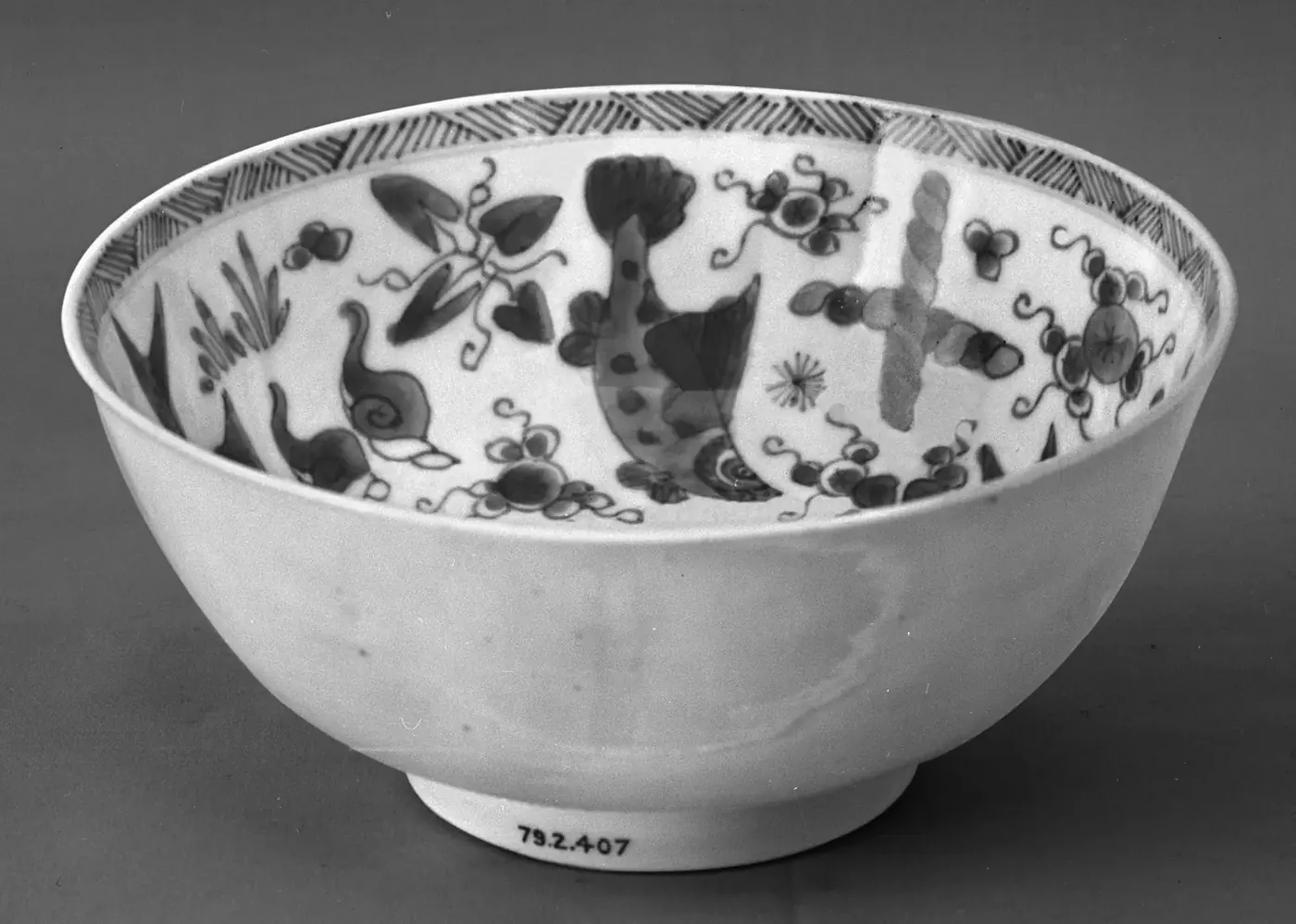
A color name won’t tell you the whole story. A blue fish painted inside a bowl occupies a very different space from a flower basket on the outside of a tall jar.
I like to look at both decisions: how the color became part of the ceramic surface, and how the picture belongs to the object carrying it.
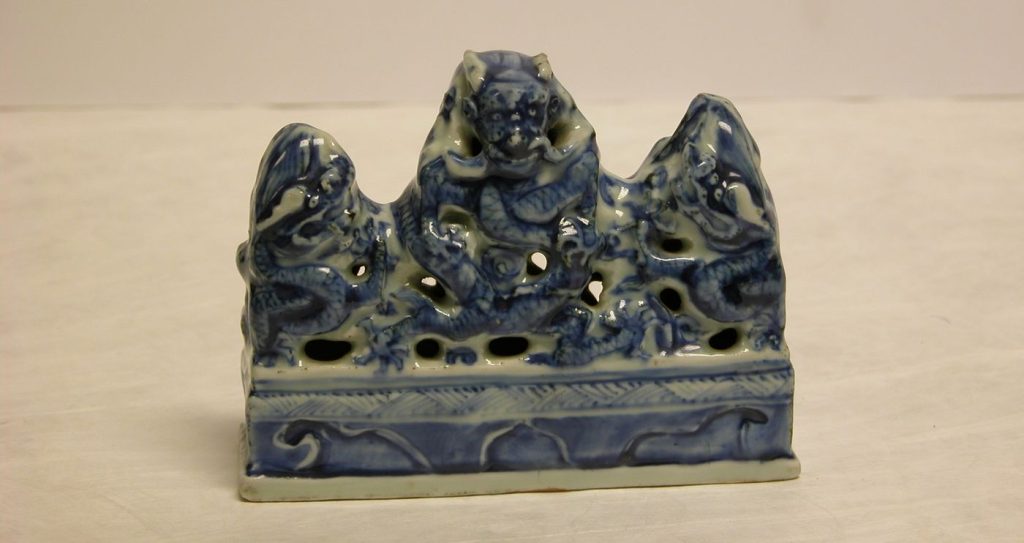
A few details to notice
Look a little closer.
Read the object account and sources ↘
Read the object account and sources ↘
01 / A closer look
Below or above the glaze?
- Brushwork
- Glaze layers
- Firing
Underglaze painting sits beneath a transparent glaze. Overglaze enamels are added to a surface whose glaze has already been fired.
Painting beneath and above a porcelain glaze ↗
From the referenced guide section and its sources.
02 / A closer look
What do brushwork and firing do?
The brush places the design; firing changes and fixes the ceramic colors. Their relationship matters as much as the color name.
What brushwork and firing each contribute to porcelain painting ↗
From the referenced guide section and its sources.
03 / A closer look
How does a picture fit its vessel?
A bowl’s interior and a tall jar’s outer wall offer different spaces for a design. Read the painting together with the shape that carries it.
Porcelain painting follows the shape of the vessel ↗
From the referenced guide section and its sources.
01 / The guide
Painting beneath and above a porcelain glaze
Start with the porcelain body: the ceramic material that gives the object its shape. Glaze is the glassy surface layer formed during firing. Painted decoration adds another question—where does the colored design sit in relation to that glaze?
If the material itself is unfamiliar, our explanation of what porcelain is separates the body from its surface covering.
In underglaze painting, the design is applied before the transparent glaze covers it. Cobalt blue is the familiar example.
Overglaze enamels go onto a surface whose glaze has already been fired, followed by a lower-temperature firing to fix the decoration. The distinction concerns the position and firing of the color, rather than whether the picture contains flowers, people, or abstract ornament.
| Painted decoration | Relationship to the glaze | A useful example |
|---|---|---|
| Underglaze | Painted design beneath the glaze | Cobalt-blue decoration on blue-and-white porcelain |
| Overglaze | Enamel decoration applied over a fired glaze | The colored enamel painting on a famille rose jar |
| Combined decoration | Parts of one design below the glaze and others above it | Blue underglaze outlines with added enamel colors in doucai |
These positions can coexist on a single object. A label that mentions both underglaze blue and overglaze enamels is describing a combination of processes. It isn’t contradicting itself.
Nor should every blue passage be assigned to the underglaze layer: blue was also available as an overglaze enamel, including in Kangxi-period decoration.
Colored glaze and painted decoration are related but distinct ways of treating porcelain. A broad, evenly colored glaze may carry the visual interest without a painted scene. A carved flower creates its form through the ceramic surface itself.
On a painted piece, look for what the drawn line or colored passage contributes; the mere presence of color doesn’t tell you how the decoration was made.
02 / The guide
What brushwork and firing each contribute to porcelain painting
A brush gives a painted stem its turn, a fish its contour, or a mountain its changing tone. Firing makes those marks part of a ceramic object.
With blue-and-white porcelain, a cobalt-bearing pigment can establish lines and washes before glazing. With overglaze enamel painting, the painter works on the already glazed surface. The two routes begin with different surfaces and put the decoration through different firing conditions.
The distinction helps explain why a finished color is more than a painter’s choice from a paint box. The pigment, its application, and its behavior during firing all matter.
Underglaze red provides a historical example: the British Museum’s account of Chinese porcelain decoration describes copper-based red as harder to control in firing than cobalt blue.
A grayish passage in a documented red-painted work can therefore belong to its firing history, rather than simply to a gray pigment chosen for the picture.
Within blue-and-white painting, a narrow palette can still carry considerable variation. The V&A describes painters using pale and dark blue, fine outlines, and white areas reserved within a blue ground.
It also identifies fenshui (分水), the use of different blue shades associated with Kangxi-period painting. A shaded leaf and a sharply outlined leaf can ask the eye to read the same cobalt color in different ways.
When I look closely, I separate contour from tone. Is a leaf mostly held together by its outline, or by a dark area against a pale one? Does the white ground describe a shape, or leave room around it? These are questions a finished object can help answer.
It can’t, by itself, tell us the painter’s exact brush sequence, working time, or kiln schedule. Our porcelain production overview places decoration among the broader stages of preparing, shaping, drying, and firing a ceramic body.
03 / The guide
From blue-and-white porcelain to Qing enamel palettes
Blue-and-white porcelain is one of the clearest routes into the subject: cobalt-blue painting against a pale porcelain ground, generally beneath the glaze. Its importance grew substantially during the Yuan dynasty, while underglaze red developed alongside it.
The National Museum of China’s history of porcelain then places further combinations of painted color within the Ming period and the expansion of enamel palettes within the Qing.
That broad sequence is useful, provided it doesn’t become a story in which every new color replaces the last. Blue-and-white painting remains a distinct visual language even when enamel decoration becomes available.
The question changes from “which technique came next?” to “what did this combination allow the painter to do?”
Ming combinations of underglaze and enamel color
Doucai (斗彩), often translated as joined or contrasting colors, brings underglaze blue together with overglaze colors in a coordinated design.
Blue outlines and areas of blue can be established beneath the glaze, while enamel colors complete other passages above it. The finished picture joins decisions made on either side of the glaze firing.
The technique developed in the Ming period and continued into the Qing. A Yongzheng-period lotus-pond dish in the Met makes that continuity concrete: its lotuses and water combine underglaze blue outlines with enamel colors.
A Ming-associated technique on an eighteenth-century object is entirely possible. The technique name and the object’s date answer different questions.
Wucai (五彩), literally five colors, is another important term in the history of multicolored porcelain. Read it alongside the particular object’s materials.
The Met identifies an early eighteenth-century Kangxi platter as wucai while recording its painting as overglaze polychrome enamels. A historical category gives a useful starting point, but the medium line tells you more precisely what is recorded on that piece.
Qing enamel colors and the famille names
Famille verte and famille rose are names encountered in discussions of Qing enamel-painted porcelain. “Verte” points toward green; “rose” toward pink. They describe palette traditions. Those names don’t identify the person holding the brush, and they shouldn’t take the place of an object’s full material description.
Pink and the possibilities of opaque enamel colors gave painters a different range of effects. The British Museum’s discussion of famille rose emphasizes the wider range obtainable through mixing opaque colors.
On a flower, that offers a different visual possibility from defining the whole form with one strong colored contour. It also helps explain why a pale passage may deserve as much attention as a bright one.
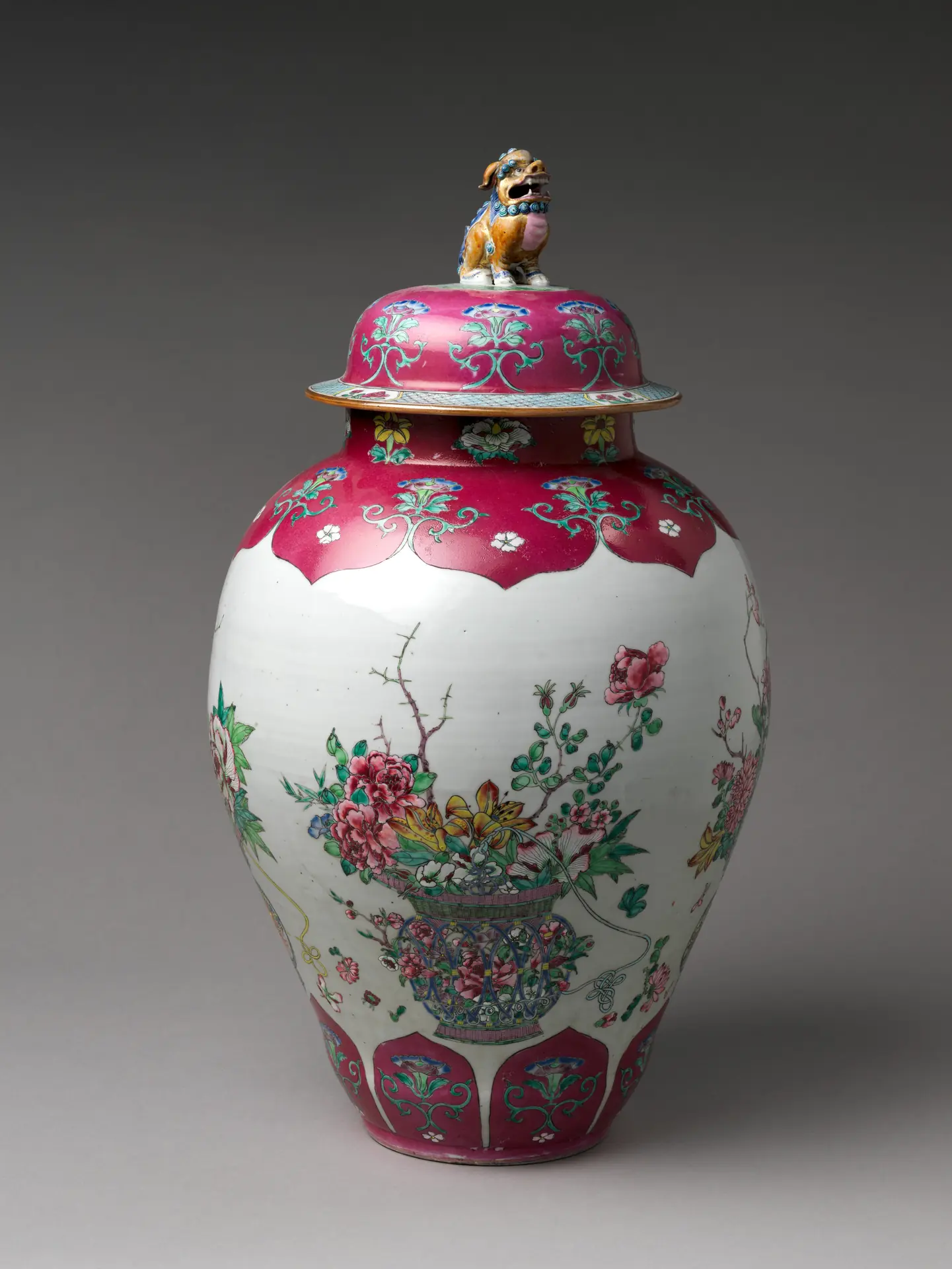
The covered jar below is recorded as Qianlong-period porcelain painted in overglaze famille rose enamels. Its pink borders help organize the object, but pink isn’t the whole picture. Greens, yellows, blue details, and the white ground all have work to do.
The palette name is an invitation to look at those relationships, rather than permission to stop at the first pink flower.
04 / The guide
Porcelain painting follows the shape of the vessel
The inside of a bowl can gather a picture around an open center. On the Met’s eighteenth-century bowl with crab and fish, animals and aquatic plants occupy the sloping inner wall.
A narrow patterned band follows the rim. In this view, the fish are spread around the bowl rather than placed together in a rectangular scene.
The sloping inner wall gives the scattered fish and plants a shared space; the rim pattern holds that space within a distinct edge.
There’s a limit to this image: it’s a black-and-white photograph. The museum records underglaze cobalt-blue painting and a light brown exterior glaze, but those colors are information from the catalogue, not colors visible here.
What the photograph does reveal is the distribution of marks: dark contours, open pale areas, repeated plants, and the distance between one animal and the next.
I like the way that spacing lets the bowl remain a bowl. The empty center has a role in the picture even without carrying the main animals. Look down into the vessel and you can see separate painted details share one field of view. The curve supplies part of the composition.
The flower-basket jar presents another problem. Its painting extends over a rounded outer wall, while the covered mouth, neck, and foot divide the height into distinct zones.
A frontal photograph reveals a substantial part of the basket and flowers, but the body continues away from the viewer on both sides. The visible scene is part of a surface that turns.
The pink bands separate the tall jar into zones, leaving the flower basket room to spread across the white body between them.
Here the broader pink areas do more than repeat a flower color. They give the eye a place to pause above and below the central painting.
The lid carries its own decoration, and the finial supplies a small sculptural accent at the top. The painting gives me one path around the jar; the shape of the lid and finial gives me another.
Put the two vessels together and the difference becomes clearer. The bowl invites a view into its interior; the jar places its picture on an exterior that curves out of sight.
I’d begin looking at the bowl by following the animals around its inner wall. On the jar, I’d first follow the boundaries between the neck, the broad flower-painted body, and the foot.
05 / The guide
Flowers and figures on porcelain need their own context
A painted peony, bird, or fruit may carry more than a likeness. The Cleveland Museum of Art’s exhibition Layers of Meaning explains that flora and fauna in Chinese painting and porcelain can communicate wishes for good fortune as well as philosophical or political ideas.
What appears together, and how it is arranged, can matter to that reading.
I try to read a vessel’s motifs together before translating one isolated flower. Naming a flower is an observation.
Explaining the intended message of this particular flower, paired with these other subjects on this particular object, calls for more context. A title, inscription, related work, or a museum’s interpretation can change the reading.
Figures can require equally careful attention. The Met’s platter with the story of Pan An is an instructive example. Its interpretation says the scene most likely shows Pan An receiving fruit, while the goat-drawn cart evokes another handsome man, Wei Jie.
The painter appears to have combined the two stories. Preserving “most likely” matters: the interpretation is more interesting with its uncertainty intact.
When I return to the flower-basket jar, I begin with what I can see: a basket filled with flowers, framed by decorative bands.
I don’t need to name a specific occasion or recipient to describe the full basket and the flowers spreading above it. That leaves room for a fuller reading when the evidence for one becomes available.
06 / The guide
Jingdezhen workshops and the named porcelain painter
Jingdezhen, in Jiangxi province, is central to the history described here. Its kilns produced important blue-and-white wares, and imperial production there supported a wide range of painted porcelain during the Ming and Qing dynasties.
The crab-and-fish bowl and flower-basket jar are both catalogued as Jingdezhen ware. A place of production connects them without making their painting identical.
“Jingdezhen ware” also leaves a different kind of question open: whose work are we seeing? A place name tells us where a work belongs in a production history. It doesn’t automatically identify its individual painter, or give one person credit for preparing the body, shaping the vessel, decorating it, and managing the firing.
Named painters become particularly useful when looking at the porcelain plaques and painted vessels of the early twentieth century.
The Hong Kong Museum of Art’s Brush and Clay exhibition list records a porcelain plaque by Wang Qi (王琦), dated 1928, with a literary gathering drawn from Li Bo’s Preface to the Spring Night Banquet in the Plum and Peach Garden.
It identifies the painting as famille rose. Here the ceramic support, named artist, date, and literary subject all belong in the account of the work.
The same exhibition list includes a square vase credited to Wang Qi and calligraphers, dated 1921, with narrative figures and calligraphy on its sides. That shared credit is worth keeping.
A painted porcelain object can bring words and pictures together while retaining more than one contributor. Individual artistic work and collaboration give us further ways to understand the painting on porcelain.
07 / The guide
Reading a painted porcelain label
Try reading a catalogue entry in separate passes. First find the material: does it actually say porcelain? Next find the decoration: underglaze cobalt blue, overglaze enamels, or a combination? Then read the date, production place, and any named artist.
Finally return to the picture and ask which parts of that information are visible and which come from the record.
The crab-and-fish bowl makes the distinction especially clear. Its catalogue supplies the cobalt blue that a monochrome image cannot show.
The flower-basket jar allows color relationships to be examined in the photograph, while its catalogue supplies the Qianlong-period attribution. An image alone doesn’t establish everything in its label.
Different reading paths follow from those questions. Underglaze painting leads toward cobalt blue and the relationship between pigment and a covering glaze. Overglaze painting leads toward enamel materials and the additional firing.
A painted plaque by a named artist leads toward composition, inscriptions, and an individual body of work. These are connected branches of Chinese porcelain painting, rather than interchangeable names for the whole subject.
For the bowl, I’d still finish by looking at the space between the fish. Knowing that the painting is underglaze blue changes how I understand its making; watching the fish occupy the curved interior changes how I understand the picture.
Published · Updated